
The Global Quantum Sensors Market 2027-2047
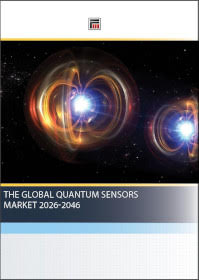
Quantum sensors exploit the fragility of quantum states — superposition, entanglement, and the exquisite sensitivity of atoms, photons and engineered defects to their environment — to measure physical quantities with a precision that classical instruments cannot approach. Because a quantum system's response is anchored to fundamental constants rather than to a manufactured reference, these devices offer measurements that are inherently accurate, drift-free and self-calibrating.
The field spans several distinct technology families. Quantum magnetometers — optically pumped, nitrogen-vacancy diamond and SQUID-based — detect magnetic fields weak enough to reveal neural activity or buried infrastructure. Atomic clocks provide timing stable enough to underpin navigation, telecommunications and financial networks. Cold-atom gravimeters and gravity gradiometers sense subsurface density variation without excavation. Quantum gyroscopes and accelerometers promise inertial navigation that does not drift when satellite signals are jammed, spoofed or simply unavailable. Single-photon detectors and quantum image sensors extend imaging into regimes of extreme low light. Rydberg-atom receivers sense radio-frequency fields across an enormous spectral range from a single aperture, while quantum radar and LiDAR, and quantum-enhanced spectroscopy, open further measurement modalities.
What unites these technologies commercially is not the physics but the engineering problem they share. Laboratory sensitivity has largely been demonstrated; the barrier to adoption is manufacturability. The decisive question is whether a device can be miniaturised, integrated onto a chip, fabricated using established semiconductor and photonic processes, and operated outside a controlled environment — without cryogenics, without a specialist to run it, and at a price the application can bear. Progress is therefore measured less in new records for sensitivity than in vapour cells produced at wafer scale, diamond substrates yielding consistent defects, photonic integration, and packaged systems that install in days rather than months.
Demand is currently led by defence and government, where resilient positioning, navigation and timing in GPS-denied environments, and electronic-warfare-resistant RF sensing, are treated as strategic capabilities. Healthcare follows, where magnetoencephalography and low-field magnetic resonance imaging offer diagnostic access without the cost and infrastructure of conventional systems. Industrial adoption is now emerging in earnest — semiconductor yield metrology, non-destructive testing, energy and power monitoring — and represents the point at which quantum sensing stops being a specialist instrument and becomes an embedded component.
The supply base reflects this transition: university spinouts and venture-backed startups developing the sensors themselves, established suppliers of the lasers, vapour cells, diamond and photonic components they depend on, and large aerospace, defence and industrial primes positioning to integrate them.
The Global Quantum Sensors Market 2027–2047 provides a comprehensive assessment of the sector across a twenty-year horizon. It sets out the underlying technologies and their comparative performance, assigns a technology readiness level to each sensor type with a documented basis for the assessment, and models the point at which each clears the specific manufacturing barrier standing between it and volume production. Market forecasts are built at the finished-sensor device level and presented by sensor type, by unit volume, by sensor price band, by end-use industry and by application area, with each view reconciling to a single revenue pool.
The report examines the drivers reshaping demand: the reorientation of government policy from research funding toward procurement and advance market commitments; the strategic priority now attached to navigation and timing that survives in GPS-denied and contested environments; the arrival of the first genuinely industrial applications in semiconductor metrology, non-destructive testing and energy optimisation; and the components and enabling technologies — lasers, vapour cells, synthetic diamond, integrated photonics, control electronics — on which the entire value chain depends.
It also maps the competitive landscape in detail, profiling companies across the value chain from sensor developers and component suppliers to systems integrators and the aerospace, defence and industrial primes positioning to embed these devices. Methodology, market definition and scope are stated explicitly, including what is counted, what is excluded, and why.
Contents include:
The field spans several distinct technology families. Quantum magnetometers — optically pumped, nitrogen-vacancy diamond and SQUID-based — detect magnetic fields weak enough to reveal neural activity or buried infrastructure. Atomic clocks provide timing stable enough to underpin navigation, telecommunications and financial networks. Cold-atom gravimeters and gravity gradiometers sense subsurface density variation without excavation. Quantum gyroscopes and accelerometers promise inertial navigation that does not drift when satellite signals are jammed, spoofed or simply unavailable. Single-photon detectors and quantum image sensors extend imaging into regimes of extreme low light. Rydberg-atom receivers sense radio-frequency fields across an enormous spectral range from a single aperture, while quantum radar and LiDAR, and quantum-enhanced spectroscopy, open further measurement modalities.
What unites these technologies commercially is not the physics but the engineering problem they share. Laboratory sensitivity has largely been demonstrated; the barrier to adoption is manufacturability. The decisive question is whether a device can be miniaturised, integrated onto a chip, fabricated using established semiconductor and photonic processes, and operated outside a controlled environment — without cryogenics, without a specialist to run it, and at a price the application can bear. Progress is therefore measured less in new records for sensitivity than in vapour cells produced at wafer scale, diamond substrates yielding consistent defects, photonic integration, and packaged systems that install in days rather than months.
Demand is currently led by defence and government, where resilient positioning, navigation and timing in GPS-denied environments, and electronic-warfare-resistant RF sensing, are treated as strategic capabilities. Healthcare follows, where magnetoencephalography and low-field magnetic resonance imaging offer diagnostic access without the cost and infrastructure of conventional systems. Industrial adoption is now emerging in earnest — semiconductor yield metrology, non-destructive testing, energy and power monitoring — and represents the point at which quantum sensing stops being a specialist instrument and becomes an embedded component.
The supply base reflects this transition: university spinouts and venture-backed startups developing the sensors themselves, established suppliers of the lasers, vapour cells, diamond and photonic components they depend on, and large aerospace, defence and industrial primes positioning to integrate them.
The Global Quantum Sensors Market 2027–2047 provides a comprehensive assessment of the sector across a twenty-year horizon. It sets out the underlying technologies and their comparative performance, assigns a technology readiness level to each sensor type with a documented basis for the assessment, and models the point at which each clears the specific manufacturing barrier standing between it and volume production. Market forecasts are built at the finished-sensor device level and presented by sensor type, by unit volume, by sensor price band, by end-use industry and by application area, with each view reconciling to a single revenue pool.
The report examines the drivers reshaping demand: the reorientation of government policy from research funding toward procurement and advance market commitments; the strategic priority now attached to navigation and timing that survives in GPS-denied and contested environments; the arrival of the first genuinely industrial applications in semiconductor metrology, non-destructive testing and energy optimisation; and the components and enabling technologies — lasers, vapour cells, synthetic diamond, integrated photonics, control electronics — on which the entire value chain depends.
It also maps the competitive landscape in detail, profiling companies across the value chain from sensor developers and component suppliers to systems integrators and the aerospace, defence and industrial primes positioning to embed these devices. Methodology, market definition and scope are stated explicitly, including what is counted, what is excluded, and why.
Contents include:
- Executive summary — key findings, technology readiness at a glance, principal conclusions
- Introduction to quantum sensing — quantum states, superposition, entanglement; why quantum sensors outperform classical instruments; fundamental constants and self-calibration
- Quantum sensor technologies — atomic clocks; optically pumped, NV-diamond and SQUID magnetometers; gravimeters and gravity gradiometers; quantum gyroscopes and accelerometers; single-photon and quantum image sensors; quantum radar and LiDAR; Rydberg/RF (PAR) sensors; quantum-enhanced spectroscopy
- Benchmarking and performance — comparative sensitivity, stability, size, weight, power; performance metrics by application domain
- Technology readiness and commercialisation — TRL by sensor type, basis of assessment, time-to-market and mass-production timing, manufacturing barriers, price-point thresholds
- Quantum sensing components and enabling technologies — lasers and VCSELs, vapour cells, synthetic diamond, integrated photonics, cryogenics, control electronics and firmware; supply-chain challenges
- Market definition, scope and methodology — value-chain stages included and excluded; primary and secondary research; interview programme; base-year estimation
- Market analysis and forecasts, 2027–2047 — by sensor type; by unit volume; by sensor price band; by end-use industry; by application area
- Segment forecasts — dedicated forecasts for each sensor technology, with sub-segment breakdowns
- Application areas — navigation and PNT; medical imaging and diagnostics; defence and security; scientific research and metrology; resource exploration and environmental monitoring; industrial process control and NDT; timing, synchronisation and communications
- Market drivers, challenges and barriers to adoption
- Policy, government programmes and procurement — national quantum strategies, defence programmes, advance market commitments
- Investment landscape — funding activity, public and private financing (reported separately from market revenue)
- Roadmaps — technology development, price-point evolution and commercial milestones by period
- Company profiles — 89 companies across the value chain. including Aegiq, Airbus, Aquark Technologies, Artilux, Atomionics, Beyond Blood Diagnostics, Bosch Quantum Sensing, BT, Cerca Magnetics, Chipiron, Chiral Nano AG, Covesion, Delta g, DeteQt, Diatope GmbH, Diffraqtion, Digistain, Element Six, Ephos, EuQlid, Exail Quantum Sensors, Genesis Quantum Technology, ID Quantique, Infleqtion, Ligentec, Mag4Health, Menlo Systems GmbH, Mesa Quantum, Miraex, Munich Quantum Instruments GmbH, NeoCrystech, Neuranics, NIQS Technology Ltd, Nomad Atomics, Nu Quantum, NVision, Phasor Innovation, Photon Force, Polariton Technologies, PsiQuantum, Q.ANT, Qaisec, Q-CTRL, Qingyuan Tianzhiheng Sensing Technology Co. Ltd and more.....
1 EXECUTIVE SUMMARY
1.1 First and second quantum revolutions
1.2 Current quantum technology market landscape
1.2.1 Key developments
1.3 Investment landscape
1.4 Global government initiatives
1.5 Industry developments 2024-2026
1.6 Market Drivers
1.7 Market and technology challenges
1.8 Technology trends and innovations
1.9 Market forecast and future outlook
1.9.1 Short-term Outlook (2025-2027)
1.9.2 Medium-term Outlook (2028-2031)
1.9.3 Long-term Outlook (2032-2047)
1.10 Emerging applications and use cases
1.11 Quantum Navigation
1.12 Benchmarking of Quantum Sensor Technologies
1.13 Potential Disruptive Technologies
1.14 Market Map
1.15 Global market for quantum sensors
1.15.1 By sensor type
1.15.2 By volume
1.15.3 By sensor price
1.15.4 By end use industry
1.15.5 By Application Area
1.16 Quantum Sensors Roadmapping
1.16.1 Atomic clocks
1.16.2 Quantum magnetometers
1.16.3 Quantum gravimeters
1.16.4 Inertial quantum sensors
1.16.5 Quantum RF sensors
1.16.6 Single photon detectors
1.17 International Standardization Landscape
2 INTRODUCTION
2.1 What is quantum sensing?
2.2 Types of quantum sensors
2.2.1 Comparison between classical and quantum sensors
2.3 Quantum Sensing Principles
2.4 Quantum Phenomena
2.5 Technology Platforms
2.6 Quantum Sensing Technologies and Applications
2.7 Value proposition for quantum sensors
2.8 SWOT Analysis
3 QUANTUM SENSING COMPONENTS
3.1 Overview
3.2 Specialized components
3.3 Vapor cells
3.3.1 Overview
3.3.2 Manufacturing
3.3.3 Alkali azides
3.3.4 Companies
3.4 VCSELs
3.4.1 Overview
3.4.2 Quantum sensor miniaturization
3.4.3 Companies
3.5 Control electronics for quantum sensors
3.6 Integrated photonic and semiconductor technologies
3.7 Challenges
3.8 Roadmap
4 ATOMIC CLOCKS
4.1 Technology Overview
4.1.1 Hyperfine energy levels
4.1.2 Self-calibration
4.2 Markets
4.3 Roadmap
4.4 High frequency oscillators
4.4.1 Emerging oscillators
4.5 New atomic clock technologies
4.6 Optical atomic clocks
4.6.1 Chip-scale optical clocks
4.6.2 Rack-sized atomic clocks
4.7 Challenge in atomic clock miniaturization
4.8 Companies
4.9 SWOT analysis
4.10 Market forecasts
4.10.1 Total market
4.10.2 Bench/rack-scale atomic clocks
4.10.3 Chip-scale atomic clocks
5 QUANTUM MAGNETIC FIELD SENSORS
5.1 Technology overview
5.1.1 Measuring magnetic fields
5.1.2 Sensitivity
5.1.3 Motivation for use
5.2 Market opportunity
5.3 Performance
5.4 Superconducting Quantum Interference Devices (Squids)
5.4.1 Introduction
5.4.2 Operating principle
5.4.3 Applications
5.4.4 Companies
5.4.5 SWOT analysis
5.5 Optically Pumped Magnetometers (OPMs)
5.5.1 Introduction
5.5.2 Operating principle
5.5.3 Applications
5.5.3.1 Miniaturization
5.5.3.2 Navigation
5.5.4 MEMS manufacturing
5.5.5 Companies
5.5.6 SWOT analysis
5.6 Tunneling Magneto Resistance Sensors (TMRs)
5.6.1 Introduction
5.6.2 Operating principle
5.6.3 Applications
5.6.4 Companies
5.6.5 SWOT analysis
5.7 Nitrogen Vacancy Centers (N-V Centers)
5.7.1 Introduction
5.7.2 Operating principle
5.7.3 Applications
5.7.4 Synthetic diamonds
5.7.5 Companies
5.7.6 SWOT analysis
5.8 Market forecasts
6 QUANTUM GRAVIMETERS
6.1 Technology overview
6.2 Operating principle
6.3 Applications
6.3.1 Commercial deployment
6.3.2 Comparison with other technologies
6.4 Roadmap
6.5 Companies
6.6 Market forecasts
6.7 SWOT analysis
7 QUANTUM GYROSCOPES
7.1 Technology description
7.1.1 Inertial Measurement Units (IMUs)
7.1.1.1 Atomic quantum gyroscopes
7.1.1.2 Quantum accelerometers
7.1.1.2.1 Operating Principles
7.1.1.2.2 Grating magneto-optical traps (MOTs)
7.1.1.2.3 Applications
7.1.1.2.4 Companies
7.2 Applications
7.3 Roadmap
7.4 Companies
7.5 Market forecasts
7.6 SWOT analysis
8 QUANTUM IMAGE SENSORS
8.1 Technology overview
8.1.1 Single photon detectors
8.1.2 Semiconductor single photon detectors
8.1.3 Superconducting single photon detectors
8.2 Applications
8.2.1 Single Photon Avalanche Diodes with Time-Correlated Single Photon Counting (TCSPC
8.2.2 Bioimaging
8.3 SWOT analysis
8.4 Market forecast
8.5 Companies
9 QUANTUM RADAR
9.1 Technology overview
9.1.1 Quantum entanglement
9.1.2 Ghost imaging
9.1.3 Quantum holography
9.2 Applications
9.2.1 Cancer detection
9.2.2 Glucose Monitoring
10 QUANTUM CHEMICAL SENSORS
10.1 Technology overview
10.2 Commercial activities
11 SPECTROSCOPIC MEASUREMENT USING ENTANGLED PHOTONS
11.1 Technology overview
11.2 Key techniques
11.3 Market size and growth outlook
11.4 Key companies and commercial activities
11.5 Growth drivers and challenges
11.6 Market forecast
12 QUANTUM RADIO FREQUENCY (RF) FIELD SENSORS
12.1 Overview
12.2 Types of Quantum RF Sensors
12.3 Rydberg Atom Based Electric Field Sensors and Radio Receivers
12.3.1 Principles
12.3.2 Commercialization
12.4 Nitrogen-Vacancy Centre Diamond Electric Field Sensors and Radio Receivers
12.4.1 Principles
12.4.2 Applications
12.5 Market and applications
12.6 Market forecast
13 QUANTUM NEMS AND MEMS
13.1 Technology overview
13.2 Types
13.3 Applications
13.4 Challenges
14 CASE STUDIES
14.1 Quantum Sensors in Healthcare: Early Disease Detection
14.2 Military Applications: Enhanced Navigation Systems
14.3 Environmental Monitoring
14.4 Financial Sector: High-Frequency Trading
14.5 Quantum Internet: Secure Communication Networks
15 END-USE INDUSTRIES
15.1 Healthcare and Life Sciences
15.1.1 Medical Imaging
15.1.2 Drug Discovery
15.1.3 Biosensing
15.2 Defence and Military
15.2.1 Navigation Systems
15.2.2 Underwater Detection
15.2.3 Communication Systems
15.3 Environmental Monitoring
15.3.1 Climate Change Research
15.3.2 Geological Surveys
15.3.3 Natural Disaster Prediction
15.3.4 Other Applications
15.4 Oil and Gas
15.4.1 Exploration and Surveying
15.4.2 Pipeline Monitoring
15.4.3 Other Applications
15.5 Transportation and Automotive
15.5.1 Autonomous Vehicles
15.5.2 Aerospace Navigation
15.5.3 Other Applications
15.6 Other Industries
15.6.1 Finance and Banking
15.6.2 Agriculture
15.6.3 Construction
15.6.4 Mining
16 COMPANY PROFILES (89 COMPANY PROFILES)
17 APPENDICES
17.1 Research Methodology
17.2 Glossary of Terms
17.3 List of Abbreviations
18 REFERENCES
1.1 First and second quantum revolutions
1.2 Current quantum technology market landscape
1.2.1 Key developments
1.3 Investment landscape
1.4 Global government initiatives
1.5 Industry developments 2024-2026
1.6 Market Drivers
1.7 Market and technology challenges
1.8 Technology trends and innovations
1.9 Market forecast and future outlook
1.9.1 Short-term Outlook (2025-2027)
1.9.2 Medium-term Outlook (2028-2031)
1.9.3 Long-term Outlook (2032-2047)
1.10 Emerging applications and use cases
1.11 Quantum Navigation
1.12 Benchmarking of Quantum Sensor Technologies
1.13 Potential Disruptive Technologies
1.14 Market Map
1.15 Global market for quantum sensors
1.15.1 By sensor type
1.15.2 By volume
1.15.3 By sensor price
1.15.4 By end use industry
1.15.5 By Application Area
1.16 Quantum Sensors Roadmapping
1.16.1 Atomic clocks
1.16.2 Quantum magnetometers
1.16.3 Quantum gravimeters
1.16.4 Inertial quantum sensors
1.16.5 Quantum RF sensors
1.16.6 Single photon detectors
1.17 International Standardization Landscape
2 INTRODUCTION
2.1 What is quantum sensing?
2.2 Types of quantum sensors
2.2.1 Comparison between classical and quantum sensors
2.3 Quantum Sensing Principles
2.4 Quantum Phenomena
2.5 Technology Platforms
2.6 Quantum Sensing Technologies and Applications
2.7 Value proposition for quantum sensors
2.8 SWOT Analysis
3 QUANTUM SENSING COMPONENTS
3.1 Overview
3.2 Specialized components
3.3 Vapor cells
3.3.1 Overview
3.3.2 Manufacturing
3.3.3 Alkali azides
3.3.4 Companies
3.4 VCSELs
3.4.1 Overview
3.4.2 Quantum sensor miniaturization
3.4.3 Companies
3.5 Control electronics for quantum sensors
3.6 Integrated photonic and semiconductor technologies
3.7 Challenges
3.8 Roadmap
4 ATOMIC CLOCKS
4.1 Technology Overview
4.1.1 Hyperfine energy levels
4.1.2 Self-calibration
4.2 Markets
4.3 Roadmap
4.4 High frequency oscillators
4.4.1 Emerging oscillators
4.5 New atomic clock technologies
4.6 Optical atomic clocks
4.6.1 Chip-scale optical clocks
4.6.2 Rack-sized atomic clocks
4.7 Challenge in atomic clock miniaturization
4.8 Companies
4.9 SWOT analysis
4.10 Market forecasts
4.10.1 Total market
4.10.2 Bench/rack-scale atomic clocks
4.10.3 Chip-scale atomic clocks
5 QUANTUM MAGNETIC FIELD SENSORS
5.1 Technology overview
5.1.1 Measuring magnetic fields
5.1.2 Sensitivity
5.1.3 Motivation for use
5.2 Market opportunity
5.3 Performance
5.4 Superconducting Quantum Interference Devices (Squids)
5.4.1 Introduction
5.4.2 Operating principle
5.4.3 Applications
5.4.4 Companies
5.4.5 SWOT analysis
5.5 Optically Pumped Magnetometers (OPMs)
5.5.1 Introduction
5.5.2 Operating principle
5.5.3 Applications
5.5.3.1 Miniaturization
5.5.3.2 Navigation
5.5.4 MEMS manufacturing
5.5.5 Companies
5.5.6 SWOT analysis
5.6 Tunneling Magneto Resistance Sensors (TMRs)
5.6.1 Introduction
5.6.2 Operating principle
5.6.3 Applications
5.6.4 Companies
5.6.5 SWOT analysis
5.7 Nitrogen Vacancy Centers (N-V Centers)
5.7.1 Introduction
5.7.2 Operating principle
5.7.3 Applications
5.7.4 Synthetic diamonds
5.7.5 Companies
5.7.6 SWOT analysis
5.8 Market forecasts
6 QUANTUM GRAVIMETERS
6.1 Technology overview
6.2 Operating principle
6.3 Applications
6.3.1 Commercial deployment
6.3.2 Comparison with other technologies
6.4 Roadmap
6.5 Companies
6.6 Market forecasts
6.7 SWOT analysis
7 QUANTUM GYROSCOPES
7.1 Technology description
7.1.1 Inertial Measurement Units (IMUs)
7.1.1.1 Atomic quantum gyroscopes
7.1.1.2 Quantum accelerometers
7.1.1.2.1 Operating Principles
7.1.1.2.2 Grating magneto-optical traps (MOTs)
7.1.1.2.3 Applications
7.1.1.2.4 Companies
7.2 Applications
7.3 Roadmap
7.4 Companies
7.5 Market forecasts
7.6 SWOT analysis
8 QUANTUM IMAGE SENSORS
8.1 Technology overview
8.1.1 Single photon detectors
8.1.2 Semiconductor single photon detectors
8.1.3 Superconducting single photon detectors
8.2 Applications
8.2.1 Single Photon Avalanche Diodes with Time-Correlated Single Photon Counting (TCSPC
8.2.2 Bioimaging
8.3 SWOT analysis
8.4 Market forecast
8.5 Companies
9 QUANTUM RADAR
9.1 Technology overview
9.1.1 Quantum entanglement
9.1.2 Ghost imaging
9.1.3 Quantum holography
9.2 Applications
9.2.1 Cancer detection
9.2.2 Glucose Monitoring
10 QUANTUM CHEMICAL SENSORS
10.1 Technology overview
10.2 Commercial activities
11 SPECTROSCOPIC MEASUREMENT USING ENTANGLED PHOTONS
11.1 Technology overview
11.2 Key techniques
11.3 Market size and growth outlook
11.4 Key companies and commercial activities
11.5 Growth drivers and challenges
11.6 Market forecast
12 QUANTUM RADIO FREQUENCY (RF) FIELD SENSORS
12.1 Overview
12.2 Types of Quantum RF Sensors
12.3 Rydberg Atom Based Electric Field Sensors and Radio Receivers
12.3.1 Principles
12.3.2 Commercialization
12.4 Nitrogen-Vacancy Centre Diamond Electric Field Sensors and Radio Receivers
12.4.1 Principles
12.4.2 Applications
12.5 Market and applications
12.6 Market forecast
13 QUANTUM NEMS AND MEMS
13.1 Technology overview
13.2 Types
13.3 Applications
13.4 Challenges
14 CASE STUDIES
14.1 Quantum Sensors in Healthcare: Early Disease Detection
14.2 Military Applications: Enhanced Navigation Systems
14.3 Environmental Monitoring
14.4 Financial Sector: High-Frequency Trading
14.5 Quantum Internet: Secure Communication Networks
15 END-USE INDUSTRIES
15.1 Healthcare and Life Sciences
15.1.1 Medical Imaging
15.1.2 Drug Discovery
15.1.3 Biosensing
15.2 Defence and Military
15.2.1 Navigation Systems
15.2.2 Underwater Detection
15.2.3 Communication Systems
15.3 Environmental Monitoring
15.3.1 Climate Change Research
15.3.2 Geological Surveys
15.3.3 Natural Disaster Prediction
15.3.4 Other Applications
15.4 Oil and Gas
15.4.1 Exploration and Surveying
15.4.2 Pipeline Monitoring
15.4.3 Other Applications
15.5 Transportation and Automotive
15.5.1 Autonomous Vehicles
15.5.2 Aerospace Navigation
15.5.3 Other Applications
15.6 Other Industries
15.6.1 Finance and Banking
15.6.2 Agriculture
15.6.3 Construction
15.6.4 Mining
16 COMPANY PROFILES (89 COMPANY PROFILES)
17 APPENDICES
17.1 Research Methodology
17.2 Glossary of Terms
17.3 List of Abbreviations
18 REFERENCES
LIST OF TABLES
Table 1. First and second quantum revolutions.
Table 2. Quantum Sensing Technologies and Applications.
Table 3. Quantum Technology investments 2012-2025 (millions USD), total.
Table 4. Major Quantum Technologies Investments 2024-2025.
Table 5. Global government initiatives in quantum technologies.
Table 6. Quantum Sensor industry developments 2024-2026.
Table 7. Market Drivers for Quantum Sensors.
Table 8. Market and technology challenges in quantum sensing.
Table 9. Technology Trends and Innovations in Quantum Sensors.
Table 10. Emerging Applications and Use Cases
Table 11. Benchmarking of Quantum Sensing Technologies by Type.
Table 12. Performance Metrics by Application Domain.
Table 13. Technology Readiness Levels (TRL) and Commercialization Status
Table 14. Comparative Performance Metrics.
Table 15. Current Research and Development Focus Areas
Table 16. Potential Disruptive Technologies.
Table 17. Global market for quantum sensors, by types, 2018-2047 (Millions USD).
Table 18. Global market for quantum sensors, by volume (Units), 2018-2047.
Table 19. Global market for quantum sensors, by sensor price, 2025-2047 (Units).
Table 20. Global market for quantum sensors, by end use industry, 2018-2047 (Millions USD).
Table 21. Global market for quantum sensors, by application area, 2026–2047 (Millions USD).
Table 22. Types of Quantum Sensors
Table 23. Comparison between classical and quantum sensors.
Table 24. Applications in quantum sensors.
Table 25. Technology approaches for enabling quantum sensing
Table 26. Key technology platforms for quantum sensing.
Table 27. Quantum sensing technologies and applications.
Table 28. Value proposition for quantum sensors.
Table 29. Components for quantum sensing.
Table 30. Specialized components for atomic and diamond-based quantum sensing.
Table 31. Companies in Chip-Scale Vapor Cell Development.
Table 32. Companies in VCSELs for Quantum Sensing.
Table 33. Challenges for Quantum Sensor Components.
Table 34. Key challenges and limitations of quartz crystal clocks vs. atomic clocks.
Table 35. Atomic clocks End users and addressable markets.
Table 36. Key Market Inflection Points and Technology Transitions.
Table 37. New modalities being researched to improve the fractional uncertainty of atomic clocks.
Table 38. Companies developing high-precision quantum time measurement
Table 39. Key players in atomic clocks.
Table 40. Global market for atomic clocks 2025-2047 (Billions USD).
Table 41. Global market for Bench/rack-scale atomic clocks, 2026-2047 (Millions USD).
Table 42. Global market for Chip-scale atomic clocks, 2026-2047 (Millions USD).
Table 43. Comparative analysis of key performance parameters and metrics of magnetic field sensors.
Table 44. Types of magnetic field sensors.
Table 45. Market opportunity for different types of quantum magnetic field sensors.
Table 46. Performance of magnetic field sensors.
Table 47. Applications of SQUIDs.
Table 48. Market opportunities for SQUIDs (Superconducting Quantum Interference Devices).
Table 49. Key players in SQUIDs.
Table 50. Applications of optically pumped magnetometers (OPMs).
Table 51. MEMS Manufacturing Techniques for Miniaturized OPMs.
Table 52. Key players in Optically Pumped Magnetometers (OPMs).
Table 53. Applications for TMR (Tunneling Magnetoresistance) sensors.
Table 54. Market players in TMR (Tunneling Magnetoresistance) sensors.
Table 55. Applications of N-V center magnetic field centers
Table 56. Quantum Grade Diamond.
Table 57. Synthetic Diamond Value Chain for Quantum Sensing.
Table 58. Key players in N-V center magnetic field sensors.
Table 59. Global market forecasts for quantum magnetic field sensors, by type, 2025-2047 (Millions USD).
Table 60. Applications of quantum gravimeters
Table 61. Comparative table between quantum gravity sensing and some other technologies commonly used for underground mapping.
Table 62. Key players in quantum gravimeters.
Table 63. Global market for Quantum gravimeters 2025-2047 (Millions USD).
Table 64. Comparison of quantum gyroscopes with MEMs gyroscopes and optical gyroscopes.
Table 65. Comparison of Quantum Gyroscopes with MEMS Gyroscopes and Optical Gyroscopes.
Table 66. Key Players in Quantum Accelerometers.
Table 67. Markets and applications for quantum gyroscopes.
Table 68. Key players in quantum gyroscopes.
Table 69. Global market for for quantum gyroscopes and accelerometers 2026-2047 (millions USD).
Table 70. Types of quantum image sensors and their key features.
Table 71. Applications of quantum image sensors.
Table 72. SPAD Bioimaging Applications.
Table 73. Global market for quantum image sensors 2025-2047 (Millions USD).
Table 74. Key players in quantum image sensors.
Table 75. Comparison of quantum radar versus conventional radar and lidar technologies.
Table 76. Applications of quantum radar.
Table 77. Key spectroscopic techniques using entangled photons and their applications.
Table 78. Related market segments and their relevance to spectroscopic measurement using entangled photons
Table 79. Estimated market size for spectroscopic measurement using entangled photons, 2025–2036 (USD Millions)
Table 80. Value Proposition of Quantum RF Sensors
Table 81. Types of Quantum RF Sensors
Table 82. Markets for Quantum RF Sensors
Table 83. Technology Transition Milestones.
Table 84. Application-Specific Adoption Timeline
Table 85. Global market for quantum RF sensors 2026-2047 (Millions USD).
Table 86. Types of Quantum NEMS and MEMS.
Table 87. Quantum Sensors in Healthcare and Life Sciences.
Table 88. Quantum Sensors in Defence and Military
Table 89. Quantum Sensors in Environmental Monitoring
Table 90. Quantum Sensors in Oil and Gas
Table 91. Quantum Sensors in Transportation.
Table 92. Glossary of terms.
Table 93. List of Abbreviations.
Table 1. First and second quantum revolutions.
Table 2. Quantum Sensing Technologies and Applications.
Table 3. Quantum Technology investments 2012-2025 (millions USD), total.
Table 4. Major Quantum Technologies Investments 2024-2025.
Table 5. Global government initiatives in quantum technologies.
Table 6. Quantum Sensor industry developments 2024-2026.
Table 7. Market Drivers for Quantum Sensors.
Table 8. Market and technology challenges in quantum sensing.
Table 9. Technology Trends and Innovations in Quantum Sensors.
Table 10. Emerging Applications and Use Cases
Table 11. Benchmarking of Quantum Sensing Technologies by Type.
Table 12. Performance Metrics by Application Domain.
Table 13. Technology Readiness Levels (TRL) and Commercialization Status
Table 14. Comparative Performance Metrics.
Table 15. Current Research and Development Focus Areas
Table 16. Potential Disruptive Technologies.
Table 17. Global market for quantum sensors, by types, 2018-2047 (Millions USD).
Table 18. Global market for quantum sensors, by volume (Units), 2018-2047.
Table 19. Global market for quantum sensors, by sensor price, 2025-2047 (Units).
Table 20. Global market for quantum sensors, by end use industry, 2018-2047 (Millions USD).
Table 21. Global market for quantum sensors, by application area, 2026–2047 (Millions USD).
Table 22. Types of Quantum Sensors
Table 23. Comparison between classical and quantum sensors.
Table 24. Applications in quantum sensors.
Table 25. Technology approaches for enabling quantum sensing
Table 26. Key technology platforms for quantum sensing.
Table 27. Quantum sensing technologies and applications.
Table 28. Value proposition for quantum sensors.
Table 29. Components for quantum sensing.
Table 30. Specialized components for atomic and diamond-based quantum sensing.
Table 31. Companies in Chip-Scale Vapor Cell Development.
Table 32. Companies in VCSELs for Quantum Sensing.
Table 33. Challenges for Quantum Sensor Components.
Table 34. Key challenges and limitations of quartz crystal clocks vs. atomic clocks.
Table 35. Atomic clocks End users and addressable markets.
Table 36. Key Market Inflection Points and Technology Transitions.
Table 37. New modalities being researched to improve the fractional uncertainty of atomic clocks.
Table 38. Companies developing high-precision quantum time measurement
Table 39. Key players in atomic clocks.
Table 40. Global market for atomic clocks 2025-2047 (Billions USD).
Table 41. Global market for Bench/rack-scale atomic clocks, 2026-2047 (Millions USD).
Table 42. Global market for Chip-scale atomic clocks, 2026-2047 (Millions USD).
Table 43. Comparative analysis of key performance parameters and metrics of magnetic field sensors.
Table 44. Types of magnetic field sensors.
Table 45. Market opportunity for different types of quantum magnetic field sensors.
Table 46. Performance of magnetic field sensors.
Table 47. Applications of SQUIDs.
Table 48. Market opportunities for SQUIDs (Superconducting Quantum Interference Devices).
Table 49. Key players in SQUIDs.
Table 50. Applications of optically pumped magnetometers (OPMs).
Table 51. MEMS Manufacturing Techniques for Miniaturized OPMs.
Table 52. Key players in Optically Pumped Magnetometers (OPMs).
Table 53. Applications for TMR (Tunneling Magnetoresistance) sensors.
Table 54. Market players in TMR (Tunneling Magnetoresistance) sensors.
Table 55. Applications of N-V center magnetic field centers
Table 56. Quantum Grade Diamond.
Table 57. Synthetic Diamond Value Chain for Quantum Sensing.
Table 58. Key players in N-V center magnetic field sensors.
Table 59. Global market forecasts for quantum magnetic field sensors, by type, 2025-2047 (Millions USD).
Table 60. Applications of quantum gravimeters
Table 61. Comparative table between quantum gravity sensing and some other technologies commonly used for underground mapping.
Table 62. Key players in quantum gravimeters.
Table 63. Global market for Quantum gravimeters 2025-2047 (Millions USD).
Table 64. Comparison of quantum gyroscopes with MEMs gyroscopes and optical gyroscopes.
Table 65. Comparison of Quantum Gyroscopes with MEMS Gyroscopes and Optical Gyroscopes.
Table 66. Key Players in Quantum Accelerometers.
Table 67. Markets and applications for quantum gyroscopes.
Table 68. Key players in quantum gyroscopes.
Table 69. Global market for for quantum gyroscopes and accelerometers 2026-2047 (millions USD).
Table 70. Types of quantum image sensors and their key features.
Table 71. Applications of quantum image sensors.
Table 72. SPAD Bioimaging Applications.
Table 73. Global market for quantum image sensors 2025-2047 (Millions USD).
Table 74. Key players in quantum image sensors.
Table 75. Comparison of quantum radar versus conventional radar and lidar technologies.
Table 76. Applications of quantum radar.
Table 77. Key spectroscopic techniques using entangled photons and their applications.
Table 78. Related market segments and their relevance to spectroscopic measurement using entangled photons
Table 79. Estimated market size for spectroscopic measurement using entangled photons, 2025–2036 (USD Millions)
Table 80. Value Proposition of Quantum RF Sensors
Table 81. Types of Quantum RF Sensors
Table 82. Markets for Quantum RF Sensors
Table 83. Technology Transition Milestones.
Table 84. Application-Specific Adoption Timeline
Table 85. Global market for quantum RF sensors 2026-2047 (Millions USD).
Table 86. Types of Quantum NEMS and MEMS.
Table 87. Quantum Sensors in Healthcare and Life Sciences.
Table 88. Quantum Sensors in Defence and Military
Table 89. Quantum Sensors in Environmental Monitoring
Table 90. Quantum Sensors in Oil and Gas
Table 91. Quantum Sensors in Transportation.
Table 92. Glossary of terms.
Table 93. List of Abbreviations.
LIST OF FIGURES
Figure 1. Quantum computing development timeline.
Figure 2. Quantum Technology investments 2012-2025 (millions USD), total.
Figure 3. National quantum initiatives and funding.
Figure 4. Quantum Sensors: Market and Technology Roadmap to 2040.
Figure 5. Quantum sensor industry market map.
Figure 7. Global market for quantum sensors, by volume, 2018-2047.
Figure 8. Global market for quantum sensors, by sensor price, 2025-2047 (Units).
Figure 9. Global market for quantum sensors, by end use industry, 2018-2047 (Millions USD).
Figure 10. Atomic clocks roadmap.
Figure 11. Quantum magnetometers roadmap.
Figure 12. Quantum gravimeters roadmap.
Figure 13. Inertial quantum sensors roadmap.
Figure 14. Quantum RF sensors roadmap.
Figure 15. Single photon detectors roadmap.
Figure 16. Q.ANT quantum particle sensor.
Figure 17. SWOT analysis for quantum sensors market.
Figure 18. Roadmap for quantum sensing components and their applications.
Figure 19. Atomic clocks market roadmap.
Figure 20. Strontium lattice optical clock.
Figure 21. NIST's compact optical clock.
Figure 22. SWOT analysis for atomic clocks.
Figure 23. Global market for atomic clocks 2025-2047 (Billions USD).
Figure 24. Global market for Bench/rack-scale atomic clocks, 2026-2047 (Millions USD).
Figure 25. Global market for Chip-scale atomic clocks, 2026-2047 (Millions USD).
Figure 26. Quantum Magnetometers Market Roadmap.
Figure 27. Principle of SQUID magnetometer.
Figure 28. SWOT analysis for SQUIDS.
Figure 29. SWOT analysis for OPMs
Figure 30. Tunneling magnetoresistance mechanism and TMR ratio formats.
Figure 31. SWOT analysis for TMR (Tunneling Magnetoresistance) sensors.
Figure 32. SWOT analysis for N-V Center Magnetic Field Sensors.
Figure 34. Quantum Gravimeter.
Figure 35. Quantum gravimeters Market roadmap.
Figure 36. Global market for Quantum gravimeters 2025-2047 (Millions USD).
Figure 37. SWOT analysis for Quantum Gravimeters.
Figure 38. Inertial Quantum Sensors Market roadmap.
Figure 39. Global market for quantum gyroscopes and accelerometers 2026-2047 (millions USD).
Figure 40. SWOT analysis for Quantum Gyroscopes.
Figure 41. SWOT analysis for Quantum image sensing.
Figure 42. Global market for quantum image sensors 2025-2047 (Millions USD).
Figure 43. Principle of quantum radar.
Figure 44. Illustration of a quantum radar prototype.
Figure 45. Quantum RF Sensors Market Roadmap (2023-2047).
Figure 46. Global market for quantum RF sensors 2026-2047 (Millions USD).
Figure 47. ColdQuanta Quantum Core (left), Physics Station (middle) and the atoms control chip (right).
Figure 48. PsiQuantum’s modularized quantum computing system networks.
Figure 49. Quantum Brilliance device
Figure 50. SpinMagIC quantum sensor.
Figure 1. Quantum computing development timeline.
Figure 2. Quantum Technology investments 2012-2025 (millions USD), total.
Figure 3. National quantum initiatives and funding.
Figure 4. Quantum Sensors: Market and Technology Roadmap to 2040.
Figure 5. Quantum sensor industry market map.
Figure 7. Global market for quantum sensors, by volume, 2018-2047.
Figure 8. Global market for quantum sensors, by sensor price, 2025-2047 (Units).
Figure 9. Global market for quantum sensors, by end use industry, 2018-2047 (Millions USD).
Figure 10. Atomic clocks roadmap.
Figure 11. Quantum magnetometers roadmap.
Figure 12. Quantum gravimeters roadmap.
Figure 13. Inertial quantum sensors roadmap.
Figure 14. Quantum RF sensors roadmap.
Figure 15. Single photon detectors roadmap.
Figure 16. Q.ANT quantum particle sensor.
Figure 17. SWOT analysis for quantum sensors market.
Figure 18. Roadmap for quantum sensing components and their applications.
Figure 19. Atomic clocks market roadmap.
Figure 20. Strontium lattice optical clock.
Figure 21. NIST's compact optical clock.
Figure 22. SWOT analysis for atomic clocks.
Figure 23. Global market for atomic clocks 2025-2047 (Billions USD).
Figure 24. Global market for Bench/rack-scale atomic clocks, 2026-2047 (Millions USD).
Figure 25. Global market for Chip-scale atomic clocks, 2026-2047 (Millions USD).
Figure 26. Quantum Magnetometers Market Roadmap.
Figure 27. Principle of SQUID magnetometer.
Figure 28. SWOT analysis for SQUIDS.
Figure 29. SWOT analysis for OPMs
Figure 30. Tunneling magnetoresistance mechanism and TMR ratio formats.
Figure 31. SWOT analysis for TMR (Tunneling Magnetoresistance) sensors.
Figure 32. SWOT analysis for N-V Center Magnetic Field Sensors.
Figure 34. Quantum Gravimeter.
Figure 35. Quantum gravimeters Market roadmap.
Figure 36. Global market for Quantum gravimeters 2025-2047 (Millions USD).
Figure 37. SWOT analysis for Quantum Gravimeters.
Figure 38. Inertial Quantum Sensors Market roadmap.
Figure 39. Global market for quantum gyroscopes and accelerometers 2026-2047 (millions USD).
Figure 40. SWOT analysis for Quantum Gyroscopes.
Figure 41. SWOT analysis for Quantum image sensing.
Figure 42. Global market for quantum image sensors 2025-2047 (Millions USD).
Figure 43. Principle of quantum radar.
Figure 44. Illustration of a quantum radar prototype.
Figure 45. Quantum RF Sensors Market Roadmap (2023-2047).
Figure 46. Global market for quantum RF sensors 2026-2047 (Millions USD).
Figure 47. ColdQuanta Quantum Core (left), Physics Station (middle) and the atoms control chip (right).
Figure 48. PsiQuantum’s modularized quantum computing system networks.
Figure 49. Quantum Brilliance device
Figure 50. SpinMagIC quantum sensor.
More Publications
The World Market for Nanotechnology: Nanomaterials, Markets and Companies
US$ 3,940.00
September 2011
559 pages
The Global Quantum Dots Market 2025-2035
US$ 1,250.00
March 2025
315 pages
Nanotechnology and Nanomaterials for the World Energy Market: Applications, Products, End User Markets, Companies and Revenues
US$ 1,435.00
January 2011
129 pages
Quantum Technologies: Investment Landscape and Global Market 2025-2045
US$ 1,650.00
March 2025
465 pages
Nanotechnology and Nanomaterials in the Electronics Sector
US$ 1,730.00
September 2011
172 pages

