
The Global Humanoid Robots Market 2027-2037
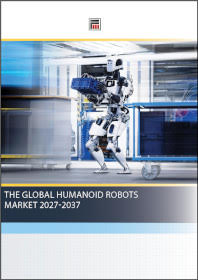
Humanoid robotics has moved decisively out of the demonstration phase. Where the sector was until recently characterised by viral videos and controlled-environment prototypes, it is now defined by volume manufacturing, multi-site customer installations and — for the first time — public listings. Chinese manufacturers dominate both production and consumption, having converted deep domestic supply chains in actuators, sensors, batteries and structural components into a cost position Western competitors have struggled to match. Two Chinese firms account for the majority of global shipments between them, and one has become the first humanoid manufacturer to list on a mainland exchange, giving investors direct exposure to the category and giving the industry its first audited window into unit economics.
The application mix has narrowed usefully. Early ambitions centred on general-purpose capability; commercial reality has concentrated deployment in structured industrial settings — production lines, logistics, warehousing — where tasks are clearly defined and economic value is measurable. Automotive manufacturers have emerged as the pivotal constituency, simultaneously building humanoids, buying them, and converting engine plants to robot production.
Three constraints now govern the trajectory. The first is autonomy: robots remain capable of impressive movement but limited in performing varied tasks reliably over long periods without human intervention. This has shifted competition from locomotion to intelligence, and made embodied AI foundation models — and the physical-world data required to train them — the primary battleground. Partnerships between robot manufacturers and frontier AI developers reflect that repositioning. The second is certification. No standard yet covers bipedal machines in industrial settings, which has pushed a significant cohort of manufacturers toward wheeled platforms certifiable under existing collaborative-robot and mobile-robot regimes. The third is geopolitics: the United States has restricted imports of Chinese humanoids and their components, separating the world's largest producer from one of its largest potential buyers and fragmenting what had been a single global market into distinct regional ones.
The outlook is for continued rapid volume growth alongside steep price deflation, with the balance of value migrating from finished robots toward components and software. Europe has established a credible position built on industrial partnerships and safety-led design rather than scale; Korea and Japan are entering through automotive manufacturing capacity. The decisive question for the coming decade is not whether humanoids will ship in quantity, but whether capability improves fast enough to justify the capital now committed to them.
This report provides a comprehensive analysis of the humanoid robotics industry across technology, applications, markets and competitive landscape, with quantitative forecasts to 2037. It examines a sector that has moved from prototype demonstration into volume manufacturing, assessing where commercial value is being created, which architectures and business models are proving viable, and how trade restriction, certification frameworks and embodied AI development are reshaping the competitive field. Coverage spans the full value chain from actuators, reducers, bearings, sensors and computing platforms through to system integration, deployment economics and end-market adoption. Forecasts are built on reported shipment data and a three-wave adoption model spanning industrial, consumer and medical applications, with a six-year replacement cycle, and are segmented by units, revenue, region, application and component.
Contents include:
The application mix has narrowed usefully. Early ambitions centred on general-purpose capability; commercial reality has concentrated deployment in structured industrial settings — production lines, logistics, warehousing — where tasks are clearly defined and economic value is measurable. Automotive manufacturers have emerged as the pivotal constituency, simultaneously building humanoids, buying them, and converting engine plants to robot production.
Three constraints now govern the trajectory. The first is autonomy: robots remain capable of impressive movement but limited in performing varied tasks reliably over long periods without human intervention. This has shifted competition from locomotion to intelligence, and made embodied AI foundation models — and the physical-world data required to train them — the primary battleground. Partnerships between robot manufacturers and frontier AI developers reflect that repositioning. The second is certification. No standard yet covers bipedal machines in industrial settings, which has pushed a significant cohort of manufacturers toward wheeled platforms certifiable under existing collaborative-robot and mobile-robot regimes. The third is geopolitics: the United States has restricted imports of Chinese humanoids and their components, separating the world's largest producer from one of its largest potential buyers and fragmenting what had been a single global market into distinct regional ones.
The outlook is for continued rapid volume growth alongside steep price deflation, with the balance of value migrating from finished robots toward components and software. Europe has established a credible position built on industrial partnerships and safety-led design rather than scale; Korea and Japan are entering through automotive manufacturing capacity. The decisive question for the coming decade is not whether humanoids will ship in quantity, but whether capability improves fast enough to justify the capital now committed to them.
This report provides a comprehensive analysis of the humanoid robotics industry across technology, applications, markets and competitive landscape, with quantitative forecasts to 2037. It examines a sector that has moved from prototype demonstration into volume manufacturing, assessing where commercial value is being created, which architectures and business models are proving viable, and how trade restriction, certification frameworks and embodied AI development are reshaping the competitive field. Coverage spans the full value chain from actuators, reducers, bearings, sensors and computing platforms through to system integration, deployment economics and end-market adoption. Forecasts are built on reported shipment data and a three-wave adoption model spanning industrial, consumer and medical applications, with a six-year replacement cycle, and are segmented by units, revenue, region, application and component.
Contents include:
- Executive summary — market structure, capital formation and the funding-execution paradox, regional ecosystem dynamics, trade restriction and market segmentation, three-wave adoption framework, strategic implications for leadership
- Introduction — definitions and characteristics, historical evolution, technology readiness by application, commercialisation models and stage of development
- Costs and economics — current and target pricing, cost breakdown by humanoid type, component cost analysis across actuators, structures, power, computing, sensors, end effectors and software, cost per labour hour, ROI timelines, production volume effects, regional cost variation, barriers to cost reduction
- Technology and component analysis — robot design advances, critical components, intelligent control, manufacturing processes, actuators, motors, reducers, screws, bearings, arm effectors and dexterous hands, SoCs, cloud robotics, human-robot interaction, biomimetic design
- Sensors and perception — market forecasts by sensor type, volume and supplier revenue; vision systems, cameras and LiDAR, hybrid approaches, mmWave radar, tactile and force sensors, electronic skin, auditory sensors, IMUs, proximity and range sensing, environmental and biometric sensors, encoders and position sensing, interconnect constraints, sensor fusion
- Artificial intelligence — AI hardware and software, simulation, motion planning and control, foundation models, synthetic data generation, multi-contact planning, end-to-end and multi-modal AI
- Power and energy management — battery technologies, energy harvesting, power distribution, thermal management, wireless charging
- Materials — metals, polymers, composites, elastomers, smart materials, textiles, ceramics, biomaterials, nanomaterials and coatings
- End use markets — healthcare and assistance, education and research, customer service and hospitality, entertainment, manufacturing and industry, automotive, logistics, military and defence, domestic settings
- Market forecasts to 2037 — unified shipment forecast, replacement cycle dynamics, regional distribution, market concentration, revenues, ASP trajectory, battery capacity demand, hardware component markets
- Company profiles — over 100 profiles covering manufacturers, component suppliers and AI developers
- Global regulations and regional market analysis
1 EXECUTIVE SUMMARY
1.1 2026: the year the humanoid market found its shape
1.2 Capital formation: the sector is now financeable at scale
1.3 Valuation context and the supply-chain thesis
1.4 Three-wave adoption framework
1.4.1 Wave 1 - Industrial Applications (2025-2030)
1.4.2 Wave 2 - Consumer/Developer Applications (2027-2033)
1.4.3 Wave 3 - Medical/Elder Care Applications (2030-2037+)
1.5 Commercial Viability
1.6 Regional Ecosystem Dynamics
1.6.1 China: Speed, Scale, and State Direction
1.6.1.1 Company Concentration
1.6.1.2 Supply Chain Completeness - The Decisive Advantage
1.6.1.3 Computing Platforms
1.6.1.4 Government Policy
1.6.1.5 Market Scale Advantage
1.6.1.6 Strategic Outlook
1.6.1.7 Computing Platform Competition - Nvidia vs Chinese Alternatives
1.6.2 North America: Vertical Integration and Proprietary Stacks
1.6.2.1 United States
1.6.3 Europe: The Trusted Humanoid Corridor
1.6.4 South Korea
1.6.5 Japan
1.7 Trade restriction and market segmentation
1.8 Automotive players are leveraging existing expertise to enter the market
1.9 Current Applications and Deployment Timeline
1.10 Investment Momentum and Market Forecats
1.10.1 Phase 1: Dexterous Hands - The Current Imperative (2025-2027)
1.10.2 Phase 2: Cost Reduction - The Volume Enabler (2026-2030)
1.10.3 Phase 3: Safety & Regulatory - The Medical Gateway (2028-2035)
1.11 Market Drivers and Challenges
1.12 Strategic Implications for Leadership
1.13 Technology Readiness and Future Outlook
2 INTRODUCTION
2.1 Humanoid Robots: Definition and Characteristics
2.2 Historical Overview and Evolution
2.3 Current State of Humanoid Robots in 2025
2.4 The Importance of Humanoid Robots
2.5 Markets and Applications (TRL)
2.6 Three-Wave Framework
2.6.1 Wave 1: Industrial Applications (NOW - 2025-2030)
2.6.2 Wave 2: Consumer/Developer Applications (NEXT - 2027-2033)
2.6.3 Wave 3: Medical/Elder Care Applications (LATER - 2030-2037+)
2.6.4 Strategic Implications for Manufacturers
2.7 Models and Stage of Commercial Development
2.8 Investments and Funding
2.8.1 The Funding-Execution Paradox
2.8.1.1 Capital Efficiency Analysis
2.9 Costs
2.9.1 Current market pricing (2025)
2.9.2 Target pricing (2026-2030)
2.9.3 Cost breakdown by Humanoid Type (Updated 2025)
2.9.4 Component cost analysis
2.9.4.1 Actuators and Motors
2.9.4.2 Structural Components
2.9.4.3 Power Systems
2.9.4.4 Computing and Control Systems
2.9.4.5 Sensors and Perception
2.9.4.6 End Effectors/Hands
2.9.4.7 Software and AI
2.9.4.8 Integration and Assembly
2.9.5 Cost evolution projections to 2037
2.9.6 Cost per labour hour analysis
2.9.7 ROI Timeline Analysis
2.9.8 Production volume impact on costs (2025-2037)
2.9.8.1 Regional cost variations (2025-2037)
2.9.9 Barriers to cost reduction
2.9.10 Cost competitiveness analysis (2025-2037)
2.10 Embodied AI models and their effect on sensor requirements
2.11 Market Drivers
2.11.1 Advancements in Artificial Intelligence (AI) and Machine Learning (ML)
2.11.2 Labour force shortages
2.11.3 Labour force substitution
2.11.4 Need for Personal Assistance and Companionship
2.11.5 Exploration of Hazardous and Extreme Environments
2.12 Challenges
2.12.1 Commercial Challenges
2.12.2 Technical Challenges
2.13 Global regulations
2.14 Market in Japan
2.15 Market in United States
2.16 Market in China
3 TECHNOLOGY AND COMPONENT ANALYSIS
3.1 Advancements in Humanoid Robot Design
3.2 Critical Components
3.3 Intelligent Control Systems and Optimization
3.4 Advanced Robotics and Automation
3.5 Manufacturing
3.5.1 Design and Prototyping
3.5.2 Component Manufacturing
3.5.3 Assembly and Integration
3.5.4 Software Integration and Testing
3.5.5 Quality Assurance and Performance Validation
3.5.6 Challenges
3.5.6.1 Actuators
3.5.6.2 Reducers
3.5.6.3 Thermal management
3.5.6.4 Batteries
3.5.6.5 Cooling
3.5.6.6 Sensors
3.6 Brain Computer Interfaces
3.7 Robotics and Intelligent Health
3.7.1 Robotic Surgery and Minimally Invasive Procedures
3.7.2 Rehabilitation and Assistive Robotics
3.7.3 Caregiving and Assistive Robots
3.7.4 Intelligent Health Monitoring and Diagnostics
3.7.5 Telemedicine and Remote Health Management
3.7.6 Robotics in Mental Health
3.8 Micro-nano Robots
3.9 Medical and Rehabilitation Robots
3.10 Mechatronics and Robotics
3.11 Image Processing, Robotics and Intelligent Vision
3.11.1 Neural Processing Revolution
3.11.2 Spatial Understanding and Navigation
3.11.3 Human-Centered Vision Systems
3.11.4 Learning and Adaptation
3.12 Artificial Intelligence and Machine Learning
3.12.1 Overview
3.12.2 AI Hardware and Software
3.12.2.1 Functions
3.12.2.2 Simulation
3.12.2.3 Motion Planning and Control
3.12.2.4 Foundation Models
3.12.2.5 Synthetic Data Generation
3.12.2.6 Multi-contact planning and control
3.12.3 End-to-end AI
3.12.4 Multi-modal AI algorithms
3.13 Sensors and Perception Technologies
3.13.1 Humanoid Robots Sensors Market
3.13.1.1 Annual volume of sensors for humanoid robots, 2027–2037
3.13.1.2 Annual supplier revenue by sensor, 2027–2037
3.13.1.3 Annual supplier revenue by sensing category, 2027–2037
3.13.1.4 Cost breakdown by sensor for humanoid robots, 2027 vs 2037
3.13.1.5 Sensor demand by region
3.13.1.6 Sensor demand by platform architecture
3.13.2 Vision Systems
3.13.2.1 Commerical examples
3.13.3 Hybrid LiDAR-camera approaches
3.13.4 Cameras and LiDAR
3.13.4.1 Cameras (RGB, depth, thermal, event-based)
3.13.4.2 Stereo vision and 3D perception
3.13.4.3 Optical character recognition (OCR)
3.13.4.4 Facial recognition and tracking
3.13.4.5 Gesture recognition
3.13.4.6 mmWave Radar
3.13.4.7 How foundation models are changing camera specification
3.13.4.8 Perception sensor requirements under safety certification regimes
3.13.5 Tactile and Force Sensors
3.13.5.1 Value proposition of advanced tactile systems
3.13.5.2 Commercial examples
3.13.5.3 Flexible tactile sensors
3.13.5.4 Tactile sensing for humanoid extremities
3.13.5.5 Tactile sensors (piezoresistive, capacitive, piezoelectric)
3.13.5.6 Force/torque sensors (strain gauges, load cells)
3.13.5.7 Haptic feedback sensors
3.13.5.8 Skin-like sensor arrays
3.13.5.9 Hand degrees of freedom as the leading indicator of tactile demand
3.13.5.10 Tactile sensing as a safety-rated component
3.13.5.11 Tactile data as an input to embodied AI model training
3.13.5.12 Node density, yield and interconnect in electronic skin manufacture
3.13.5.13 Hands and e-skin are different businesses
3.13.5.14 High-payload force-torque sensing: the 100 kg class
3.13.5.15 Mounting position and the effect of wheeled architectures
3.13.6 Auditory Sensors
3.13.6.1 Microphones (array, directional, binaural)
3.13.6.2 Sound Localization and Source Separation
3.13.6.3 Speech Recognition and Synthesis
3.13.6.4 Acoustic Event Detection
3.13.7 Inertial Measurement Units (IMUs)
3.13.7.1 Accelerometers
3.13.7.2 Gyroscopes
3.13.7.3 Magnetometers
3.13.7.4 Attitude and Heading Reference Systems (AHRS)
3.13.7.5 IMU requirements for wheeled versus bipedal architectures
3.13.7.6 IMU grade segmentation and the commoditisation risk
3.13.8 Proximity and Range Sensors
3.13.8.1 Ultrasonic sensors
3.13.8.2 Laser range finders (LiDAR)
3.13.8.3 Radar sensors
3.13.8.4 Time-of-Flight (ToF) sensors
3.13.9 Environmental Sensors
3.13.9.1 Temperature sensors
3.13.9.2 Humidity sensors
3.13.9.3 Gas and chemical sensors
3.13.9.4 Pressure sensors
3.13.10 Biometric Sensors
3.13.10.1 Heart rate sensors
3.13.10.2 Respiration sensors
3.13.10.3 Electromyography (EMG) sensors
3.13.10.4 Electroencephalography (EEG) sensors
3.13.11 Sensor Fusion
3.13.11.1 Kalman Filters
3.13.11.2 Particle Filters
3.13.11.3 Simultaneous Localization and Mapping (SLAM)
3.13.11.4 Object Detection and Recognition
3.13.11.5 Semantic Segmentation
3.13.11.6 Scene Understanding
3.13.12 Encoders and Position Sensors
3.13.12.1 Reduced degree-of-freedom platforms and their effect on encoder demand
3.13.12.2 Encoder qualification and supply security in Chinese programmes
3.13.13 Interconnect, Harnessing and the Physical Limits of Sensor Density
3.13.13.1 Why interconnect constrains sensor count
3.13.13.2 Interconnect suppliers entering humanoid robotics
3.13.13.3 Implications for distributed sensing architectures
3.14 Power and Energy Management
3.14.1 Battery Technologies
3.14.2 Challenges
3.14.3 Energy Harvesting and Regenerative Systems
3.14.3.1 Energy Harvesting Techniques
3.14.3.2 Regenerative Braking Systems
3.14.3.3 Hybrid Power Systems
3.14.4 Power Distribution and Transmission
3.14.4.1 Efficient Power Distribution Architectures
3.14.4.2 Advanced Power Electronics and Motor Drive Systems
3.14.4.3 Distributed Power Systems and Intelligent Load Management
3.14.5 Thermal Management
3.14.5.1 Cooling Systems
3.14.5.2 Thermal Modeling and Simulation Techniques
3.14.5.3 Advanced Materials and Coatings
3.14.6 Energy-Efficient Computing and Communication
3.14.7 Cooling architectures
3.14.7.1 Low-Power Computing Architectures
3.14.7.2 Energy-Efficient Communication Protocols and Wireless Technologies
3.14.7.3 Intelligent Power Management Strategies
3.14.8 Wireless Power Transfer and Charging
3.14.9 Energy Optimization and Machine Learning
3.15 Actuators
3.15.1 Humanoid robot actuation systems
3.15.2 Actuators in humanoid joint systems
3.15.3 Energy transduction mechanism
3.16 Motors
3.16.1 Overview
3.16.2 Frameless motors
3.16.3 Brushed/Brushless Motors
3.16.4 Coreless motors
3.17 Reducers
3.17.1 Harmonic reducers
3.17.2 RV (Rotary Vector) reducers
3.17.3 Planetary gear systems
3.18 Screws
3.18.1 Screw-based transmission systems
3.18.2 Ball screw assemblies
3.18.3 Planetary Roller Screws
3.19 Bearings
3.19.1 Overview
3.20 Arm Effectors
3.20.1 Overview
3.20.2 Dexterous hands and tactile sensing
3.20.3 Hot-swappable end effector systems
3.20.4 Challenges
3.21 SoCs for Humanoid Robotics
3.22 Cloud Robotics and Internet of Robotic Things (IoRT)
3.23 Human-Robot Interaction (HRI) and Social Robotics
3.24 Biomimetic and Bioinspired Design
3.25 Materials for Humanoid Robots
3.25.1 New materials development
3.25.2 Metals
3.25.2.1 Magnesium Alloy
3.25.3 Shape Memory Alloys
3.25.4 Plastics and Polymers
3.25.5 Composites
3.25.6 Elastomers
3.25.7 Smart Materials
3.25.8 Textiles
3.25.9 Ceramics
3.25.10 Biomaterials
3.25.11 Nanomaterials
3.25.12 Coatings
3.25.12.1 Self-healing coatings
3.25.12.2 Conductive coatings
3.26 Binding Skin Tissue
4 END USE MARKETS
4.1 Market supply chain
4.2 Level of commercialization
4.3 Healthcare and Assistance
4.4 Education and Research
4.5 Customer Service and Hospitality
4.6 Entertainment and Leisure
4.7 Manufacturing and Industry
4.7.1 Overview
4.7.1.1 Assembly and Production
4.7.1.2 Quality Inspection
4.7.1.3 Warehouse Assistance
4.7.2 Automotive
4.7.2.1 Commercial examples
4.7.3 Logistics
4.7.3.1 Warehouse environments
4.7.3.2 Commercial examples
4.7.4 Deployments
4.7.4.1 Deployment Leaders - Automotive
4.7.4.2 Deployment Leaders - Logistics
4.8 Military and Defense
4.9 Personal Use and Domestic Settings
5 GLOBAL MARKET SIZE (UNITS AND REVENUES) 2024-2037
5.1 Market Drivers and Labour Dynamics
5.2 Unified Shipments Forecast: Three-Wave Adoption Model
5.2.1 Wave 1: Industrial Applications (2025-2030)
5.2.2 Wave 2: Consumer/Developer Applications (2027-2033)
5.2.2.1 Strategic Importance Beyond Revenue
5.2.3 Wave 3: Medical/Elder Care Applications (2030-2037+)
5.3 Replacement Cycle Dynamics
5.3.1 Impact on Market Dynamics
5.4 Growth Trajectory Analysis
5.5 Regional Distribution Forecast
5.5.1 China's Dominant Position Strengthens Over Time
5.6 Market Concentration Evolution
5.7 Risk Factors and Sensitivities
5.8 Revenues (Total)
5.8.1 Three-Wave Revenue Architecture
5.8.1.1 Wave 1: Industrial Applications (2025-2037)
5.8.1.2 Key Applications and Revenue Drivers
5.8.1.3 ROI Model Supporting Pricing
5.8.2 Wave 2: Consumer and Developer Applications (2026-2037)
5.8.2.1 Breakthrough Products and Price Anchors
5.8.2.2 Market Segments and Revenue Drivers
5.8.2.3 Strategic Value Beyond Direct Revenue
5.8.3 Wave 3: Medical and Elder Care Applications (2031-2037+)
5.8.3.1 Price Point Evolution
5.8.3.2 Sensing and Certification Requirements
5.8.3.3 Deployment Sequencing and Regulatory Pathways
5.8.3.4 Growth Constraints
5.8.3.5 Policy Signals Enabling Future Acceleration
5.8.3.6 ROI Model Supporting Premium Pricing
5.8.3.7 Post-2037 Outlook
5.8.4 Downside Scenarios
5.9 Average Selling Price Trajectory and Drivers
5.9.1 ASP Decline by Period
5.9.2 Decomposing ASP Decline Factors
5.9.3 ASP Variance by Wave (2036)
5.10 Geographic Revenue Distribution
5.10.1 Revenue by Region of Deployment
5.10.1.1 China
5.10.1.2 North America
5.10.1.3 Europe
5.10.1.4 Japan and South Korea
5.10.1.5 Rest of World
5.10.2 Revenue by Region of Manufacture
5.10.3 Regional Wave Composition
5.10.4 Regional Forecast Risks
5.11 Replacement Cycle Revenue Dynamics
5.11.1 Replacement Revenue Emergence
5.11.2 Wave-Specific Replacement Behaviour
5.11.3 Model Retraining as a Replacement Driver
5.11.4 Manufacturer Economics Improvement
5.12 Market Structure and Concentration
5.12.1 Concentration Evolution
5.12.2 Public Market Transition
5.12.3 Chinese Manufacturer Revenue Share
5.12.4 Revenue Forecast Confidence Assessment
5.12.5 Sensitivity Analysis
5.13 Battery Capacity (GWh) Forecast
5.13.1 Capacity Demand by Industry Segment
5.13.2 Average Capacity per Robot
5.13.3 Capacity Requirements by Application
5.13.4 Forecast Drivers
5.14 Hardware Components
5.14.1 Component Cost per Robot
5.14.2 Total Component Market Size
5.14.3 Understanding the Mechanical Dominance of Humanoid BOM
5.14.3.1 Dexterous Hands: The Critical Bottleneck (31% of BOM)
5.14.3.2 Joint Actuators: Mature Technology, High Volume Cost (42% of BOM)
5.14.3.3 Why Semiconductors Are Small Despite Increasing Compute (8% to 5% of BOM)
5.14.4 Interconnect and Harnessing
5.14.5 Strategic Implications for Component Suppliers
6 COMPANY PROFILES (109 COMPANY PROFILES)
7 HUMANOID ROBOTS DEVELOPED BY ACADEMIA
8 RESEARCH METHODOLOGY
9 REFERENCES
1.1 2026: the year the humanoid market found its shape
1.2 Capital formation: the sector is now financeable at scale
1.3 Valuation context and the supply-chain thesis
1.4 Three-wave adoption framework
1.4.1 Wave 1 - Industrial Applications (2025-2030)
1.4.2 Wave 2 - Consumer/Developer Applications (2027-2033)
1.4.3 Wave 3 - Medical/Elder Care Applications (2030-2037+)
1.5 Commercial Viability
1.6 Regional Ecosystem Dynamics
1.6.1 China: Speed, Scale, and State Direction
1.6.1.1 Company Concentration
1.6.1.2 Supply Chain Completeness - The Decisive Advantage
1.6.1.3 Computing Platforms
1.6.1.4 Government Policy
1.6.1.5 Market Scale Advantage
1.6.1.6 Strategic Outlook
1.6.1.7 Computing Platform Competition - Nvidia vs Chinese Alternatives
1.6.2 North America: Vertical Integration and Proprietary Stacks
1.6.2.1 United States
1.6.3 Europe: The Trusted Humanoid Corridor
1.6.4 South Korea
1.6.5 Japan
1.7 Trade restriction and market segmentation
1.8 Automotive players are leveraging existing expertise to enter the market
1.9 Current Applications and Deployment Timeline
1.10 Investment Momentum and Market Forecats
1.10.1 Phase 1: Dexterous Hands - The Current Imperative (2025-2027)
1.10.2 Phase 2: Cost Reduction - The Volume Enabler (2026-2030)
1.10.3 Phase 3: Safety & Regulatory - The Medical Gateway (2028-2035)
1.11 Market Drivers and Challenges
1.12 Strategic Implications for Leadership
1.13 Technology Readiness and Future Outlook
2 INTRODUCTION
2.1 Humanoid Robots: Definition and Characteristics
2.2 Historical Overview and Evolution
2.3 Current State of Humanoid Robots in 2025
2.4 The Importance of Humanoid Robots
2.5 Markets and Applications (TRL)
2.6 Three-Wave Framework
2.6.1 Wave 1: Industrial Applications (NOW - 2025-2030)
2.6.2 Wave 2: Consumer/Developer Applications (NEXT - 2027-2033)
2.6.3 Wave 3: Medical/Elder Care Applications (LATER - 2030-2037+)
2.6.4 Strategic Implications for Manufacturers
2.7 Models and Stage of Commercial Development
2.8 Investments and Funding
2.8.1 The Funding-Execution Paradox
2.8.1.1 Capital Efficiency Analysis
2.9 Costs
2.9.1 Current market pricing (2025)
2.9.2 Target pricing (2026-2030)
2.9.3 Cost breakdown by Humanoid Type (Updated 2025)
2.9.4 Component cost analysis
2.9.4.1 Actuators and Motors
2.9.4.2 Structural Components
2.9.4.3 Power Systems
2.9.4.4 Computing and Control Systems
2.9.4.5 Sensors and Perception
2.9.4.6 End Effectors/Hands
2.9.4.7 Software and AI
2.9.4.8 Integration and Assembly
2.9.5 Cost evolution projections to 2037
2.9.6 Cost per labour hour analysis
2.9.7 ROI Timeline Analysis
2.9.8 Production volume impact on costs (2025-2037)
2.9.8.1 Regional cost variations (2025-2037)
2.9.9 Barriers to cost reduction
2.9.10 Cost competitiveness analysis (2025-2037)
2.10 Embodied AI models and their effect on sensor requirements
2.11 Market Drivers
2.11.1 Advancements in Artificial Intelligence (AI) and Machine Learning (ML)
2.11.2 Labour force shortages
2.11.3 Labour force substitution
2.11.4 Need for Personal Assistance and Companionship
2.11.5 Exploration of Hazardous and Extreme Environments
2.12 Challenges
2.12.1 Commercial Challenges
2.12.2 Technical Challenges
2.13 Global regulations
2.14 Market in Japan
2.15 Market in United States
2.16 Market in China
3 TECHNOLOGY AND COMPONENT ANALYSIS
3.1 Advancements in Humanoid Robot Design
3.2 Critical Components
3.3 Intelligent Control Systems and Optimization
3.4 Advanced Robotics and Automation
3.5 Manufacturing
3.5.1 Design and Prototyping
3.5.2 Component Manufacturing
3.5.3 Assembly and Integration
3.5.4 Software Integration and Testing
3.5.5 Quality Assurance and Performance Validation
3.5.6 Challenges
3.5.6.1 Actuators
3.5.6.2 Reducers
3.5.6.3 Thermal management
3.5.6.4 Batteries
3.5.6.5 Cooling
3.5.6.6 Sensors
3.6 Brain Computer Interfaces
3.7 Robotics and Intelligent Health
3.7.1 Robotic Surgery and Minimally Invasive Procedures
3.7.2 Rehabilitation and Assistive Robotics
3.7.3 Caregiving and Assistive Robots
3.7.4 Intelligent Health Monitoring and Diagnostics
3.7.5 Telemedicine and Remote Health Management
3.7.6 Robotics in Mental Health
3.8 Micro-nano Robots
3.9 Medical and Rehabilitation Robots
3.10 Mechatronics and Robotics
3.11 Image Processing, Robotics and Intelligent Vision
3.11.1 Neural Processing Revolution
3.11.2 Spatial Understanding and Navigation
3.11.3 Human-Centered Vision Systems
3.11.4 Learning and Adaptation
3.12 Artificial Intelligence and Machine Learning
3.12.1 Overview
3.12.2 AI Hardware and Software
3.12.2.1 Functions
3.12.2.2 Simulation
3.12.2.3 Motion Planning and Control
3.12.2.4 Foundation Models
3.12.2.5 Synthetic Data Generation
3.12.2.6 Multi-contact planning and control
3.12.3 End-to-end AI
3.12.4 Multi-modal AI algorithms
3.13 Sensors and Perception Technologies
3.13.1 Humanoid Robots Sensors Market
3.13.1.1 Annual volume of sensors for humanoid robots, 2027–2037
3.13.1.2 Annual supplier revenue by sensor, 2027–2037
3.13.1.3 Annual supplier revenue by sensing category, 2027–2037
3.13.1.4 Cost breakdown by sensor for humanoid robots, 2027 vs 2037
3.13.1.5 Sensor demand by region
3.13.1.6 Sensor demand by platform architecture
3.13.2 Vision Systems
3.13.2.1 Commerical examples
3.13.3 Hybrid LiDAR-camera approaches
3.13.4 Cameras and LiDAR
3.13.4.1 Cameras (RGB, depth, thermal, event-based)
3.13.4.2 Stereo vision and 3D perception
3.13.4.3 Optical character recognition (OCR)
3.13.4.4 Facial recognition and tracking
3.13.4.5 Gesture recognition
3.13.4.6 mmWave Radar
3.13.4.7 How foundation models are changing camera specification
3.13.4.8 Perception sensor requirements under safety certification regimes
3.13.5 Tactile and Force Sensors
3.13.5.1 Value proposition of advanced tactile systems
3.13.5.2 Commercial examples
3.13.5.3 Flexible tactile sensors
3.13.5.4 Tactile sensing for humanoid extremities
3.13.5.5 Tactile sensors (piezoresistive, capacitive, piezoelectric)
3.13.5.6 Force/torque sensors (strain gauges, load cells)
3.13.5.7 Haptic feedback sensors
3.13.5.8 Skin-like sensor arrays
3.13.5.9 Hand degrees of freedom as the leading indicator of tactile demand
3.13.5.10 Tactile sensing as a safety-rated component
3.13.5.11 Tactile data as an input to embodied AI model training
3.13.5.12 Node density, yield and interconnect in electronic skin manufacture
3.13.5.13 Hands and e-skin are different businesses
3.13.5.14 High-payload force-torque sensing: the 100 kg class
3.13.5.15 Mounting position and the effect of wheeled architectures
3.13.6 Auditory Sensors
3.13.6.1 Microphones (array, directional, binaural)
3.13.6.2 Sound Localization and Source Separation
3.13.6.3 Speech Recognition and Synthesis
3.13.6.4 Acoustic Event Detection
3.13.7 Inertial Measurement Units (IMUs)
3.13.7.1 Accelerometers
3.13.7.2 Gyroscopes
3.13.7.3 Magnetometers
3.13.7.4 Attitude and Heading Reference Systems (AHRS)
3.13.7.5 IMU requirements for wheeled versus bipedal architectures
3.13.7.6 IMU grade segmentation and the commoditisation risk
3.13.8 Proximity and Range Sensors
3.13.8.1 Ultrasonic sensors
3.13.8.2 Laser range finders (LiDAR)
3.13.8.3 Radar sensors
3.13.8.4 Time-of-Flight (ToF) sensors
3.13.9 Environmental Sensors
3.13.9.1 Temperature sensors
3.13.9.2 Humidity sensors
3.13.9.3 Gas and chemical sensors
3.13.9.4 Pressure sensors
3.13.10 Biometric Sensors
3.13.10.1 Heart rate sensors
3.13.10.2 Respiration sensors
3.13.10.3 Electromyography (EMG) sensors
3.13.10.4 Electroencephalography (EEG) sensors
3.13.11 Sensor Fusion
3.13.11.1 Kalman Filters
3.13.11.2 Particle Filters
3.13.11.3 Simultaneous Localization and Mapping (SLAM)
3.13.11.4 Object Detection and Recognition
3.13.11.5 Semantic Segmentation
3.13.11.6 Scene Understanding
3.13.12 Encoders and Position Sensors
3.13.12.1 Reduced degree-of-freedom platforms and their effect on encoder demand
3.13.12.2 Encoder qualification and supply security in Chinese programmes
3.13.13 Interconnect, Harnessing and the Physical Limits of Sensor Density
3.13.13.1 Why interconnect constrains sensor count
3.13.13.2 Interconnect suppliers entering humanoid robotics
3.13.13.3 Implications for distributed sensing architectures
3.14 Power and Energy Management
3.14.1 Battery Technologies
3.14.2 Challenges
3.14.3 Energy Harvesting and Regenerative Systems
3.14.3.1 Energy Harvesting Techniques
3.14.3.2 Regenerative Braking Systems
3.14.3.3 Hybrid Power Systems
3.14.4 Power Distribution and Transmission
3.14.4.1 Efficient Power Distribution Architectures
3.14.4.2 Advanced Power Electronics and Motor Drive Systems
3.14.4.3 Distributed Power Systems and Intelligent Load Management
3.14.5 Thermal Management
3.14.5.1 Cooling Systems
3.14.5.2 Thermal Modeling and Simulation Techniques
3.14.5.3 Advanced Materials and Coatings
3.14.6 Energy-Efficient Computing and Communication
3.14.7 Cooling architectures
3.14.7.1 Low-Power Computing Architectures
3.14.7.2 Energy-Efficient Communication Protocols and Wireless Technologies
3.14.7.3 Intelligent Power Management Strategies
3.14.8 Wireless Power Transfer and Charging
3.14.9 Energy Optimization and Machine Learning
3.15 Actuators
3.15.1 Humanoid robot actuation systems
3.15.2 Actuators in humanoid joint systems
3.15.3 Energy transduction mechanism
3.16 Motors
3.16.1 Overview
3.16.2 Frameless motors
3.16.3 Brushed/Brushless Motors
3.16.4 Coreless motors
3.17 Reducers
3.17.1 Harmonic reducers
3.17.2 RV (Rotary Vector) reducers
3.17.3 Planetary gear systems
3.18 Screws
3.18.1 Screw-based transmission systems
3.18.2 Ball screw assemblies
3.18.3 Planetary Roller Screws
3.19 Bearings
3.19.1 Overview
3.20 Arm Effectors
3.20.1 Overview
3.20.2 Dexterous hands and tactile sensing
3.20.3 Hot-swappable end effector systems
3.20.4 Challenges
3.21 SoCs for Humanoid Robotics
3.22 Cloud Robotics and Internet of Robotic Things (IoRT)
3.23 Human-Robot Interaction (HRI) and Social Robotics
3.24 Biomimetic and Bioinspired Design
3.25 Materials for Humanoid Robots
3.25.1 New materials development
3.25.2 Metals
3.25.2.1 Magnesium Alloy
3.25.3 Shape Memory Alloys
3.25.4 Plastics and Polymers
3.25.5 Composites
3.25.6 Elastomers
3.25.7 Smart Materials
3.25.8 Textiles
3.25.9 Ceramics
3.25.10 Biomaterials
3.25.11 Nanomaterials
3.25.12 Coatings
3.25.12.1 Self-healing coatings
3.25.12.2 Conductive coatings
3.26 Binding Skin Tissue
4 END USE MARKETS
4.1 Market supply chain
4.2 Level of commercialization
4.3 Healthcare and Assistance
4.4 Education and Research
4.5 Customer Service and Hospitality
4.6 Entertainment and Leisure
4.7 Manufacturing and Industry
4.7.1 Overview
4.7.1.1 Assembly and Production
4.7.1.2 Quality Inspection
4.7.1.3 Warehouse Assistance
4.7.2 Automotive
4.7.2.1 Commercial examples
4.7.3 Logistics
4.7.3.1 Warehouse environments
4.7.3.2 Commercial examples
4.7.4 Deployments
4.7.4.1 Deployment Leaders - Automotive
4.7.4.2 Deployment Leaders - Logistics
4.8 Military and Defense
4.9 Personal Use and Domestic Settings
5 GLOBAL MARKET SIZE (UNITS AND REVENUES) 2024-2037
5.1 Market Drivers and Labour Dynamics
5.2 Unified Shipments Forecast: Three-Wave Adoption Model
5.2.1 Wave 1: Industrial Applications (2025-2030)
5.2.2 Wave 2: Consumer/Developer Applications (2027-2033)
5.2.2.1 Strategic Importance Beyond Revenue
5.2.3 Wave 3: Medical/Elder Care Applications (2030-2037+)
5.3 Replacement Cycle Dynamics
5.3.1 Impact on Market Dynamics
5.4 Growth Trajectory Analysis
5.5 Regional Distribution Forecast
5.5.1 China's Dominant Position Strengthens Over Time
5.6 Market Concentration Evolution
5.7 Risk Factors and Sensitivities
5.8 Revenues (Total)
5.8.1 Three-Wave Revenue Architecture
5.8.1.1 Wave 1: Industrial Applications (2025-2037)
5.8.1.2 Key Applications and Revenue Drivers
5.8.1.3 ROI Model Supporting Pricing
5.8.2 Wave 2: Consumer and Developer Applications (2026-2037)
5.8.2.1 Breakthrough Products and Price Anchors
5.8.2.2 Market Segments and Revenue Drivers
5.8.2.3 Strategic Value Beyond Direct Revenue
5.8.3 Wave 3: Medical and Elder Care Applications (2031-2037+)
5.8.3.1 Price Point Evolution
5.8.3.2 Sensing and Certification Requirements
5.8.3.3 Deployment Sequencing and Regulatory Pathways
5.8.3.4 Growth Constraints
5.8.3.5 Policy Signals Enabling Future Acceleration
5.8.3.6 ROI Model Supporting Premium Pricing
5.8.3.7 Post-2037 Outlook
5.8.4 Downside Scenarios
5.9 Average Selling Price Trajectory and Drivers
5.9.1 ASP Decline by Period
5.9.2 Decomposing ASP Decline Factors
5.9.3 ASP Variance by Wave (2036)
5.10 Geographic Revenue Distribution
5.10.1 Revenue by Region of Deployment
5.10.1.1 China
5.10.1.2 North America
5.10.1.3 Europe
5.10.1.4 Japan and South Korea
5.10.1.5 Rest of World
5.10.2 Revenue by Region of Manufacture
5.10.3 Regional Wave Composition
5.10.4 Regional Forecast Risks
5.11 Replacement Cycle Revenue Dynamics
5.11.1 Replacement Revenue Emergence
5.11.2 Wave-Specific Replacement Behaviour
5.11.3 Model Retraining as a Replacement Driver
5.11.4 Manufacturer Economics Improvement
5.12 Market Structure and Concentration
5.12.1 Concentration Evolution
5.12.2 Public Market Transition
5.12.3 Chinese Manufacturer Revenue Share
5.12.4 Revenue Forecast Confidence Assessment
5.12.5 Sensitivity Analysis
5.13 Battery Capacity (GWh) Forecast
5.13.1 Capacity Demand by Industry Segment
5.13.2 Average Capacity per Robot
5.13.3 Capacity Requirements by Application
5.13.4 Forecast Drivers
5.14 Hardware Components
5.14.1 Component Cost per Robot
5.14.2 Total Component Market Size
5.14.3 Understanding the Mechanical Dominance of Humanoid BOM
5.14.3.1 Dexterous Hands: The Critical Bottleneck (31% of BOM)
5.14.3.2 Joint Actuators: Mature Technology, High Volume Cost (42% of BOM)
5.14.3.3 Why Semiconductors Are Small Despite Increasing Compute (8% to 5% of BOM)
5.14.4 Interconnect and Harnessing
5.14.5 Strategic Implications for Component Suppliers
6 COMPANY PROFILES (109 COMPANY PROFILES)
7 HUMANOID ROBOTS DEVELOPED BY ACADEMIA
8 RESEARCH METHODOLOGY
9 REFERENCES
LIST OF TABLES
Table 1. Global Humanoid Robot Company Distribution and Ecosystem Maturity.
Table 2. China Humanoid Robot Supply Chain - Component-by-Component Analysis
Table 3. Humanoid Robot Computing Platform Market Share - China Market
Table 4. Investment Prioritization by Development Phase and Wave Enablement
Table 5. Capital Requirements and ROI Timeline by Phase.
Table 6. Core Components of Humanoid Robots.
Table 7. Classification of Humanoid Robots.
Table 8. Historical Overview and Evolution of Humanoid Robots.
Table 9. Importance of humanoid robots by end use.
Table 10. Markets and applications for humanoid robots and TRL.
Table 11. Three-Wave Adoption Model for Humanoid Robots
Table 12. Wave 1 Industrial Applications - Detailed Breakdown
Table 13. Wave 2 Consumer/Developer Market Segments
Table 14. Wave 3 Medical Applications - Detailed Roadmap
Table 15. Manufacturer Strategy by Adoption Wave
Table 16. Humanoid Robots under commercial development.
Table 17. Comparison of major humanoid robot prototypes.
Table 18. Humanoid Robot investments 2023-2025.
Table 19. Overall Sector Funding.
Table 20. 2025 Expected Market Share - Funding vs. Execution
Table 21. Humanoid Robot Market Share by Shipments, H1 2026
Table 22. Cost Breakdown by Humanoid Type.
Table 23. Average Unit Cost by Robot Type (2025-2037).
Table 24. Year-over-Year Cost Reduction Rates (2025-2037).
Table 25. Component Cost Evolution (% of Total Cost, 2025-2037).
Table 26. Component Cost Evolution in Absolute Terms (Premium Industrial Humanoid).
Table 27. Human Worker Comparison (2025-2037).
Table 28. Comparative Labor Cost Analysis (Per Equivalent Full-Time Worker).
Table 29. Production Volume Impact on Humanoid Robot Unit Costs, 2025-2037
Table 30. Impact of Volume on Unit Costs.
Table 31. Regional Production Capacity Projections (2036).
Table 32. Technical Barriers (Current Status and 2036 Outlook).
Table 33. Break-Even Analysis Evolution.
Table 34. Market drivers for humanoid robots.
Table 35. Market challenges for humanoid robots.
Table 36. Technical challenges for humanoid robots.
Table 37. Global regulatory landscape for humanoid robots.
Table 38. Performance Parameters of Humanoid Robots.
Table 39. Common Actuators in Humanoid Robotics.
Table 40. Advanced Vision Technology Performance Comparison.
Table 41. Neural Architecture Performance Metrics.
Table 42. Sensor Fusion Technologies.
Table 43. Software and Functions in Humanoid Robots.
Table 44. Sensors and Perception Technologies for humanoid robotics.
Table 45. Average sensor count per humanoid robot, 2027, 2032 and 2037
Table 46. Annual sensor unit volumes for humanoid robots, 2027 and 2037 (millions of units)
Table 47. Annual humanoid sensor supplier revenue, 2027–2037
Table 48. Humanoid sensor supplier revenue by category, 2027 and 2037 (US$ million)
Table 49. Sensor cost per humanoid robot by category, 2027 and 2037 (US$)
Table 50. Humanoid sensor supplier revenue by region of manufacture, 2027–2037 (US$ million)
Table 51. Sensor bill of materials by platform architecture, 2030 (US$ per robot)
Table 52. Comparison of LiDAR, Cameras, and 1D/3D Ultrasonic Sensors.
Table 53. Categorization of LiDAR in Humanoids
Table 54. LiDAR Costs.
Table 55. LiDAR Costs in Humanoid Robots.
Table 56. Tactile and force sensors for humanoid robots,
Table 57. Benchmarking Tactile Sensors by Technology
Table 58. Challenges of Tactile Sensors and Electronic Skins
Table 59. Tactile node demand by hand articulation class
Table 60. Comparison of tactile market segments, 2037
Table 61. Six-axis force-torque sensor demand by mounting position, 2027 and 2037
Table 62. Auditory sensors for humanoid robots.
Table 63. Inertial Measurement Units (IMUs) for humanoid robots.
Table 64. Key characteristics of proximity and range sensors commonly used in humanoid robots.
Table 65. Environmental Sensors for humanoid robots.
Table 66. Biometric sensors commonly used in humanoid robots:
Table 67. Humanoid Robot Sensor Systems - Current State and Evolution
Table 68. Power and Energy Management in Humanoid Robotics.- Integrated Systems Overview.
Table 69. Energy Management Strategies for Humanoid Robots.
Table 70. Advanced Power Management Technologies.
Table 71. Battery technologies for humanoid robotics.
Table 72. Battery Capacity per Humanoid Robot for Industrial Applications.
Table 73. Humanoid Batteries - Parameters Comparison.
Table 74. Challenges of Batteries in Humanoid Robots.
Table 75. Energy Harvesting and Regenerative Systems in Humanoid Robots.
Table 76. Power Distribution and Transmission Techniques in Humanoid Robots
Table 77. Thermal Management Techniques for Humanoid Robots
Table 78. Energy-Efficient Computing and Communication Techniques for Humanoid Robots
Table 79. Wireless Power Transfer and Charging for Humanoid Robots.
Table 80. Actuator Components.
Table 81. Actuator Types.
Table 82. Pros and Cons Comparison.
Table 83. Joint Application Matrix.
Table 84. Comparison of Electric, Hydraulic, and Pneumatic Actuators.
Table 85. Actuator challenges.
Table 86. Direct Drive vs. Geared Comparison
Table 87. Motors for Commercial Humanoid Robots.
Table 88. Benefits and Drawbacks of Coreless Motors.
Table 89. Benchmarking of Reducers.
Table 90. Bearings for Humanoids.
Table 91. Actuation Methods of Humanoid's Hands.
Table 92. Technical barriers of humanoid's hands
Table 93. Key aspects of Cloud Robotics and Internet of Robotic Things (IoRT) for humanoid robotics.
Table 94. Examples of Biomimetic Design for Humanoid Robots.
Table 95. Examples of Bioinspired Design for Humanoid Robots.
Table 96. Types of metals commonly used in humanoid robots.
Table 97. Types of plastics and polymers commonly used in humanoid robots.
Table 98. PEEK - Costs and Technical Properties.
Table 99. Types of composites commonly used in humanoid.
Table 100. Types of elastomers commonly used in humanoid robots.
Table 101. Types of smart materials in humanoid robotics.
Table 102. Types of textiles commonly used in humanoid robots.
Table 103. Types of ceramics commonly used in humanoid robots.
Table 104. Biomaterials commonly used in humanoid robotics.
Table 105. Types of nanomaterials used in humanoid robotics.
Table 106. Types of coatings used in humanoid robotics.
Table 107. Industry Segment Adoption Timeline.
Table 108. Level of commercialization of humanoid robots by application
Table 109. Market Drivers in healthcare and assistance.
Table 110. Applications of humanoid robots in healthcare and assistance.
Table 111. Technology Readiness Level (TRL) Table; humanoid robots in healthcare and assistance.
Table 112. Market Drivers in education and research.
Table 113. Applications of humanoid robots in education and research.
Table 114. Technology Readiness Level (TRL) for humanoid robots in education and research.
Table 115. Education, Research & Developer Platform Market - 2025 Competitive Landscape
Table 116. Market Drivers in Customer Service and Hospitality.
Table 117. Applications of humanoid robots in Customer Service and Hospitality.
Table 118. Technology Readiness Level (TRL) for humanoid robots in Customer Service and Hospitality.
Table 119. Market Drivers in Entertainment and Leisure.
Table 120. Applications of humanoid robots in Entertainment and Leisure.
Table 121. Technology Readiness Level (TRL) for humanoid robots in Entertainment and Leisure.
Table 122. Market Drivers manufacturing and industry.
Table 123. Applications for humanoid robots in manufacturing and industry.
Table 124. Major Humanoid Robot Partnerships and Pilot Programs (2023-2025)
Table 125. Demonstration-Only (No Confirmed Commercial Deployments):
Table 126. Humanoid Robots in the Automotive Sector.
Table 127. Implementation of humanoids in automotive manufacturing.
Table 128. Humanoid robots in the logistics industry.
Table 129. Timeline of Tasks Handled by Humanoid Robots in Logistics.
Table 130. Market Drivers in Military and Defense.
Table 131. Applications for humanoid robots in Military and Defense.
Table 132. Technology Readiness Level (TRL) for humanoid robots in Military and Defense.
Table 133. Market Drivers in Personal Use and Domestic Settings.
Table 134. Applications in humanoid robots in Personal Use and Domestic Settings.
Table 135. Technology Readiness Level (TRL) humanoid robots in Personal Use and Domestic Settings.
Table 136. Global humanoid robot shipments, 2025–2037 (units)
Table 137. Replacement Cycle Mechanics.
Table 139. Regional Shipments Distribution 2025-2037
Table 140. Global Humanoid Robot Market Revenue 2024-2037, Unified Forecast
Table 141. Global Humanoid Robot Market Revenue Forecast by Wave, 2024-2037 (US$ million)
Table 142. Humanoid Robot Shipments by Wave, 2025-2037 (units)
Table 143. Humanoid Robot Average Selling Price by Wave, 2025-2037 (US$)
Table 144. Revenue Scenarios, 2030 and 2037
Table 145. Humanoid Robot Average Selling Price Trajectory 2025-2037 (US$)
Table 146. Global Humanoid Robot Revenue by Region of Deployment, 2025-2037
Table 147. Revenue per Unit by Region of Deployment, 2025-2037 (US$)
Table 148. Global Humanoid Robot Revenue by Region of Manufacturer, 2025-2037
Table 149. Manufacturer Revenue Share versus Unit Share, 2026 and 2037
Table 150. Regional Revenue by Wave, 2037 (share of regional total)
Table 151. Replacement Demand and Revenue Contribution, 2031-2037
Table 152. Estimated Company Revenue Distribution, 2025
Table 153. Market Concentration Evolution, 2025-2037
Table 154. Humanoid Robot Battery Capacity Demand Forecast, 2025-2037 (GWh)
Table 155. Humanoid Robot Battery Capacity Demand by Industry Segment, 2037 (GWh)
Table 156. Average Battery Capacity per Humanoid Robot, 2025-2037 (kWh)
Table 157. Battery Capacity Requirements by Application Category, 2037
Table 158. Average Component Cost per Humanoid Robot, 2025-2037 (US$)
Table 159. Component Cost Share Evolution, 2025-2037
Table 160. Humanoid Robot Hardware Component Market Size Forecast, 2025-2037, Base Case (US$ million)
Table 161. Component Market Share by Category, 2025-2037
Table 162. Hardware Component Market Size, Conservative and Optimistic Scenarios (US$ million)
Table 163. Breakdown of Semiconductor Content (US$4,960 total in 2025)
Table 164. Humanoid Robots Developed by Academia.
Table 1. Global Humanoid Robot Company Distribution and Ecosystem Maturity.
Table 2. China Humanoid Robot Supply Chain - Component-by-Component Analysis
Table 3. Humanoid Robot Computing Platform Market Share - China Market
Table 4. Investment Prioritization by Development Phase and Wave Enablement
Table 5. Capital Requirements and ROI Timeline by Phase.
Table 6. Core Components of Humanoid Robots.
Table 7. Classification of Humanoid Robots.
Table 8. Historical Overview and Evolution of Humanoid Robots.
Table 9. Importance of humanoid robots by end use.
Table 10. Markets and applications for humanoid robots and TRL.
Table 11. Three-Wave Adoption Model for Humanoid Robots
Table 12. Wave 1 Industrial Applications - Detailed Breakdown
Table 13. Wave 2 Consumer/Developer Market Segments
Table 14. Wave 3 Medical Applications - Detailed Roadmap
Table 15. Manufacturer Strategy by Adoption Wave
Table 16. Humanoid Robots under commercial development.
Table 17. Comparison of major humanoid robot prototypes.
Table 18. Humanoid Robot investments 2023-2025.
Table 19. Overall Sector Funding.
Table 20. 2025 Expected Market Share - Funding vs. Execution
Table 21. Humanoid Robot Market Share by Shipments, H1 2026
Table 22. Cost Breakdown by Humanoid Type.
Table 23. Average Unit Cost by Robot Type (2025-2037).
Table 24. Year-over-Year Cost Reduction Rates (2025-2037).
Table 25. Component Cost Evolution (% of Total Cost, 2025-2037).
Table 26. Component Cost Evolution in Absolute Terms (Premium Industrial Humanoid).
Table 27. Human Worker Comparison (2025-2037).
Table 28. Comparative Labor Cost Analysis (Per Equivalent Full-Time Worker).
Table 29. Production Volume Impact on Humanoid Robot Unit Costs, 2025-2037
Table 30. Impact of Volume on Unit Costs.
Table 31. Regional Production Capacity Projections (2036).
Table 32. Technical Barriers (Current Status and 2036 Outlook).
Table 33. Break-Even Analysis Evolution.
Table 34. Market drivers for humanoid robots.
Table 35. Market challenges for humanoid robots.
Table 36. Technical challenges for humanoid robots.
Table 37. Global regulatory landscape for humanoid robots.
Table 38. Performance Parameters of Humanoid Robots.
Table 39. Common Actuators in Humanoid Robotics.
Table 40. Advanced Vision Technology Performance Comparison.
Table 41. Neural Architecture Performance Metrics.
Table 42. Sensor Fusion Technologies.
Table 43. Software and Functions in Humanoid Robots.
Table 44. Sensors and Perception Technologies for humanoid robotics.
Table 45. Average sensor count per humanoid robot, 2027, 2032 and 2037
Table 46. Annual sensor unit volumes for humanoid robots, 2027 and 2037 (millions of units)
Table 47. Annual humanoid sensor supplier revenue, 2027–2037
Table 48. Humanoid sensor supplier revenue by category, 2027 and 2037 (US$ million)
Table 49. Sensor cost per humanoid robot by category, 2027 and 2037 (US$)
Table 50. Humanoid sensor supplier revenue by region of manufacture, 2027–2037 (US$ million)
Table 51. Sensor bill of materials by platform architecture, 2030 (US$ per robot)
Table 52. Comparison of LiDAR, Cameras, and 1D/3D Ultrasonic Sensors.
Table 53. Categorization of LiDAR in Humanoids
Table 54. LiDAR Costs.
Table 55. LiDAR Costs in Humanoid Robots.
Table 56. Tactile and force sensors for humanoid robots,
Table 57. Benchmarking Tactile Sensors by Technology
Table 58. Challenges of Tactile Sensors and Electronic Skins
Table 59. Tactile node demand by hand articulation class
Table 60. Comparison of tactile market segments, 2037
Table 61. Six-axis force-torque sensor demand by mounting position, 2027 and 2037
Table 62. Auditory sensors for humanoid robots.
Table 63. Inertial Measurement Units (IMUs) for humanoid robots.
Table 64. Key characteristics of proximity and range sensors commonly used in humanoid robots.
Table 65. Environmental Sensors for humanoid robots.
Table 66. Biometric sensors commonly used in humanoid robots:
Table 67. Humanoid Robot Sensor Systems - Current State and Evolution
Table 68. Power and Energy Management in Humanoid Robotics.- Integrated Systems Overview.
Table 69. Energy Management Strategies for Humanoid Robots.
Table 70. Advanced Power Management Technologies.
Table 71. Battery technologies for humanoid robotics.
Table 72. Battery Capacity per Humanoid Robot for Industrial Applications.
Table 73. Humanoid Batteries - Parameters Comparison.
Table 74. Challenges of Batteries in Humanoid Robots.
Table 75. Energy Harvesting and Regenerative Systems in Humanoid Robots.
Table 76. Power Distribution and Transmission Techniques in Humanoid Robots
Table 77. Thermal Management Techniques for Humanoid Robots
Table 78. Energy-Efficient Computing and Communication Techniques for Humanoid Robots
Table 79. Wireless Power Transfer and Charging for Humanoid Robots.
Table 80. Actuator Components.
Table 81. Actuator Types.
Table 82. Pros and Cons Comparison.
Table 83. Joint Application Matrix.
Table 84. Comparison of Electric, Hydraulic, and Pneumatic Actuators.
Table 85. Actuator challenges.
Table 86. Direct Drive vs. Geared Comparison
Table 87. Motors for Commercial Humanoid Robots.
Table 88. Benefits and Drawbacks of Coreless Motors.
Table 89. Benchmarking of Reducers.
Table 90. Bearings for Humanoids.
Table 91. Actuation Methods of Humanoid's Hands.
Table 92. Technical barriers of humanoid's hands
Table 93. Key aspects of Cloud Robotics and Internet of Robotic Things (IoRT) for humanoid robotics.
Table 94. Examples of Biomimetic Design for Humanoid Robots.
Table 95. Examples of Bioinspired Design for Humanoid Robots.
Table 96. Types of metals commonly used in humanoid robots.
Table 97. Types of plastics and polymers commonly used in humanoid robots.
Table 98. PEEK - Costs and Technical Properties.
Table 99. Types of composites commonly used in humanoid.
Table 100. Types of elastomers commonly used in humanoid robots.
Table 101. Types of smart materials in humanoid robotics.
Table 102. Types of textiles commonly used in humanoid robots.
Table 103. Types of ceramics commonly used in humanoid robots.
Table 104. Biomaterials commonly used in humanoid robotics.
Table 105. Types of nanomaterials used in humanoid robotics.
Table 106. Types of coatings used in humanoid robotics.
Table 107. Industry Segment Adoption Timeline.
Table 108. Level of commercialization of humanoid robots by application
Table 109. Market Drivers in healthcare and assistance.
Table 110. Applications of humanoid robots in healthcare and assistance.
Table 111. Technology Readiness Level (TRL) Table; humanoid robots in healthcare and assistance.
Table 112. Market Drivers in education and research.
Table 113. Applications of humanoid robots in education and research.
Table 114. Technology Readiness Level (TRL) for humanoid robots in education and research.
Table 115. Education, Research & Developer Platform Market - 2025 Competitive Landscape
Table 116. Market Drivers in Customer Service and Hospitality.
Table 117. Applications of humanoid robots in Customer Service and Hospitality.
Table 118. Technology Readiness Level (TRL) for humanoid robots in Customer Service and Hospitality.
Table 119. Market Drivers in Entertainment and Leisure.
Table 120. Applications of humanoid robots in Entertainment and Leisure.
Table 121. Technology Readiness Level (TRL) for humanoid robots in Entertainment and Leisure.
Table 122. Market Drivers manufacturing and industry.
Table 123. Applications for humanoid robots in manufacturing and industry.
Table 124. Major Humanoid Robot Partnerships and Pilot Programs (2023-2025)
Table 125. Demonstration-Only (No Confirmed Commercial Deployments):
Table 126. Humanoid Robots in the Automotive Sector.
Table 127. Implementation of humanoids in automotive manufacturing.
Table 128. Humanoid robots in the logistics industry.
Table 129. Timeline of Tasks Handled by Humanoid Robots in Logistics.
Table 130. Market Drivers in Military and Defense.
Table 131. Applications for humanoid robots in Military and Defense.
Table 132. Technology Readiness Level (TRL) for humanoid robots in Military and Defense.
Table 133. Market Drivers in Personal Use and Domestic Settings.
Table 134. Applications in humanoid robots in Personal Use and Domestic Settings.
Table 135. Technology Readiness Level (TRL) humanoid robots in Personal Use and Domestic Settings.
Table 136. Global humanoid robot shipments, 2025–2037 (units)
Table 137. Replacement Cycle Mechanics.
Table 139. Regional Shipments Distribution 2025-2037
Table 140. Global Humanoid Robot Market Revenue 2024-2037, Unified Forecast
Table 141. Global Humanoid Robot Market Revenue Forecast by Wave, 2024-2037 (US$ million)
Table 142. Humanoid Robot Shipments by Wave, 2025-2037 (units)
Table 143. Humanoid Robot Average Selling Price by Wave, 2025-2037 (US$)
Table 144. Revenue Scenarios, 2030 and 2037
Table 145. Humanoid Robot Average Selling Price Trajectory 2025-2037 (US$)
Table 146. Global Humanoid Robot Revenue by Region of Deployment, 2025-2037
Table 147. Revenue per Unit by Region of Deployment, 2025-2037 (US$)
Table 148. Global Humanoid Robot Revenue by Region of Manufacturer, 2025-2037
Table 149. Manufacturer Revenue Share versus Unit Share, 2026 and 2037
Table 150. Regional Revenue by Wave, 2037 (share of regional total)
Table 151. Replacement Demand and Revenue Contribution, 2031-2037
Table 152. Estimated Company Revenue Distribution, 2025
Table 153. Market Concentration Evolution, 2025-2037
Table 154. Humanoid Robot Battery Capacity Demand Forecast, 2025-2037 (GWh)
Table 155. Humanoid Robot Battery Capacity Demand by Industry Segment, 2037 (GWh)
Table 156. Average Battery Capacity per Humanoid Robot, 2025-2037 (kWh)
Table 157. Battery Capacity Requirements by Application Category, 2037
Table 158. Average Component Cost per Humanoid Robot, 2025-2037 (US$)
Table 159. Component Cost Share Evolution, 2025-2037
Table 160. Humanoid Robot Hardware Component Market Size Forecast, 2025-2037, Base Case (US$ million)
Table 161. Component Market Share by Category, 2025-2037
Table 162. Hardware Component Market Size, Conservative and Optimistic Scenarios (US$ million)
Table 163. Breakdown of Semiconductor Content (US$4,960 total in 2025)
Table 164. Humanoid Robots Developed by Academia.
LIST OF FIGURES
Figure 1. Core components of a humanoid robot.
Figure 2. Status of humanoid robots.
Figure 3. Humanoid robot for railroad maintenance to be implemented by West Japan Railway Co.
Figure 4. Historical progression of humanoid robots.
Figure 5. Event-based cameras.
Figure 6. Humanoid Robots Market Supply Chain.
Figure 7. NEO.
Figure 8. Alice: A bipedal walking humanoid robot from AeiRobot.
Figure 9. RAISE-A1.
Figure 10. Digit humanoid robot.
Figure 11. Apptronick Apollo.
Figure 12. Alex.
Figure 13. BR002.
Figure 14. Atlas.
Figure 15. XR-4.
Figure 16. Deep Robotics all weather robot.
Figure 17. Dreame Technology's second-generation bionic robot dog and general-purpose humanoid robot.
Figure 18. Mercury X1.
Figure 19. Miroka? robots.
Figure 20. Ameca.
Figure 21. Prototype Ex-Robots humanoid robots.
Figure 22. Figure.ai humanoid robot.
Figure 23. Figure 02 humanoid robot.
Figure 24. GR-1.
Figure 25. Sophia.
Figure 26. Honda ASIMO.
Figure 27. HMND 01 Alpha.
Figure 28. Kaleido.
Figure 29. Forerunner.
Figure 30. Kuafu.
Figure 31. CL-1.
Figure 32. MagicHand S01
Figure 33. Bumi robot.
Figure 35. Tora-One.
Figure 36. PUDU D9.
Figure 37. HUBO2.
Figure 38. XBot-L.
Figure 39. Sanctuary AI Phoenix.
Figure 40. Pepper Humanoid Robot.
Figure 41. Astribot S1.
Figure 42. Tesla Optimus Gen 2.
Figure 43. Toyota T-HR3
Figure 44. UBTECH Walker.
Figure 45. G1 foldable robot.
Figure 46. Unitree H1.
Figure 47. WANDA.
Figure 48. CyberOne.
Figure 49. PX5.
Figure 50. Q Family robots from the Institute of Automation, Chinese Academy of Sciences.
Figure 1. Core components of a humanoid robot.
Figure 2. Status of humanoid robots.
Figure 3. Humanoid robot for railroad maintenance to be implemented by West Japan Railway Co.
Figure 4. Historical progression of humanoid robots.
Figure 5. Event-based cameras.
Figure 6. Humanoid Robots Market Supply Chain.
Figure 7. NEO.
Figure 8. Alice: A bipedal walking humanoid robot from AeiRobot.
Figure 9. RAISE-A1.
Figure 10. Digit humanoid robot.
Figure 11. Apptronick Apollo.
Figure 12. Alex.
Figure 13. BR002.
Figure 14. Atlas.
Figure 15. XR-4.
Figure 16. Deep Robotics all weather robot.
Figure 17. Dreame Technology's second-generation bionic robot dog and general-purpose humanoid robot.
Figure 18. Mercury X1.
Figure 19. Miroka? robots.
Figure 20. Ameca.
Figure 21. Prototype Ex-Robots humanoid robots.
Figure 22. Figure.ai humanoid robot.
Figure 23. Figure 02 humanoid robot.
Figure 24. GR-1.
Figure 25. Sophia.
Figure 26. Honda ASIMO.
Figure 27. HMND 01 Alpha.
Figure 28. Kaleido.
Figure 29. Forerunner.
Figure 30. Kuafu.
Figure 31. CL-1.
Figure 32. MagicHand S01
Figure 33. Bumi robot.
Figure 35. Tora-One.
Figure 36. PUDU D9.
Figure 37. HUBO2.
Figure 38. XBot-L.
Figure 39. Sanctuary AI Phoenix.
Figure 40. Pepper Humanoid Robot.
Figure 41. Astribot S1.
Figure 42. Tesla Optimus Gen 2.
Figure 43. Toyota T-HR3
Figure 44. UBTECH Walker.
Figure 45. G1 foldable robot.
Figure 46. Unitree H1.
Figure 47. WANDA.
Figure 48. CyberOne.
Figure 49. PX5.
Figure 50. Q Family robots from the Institute of Automation, Chinese Academy of Sciences.
More Publications
Prefilled Syringes Market, 2012-2017
US$ 1,699.00
November 2012
137 pages
Sodium Sulfate World Market Outlook and Forecast
US$ 7,500.00
December 2017
151 pages
Alzherimer's Drugs Market, 2012-2017
US$ 1,699.00
October 2012
117 pages
Neurostimulation Devices Market, 2012-2017
US$ 1,699.00
November 2012
124 pages

