Polyacetal: Major Trends Shaping the Market Landscape in 2026
17 Sep 2026 • by Natalie Aster
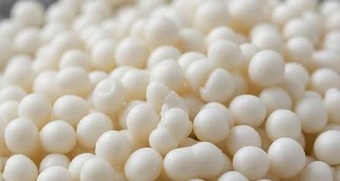
The polyacetal market is becoming more specialized. Buyers still choose polyoxymethylene (POM) for gears, clips, bearings and other precision parts, but purchasing decisions increasingly extend beyond strength and wear resistance. Vehicle production is shifting geographically, manufacturers are specifying grades for particular emission or medical requirements, and suppliers are offering POM with a documented lower production-stage carbon footprint.
Asia’s Automotive Output Shapes the POM Demand Outlook
Automotive manufacturing remains an important outlet for polyacetal components. In 2025, global vehicle production rose 3.9% to 96.4 million units. Asia-Pacific produced about 59.2 million, more than 61% of the world total, while Europe produced 17.2 million and the Americas 18.7 million. China alone manufactured 34.53 million vehicles. (Vehicle output is a downstream demand indicator, not a measure of POM production or consumption. Regional figures are rounded.)
This concentration gives POM suppliers a strong reason to serve Asian vehicle makers close to their design and manufacturing operations. It also makes regional demand patterns more useful than a single global automotive growth figure when assessing the polyacetal market.
Low-Emission Grades Gain Ground in Vehicle Interiors
POM suppliers are refining grades for specific automotive requirements. In 2025, Celanese and Li Auto introduced Hostaform POM XAP3 for vehicle cabin components, focusing on very low material emissions. The development illustrates a shift toward grades that meet both mechanical and cabin-air specifications, rather than treating all automotive POM as interchangeable.
Demand also extends beyond interiors. Fuel-system parts require their own combination of dimensional stability and material compatibility. In June 2026, Celanese announced that Aisan had adopted its POM ECO-C, made using captured-CO₂-derived feedstock, for fuel pump modules supplied to a North American automaker.
Lower-Carbon Polyacetal Moves into Commercial Products
The most visible supply-side trend is the expansion of lower-carbon POM options. At CHINAPLAS 2026, Delrin introduced a grade for which it reports a zero cradle-to-gate product carbon footprint, alongside grades with stated reductions of up to 60% or 20% through different feedstock and electricity approaches. Cradle-to-gate covers production through the factory gate; it does not describe the part’s full life-cycle emissions.
BASF has also shown biomass-balanced Ultraform applications with an approximately 70% lower product carbon footprint than its conventional Ultraform reference while maintaining comparable performance. These supplier figures use specific products and accounting methods, so buyers should compare the documentation behind each claim.
Medical & Precision Grades Add Value
Medical devices offer another route for specialized POM. Delrin’s 2026 SC637 grade targets moving parts in inhalers, injector pens and similar devices, combining low-friction performance with additional manufacturing controls and application-specific testing. For these uses, consistency and the suitability of a particular grade matter more than the generic label “polyacetal.”
The 2026 polyacetal market therefore combines uneven regional demand with growing competition in specialized and lower-carbon materials.
Find a closer view of capacity, production, trade, prices and the outlook to 2035, in the in-demand research report “Polyacetal (Polyoxymethylene, POM) 2026 World Market Outlook and Forecast up to 2035”.
Follow this Market Publishers catalogue to find a collection of research studies covering country and regional markets for polyacetal.
At Market Publishers you’ll find a rich collection of insightful research studies featuring various markets. Simply use the search form to find the report you need.
CONTACTS
The Market Publishers, Ltd.
Natalie Aster
Tel: +357 96 030 922
[email protected]
MarketPublishers.com
Analytics & News