Polyvinylidene Fluoride: A High-Performance Polymer Shaping the Future of Advanced Materials
17 Jul 2026 • by Natalie Aster
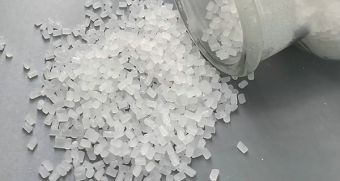
Polyvinylidene fluoride, commonly known as PVDF, has moved from specialized industrial applications into the center of the advanced materials economy. Its combination of chemical resistance, electrochemical stability, mechanical strength, weatherability, purity, and thermoplastic processability makes it difficult to replace in lithium-ion batteries, semiconductor manufacturing, water-treatment membranes, architectural coatings, chemical-processing equipment, and flexible electronics.
Demand is supported by several rapidly expanding industries. The global PVDF sector is slated to add approximately USD 322.1 million between 2025 and 2029, representing a compound annual growth rate of around 6.5%. Electric-vehicle battery production is identified as one of the principal growth engines.
Why PVDF Delivers Exceptional Material Performance
PVDF is a semi-crystalline fluoropolymer produced from vinylidene fluoride. Strong carbon–fluorine bonds help the material withstand aggressive chemicals, ultraviolet exposure, oxidation, radiation, abrasion, and demanding electrochemical environments.
Unlike some high-performance fluoropolymers that require specialized processing, PVDF can be extruded, injection-molded, welded, coated, and formed using established industrial equipment. Commercial PVDF grades offer high purity, strong flame and smoke performance, excellent electrochemical stability, and long-term temperature ratings reaching approximately 150°C for selected applications.
These properties allow manufacturers to produce pipes, valves, pumps, films, wire insulation, membranes, powder coatings, battery binders, and precision components from the same broad polymer family.
Lithium-Ion Batteries Are Accelerating PVDF Consumption
PVDF is widely used as a cathode binder in lithium-ion batteries. It holds active electrode particles and conductive additives together while maintaining adhesion to the metallic current collector. PVDF can also be applied as a separator coating, improving the interface between the separator and electrode while supporting longer battery life and higher energy density.
Every increase in battery-cell manufacturing expands the addressable market for battery-grade PVDF. Producers are therefore developing higher-adhesion grades that reduce the amount of binder required while supporting high-nickel cathodes, lithium iron phosphate batteries, thicker electrodes, and faster cell-production processes.
Semiconductor & Clean-Energy Investment Expands PVDF Applications
Semiconductor plants use PVDF piping and fluid-handling components because chip fabrication requires exceptionally pure materials capable of transporting corrosive chemicals without introducing contaminants. This application is becoming increasingly important as global semiconductor sales are gaining momentum.
PVDF also supports renewable-energy infrastructure through photovoltaic films, protective coatings, electrical insulation, and chemically resistant components. Global renewable capacity additions are forecast to approach 935 GW annually by 2030. Solar photovoltaic and wind projects are expected to represent 95% of renewable capacity additions through the end of the decade.
Piezoelectric PVDF Enables Flexible Sensors & Smart Surfaces
PVDF has another capability that distinguishes it from conventional engineering plastics: selected crystalline phases exhibit piezoelectric, pyroelectric, and ferroelectric behavior. When mechanically deformed, properly processed PVDF films can generate an electrical response.
Researchers are using this characteristic to develop lightweight pressure sensors, wearable health monitors, structural-condition sensors, actuators, energy-harvesting films, electronic skin, and intelligent biomedical devices. Recent materials research continues to improve the electroactive beta phase of PVDF through nanofillers, electrospinning, controlled stretching, and advanced phase-engineering techniques.
Looking Forward
PVDF’s future will be defined by applications in which failure, corrosion, contamination, or material degradation cannot be tolerated. Battery electrification, semiconductor fabrication, high-purity chemical processing, membrane filtration, renewable energy, and flexible electronics all require materials that combine durability with precise functional performance.
As manufacturers introduce lower-binder battery formulations, recyclable membrane systems, waterborne coatings, specialized copolymers, and higher-output piezoelectric composites, polyvinylidene fluoride will evolve beyond its traditional role as a corrosion-resistant polymer. It is becoming a strategic material for the electrified, connected, and resource-efficient industrial economy.
Follow this page to find Market Publishers’ collection of in-demand research reports covering various sectors of the polyvinylidene fluoride market.
Furthermore, Market Publishers offers a heap of insightful research studies covering the chemicals and petrochemicals market; find it in the Chemicals & Petrochemicals Market Reports Catalogue.
CONTACTS
The Market Publishers, Ltd.
Natalie Aster
Tel: +357 96 030 922
[email protected]
MarketPublishers.com
Analytics & News