Polyvinyl Alcohol in Modern Manufacturing: A Versatile Polymer in High-Performance Industrial Formulations
26 May 2026 • by Natalie Aster
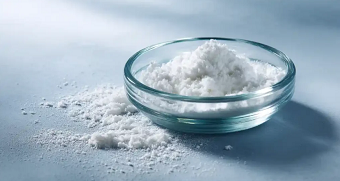
Polyvinyl alcohol, widely known as PVA or PVOH, has become one of the most strategically important specialty polymers in modern manufacturing. Its value comes from an uncommon combination of water solubility, film-forming strength, adhesive performance, chemical resistance, emulsifying capacity, and compatibility with multiple industrial formulation systems. In a manufacturing environment increasingly focused on lightweight materials, controlled release, lower-waste processing, and cleaner chemistries, polyvinyl alcohol is no longer a niche additive. It is a performance enabler across packaging, textiles, paper, construction chemicals, ceramics, adhesives, coatings, pharmaceuticals, agrochemicals, and advanced films.
The commercial outlook reflects this expanding role. The global polyvinyl alcohol market was estimated at USD 1.66 billion last year, and is expected to rise up to around USD 2.53 billion by 2034, expanding at a 4.9% CAGR. The demand volume is estimated at around 1.46 million tons in 2026, and is projected to reach 1.67 million tons by 2031.
The strongest momentum is expected in film-based and water-soluble applications. PVA films alone are projected to grow from USD 449.5 million in 2024 to USD 720.1 million by 2033, supported by advances in polymer modification and coating technologies. Water-soluble packaging films, a broader category where PVA is highly relevant, are slated to increase from USD 2.6 billion in 2025 to USD 4.3 billion by 2032.
Why Polyvinyl Alcohol Works in High-Performance Formulations
The technical strength of polyvinyl alcohol lies in its tunability. By adjusting molecular weight and degree of hydrolysis, manufacturers can influence viscosity, solubility, tensile strength, adhesion, barrier properties, and thermal behavior. This makes PVA suitable for both commodity-scale production and highly engineered formulations.
In adhesives, PVA improves bond strength, flexibility, and wet tack in paper converting, woodworking, packaging, and labeling. In textile sizing, it forms a protective film around yarns, reducing breakage and improving weaving efficiency. In paper coatings, it supports surface strength, printability, oil resistance, and pigment binding. In ceramics and construction materials, it acts as a binder that improves green strength, workability, and dimensional consistency before firing or curing.
Manufacturing Applications Driving Industrial Demand
In packaging, PVA’s water solubility renders it ideal for detergent pods, unit-dose cleaning products, agrochemical sachets, and controlled-release systems. Its film-forming ability allows manufacturers to create thin, strong, dissolvable films that reduce direct handling of concentrated chemicals.
In coatings and emulsions, PVA functions as a stabilizer and protective colloid, helping control particle dispersion and film uniformity. In pharmaceuticals and healthcare, it is used in tablet coatings, eye drops, hydrogels, and biomedical materials due to its biocompatibility and controlled hydration behavior. In electronics and specialty manufacturing, PVA can support temporary films, release layers, and precision processing aids.
Sustainability & Performance Are Reshaping PVA Formulation Strategy
Polyvinyl alcohol is gaining attention because it aligns with two manufacturing priorities that rarely move together: functional performance and material efficiency. It enables concentrated dosing, reduces overuse of active ingredients, supports lightweight packaging formats, and allows safer handling of chemicals in pre-measured soluble units.
However, modern formulation work is becoming more precise. Manufacturers are selecting PVA grades based on dissolution temperature, moisture sensitivity, end-use environment, compatibility with active ingredients, and processing conditions. This grade-specific approach is especially important in detergent films, agrochemical delivery, paper coatings, and industrial binders, where small formulation changes can affect solubility, strength, shelf life, and production speed.
The Future of Polyvinyl Alcohol in Industrial Manufacturing
The next phase of PVA growth will be shaped by high-performance films, specialty adhesives, bio-compatible materials, advanced coatings, and controlled-release formulations. As manufacturers push for cleaner processes and more efficient material systems, polyvinyl alcohol will remain a valuable polymer platform because it can be engineered for strength, solubility, adhesion, flexibility, and formulation stability.
For industrial buyers, product developers, and chemical formulators, PVA offers more than a functional additive. It provides a practical route to smarter manufacturing: less waste, better process control, stronger end-product performance, and broader design freedom across demanding applications.
Related Reports:
- Polyvinyl Alcohol (PVOH): 2026 World Market Outlook and Forecast up to 2035
- Polyvinyl Alcohol (CAS 25213-24-5) Market Research Report 2026
- Polyvinyl alcohol (CAS 39-05-3) Market Research Report 2026
- POLYVINYL ALCOHOL (CAS 9002-89-5) Market Research Report 2026
- Polyvinyl alcohol Market Research Report 2026
- Polyvinyl Alcohol Market Size, Share & Trends Analysis Report By End Use (Paper, Food Packaging, Construction, Electronics), By Region (North America, Europe, Asia Pacific), And Segment Forecasts, 2026 - 2033
Market Publishers boasts a rich collection of insightful research studies covering the chemicals and petrochemicals market, find it in the Chemicals & Petrochemicals Market Reports Catalogue.
CONTACTS
The Market Publishers, Ltd.
Natalie Aster
Tel: +357 96 030 922
[email protected]
MarketPublishers.com
Analytics & News