Agricultural Leaders: Top 5 Apricot-Producing Countries
16 Jun 2025 • by Natalie Aster

Apricots, known for their golden hue and sweet-tart flavor, are more than just a summer delicacy – they represent a critical component of agricultural economies across several regions. While the fruit is grown in many parts of the world, a select group of countries dominates global apricot production through a blend of favorable climate, cultivated expertise, and strategic market development.
Let’s explore the five countries that take the lead in apricot production and understand what makes them agricultural giants in this niche but essential sector.
Turkey: The Undisputed Champion of Apricots
When it comes to apricots, Turkey reigns supreme. The country’s relationship with this fruit runs deep, especially in the region of Malatya, which has become globally recognized as the heart of apricot cultivation. The land’s unique climate, characterized by hot, dry summers and cold winters, offers the perfect environment for producing high-quality apricots with exceptional flavor and sugar concentration.
What sets Turkey apart isn’t just the volume of its harvests but also its dominance in the dried apricot sector. Malatya’s orchards produce more than just fresh fruit; they generate a substantial share of the world’s dried apricot exports. These are shipped across Europe, the Middle East, and North America, making Turkey the leading player both in production and trade. With an annual output of around 800,000 metric tons, Turkey has not only maintained its leadership but continues to expand its influence with robust agricultural policies and export strategies.
Uzbekistan: Central Asia’s Rising Force
Uzbekistan has quietly but confidently positioned itself as a major contender in apricot production. Over the past two decades, the country has scaled its output, blending traditional farming methods with emerging agricultural technologies. Regions like the Fergana Valley have proven especially fertile, supporting the cultivation of sweet, juicy apricots that are increasingly sought after in international markets.
Unlike some countries that focus primarily on dried fruit, Uzbekistan has become a prominent supplier of fresh apricots, particularly to neighboring nations such as Russia and Kazakhstan. This growing demand has encouraged investment in cold storage and logistics infrastructure, allowing the country to improve post-harvest quality and reduce waste. Currently producing about 500,000 metric tons annually, Uzbekistan stands as a formidable player in the apricot world, with plans to expand its export footprint even further.
Iran: A Legacy Rooted in Tradition
In Iran, apricots are not just a crop, they’re a part of cultural heritage. The fruit has been cultivated in the region since ancient times, and the country continues to honor that legacy with a wide variety of apricot cultivars spread across different provinces, from East Azerbaijan to Fars.
What distinguishes Iran is its diversity. Apricots grown here range from sweet and succulent varieties to those with a sharp tang, catering to both domestic and international preferences. These apricots find their way into local kitchens in the form of jams, juices, and traditional sweets, while also being exported in both fresh and dried forms. Though the country faces a number of challenges such as water scarcity, innovations in irrigation and resource management have helped maintain an annual output of over 300,000 metric tons.
Algeria: North Africa’s Apricot Heartland
Algeria has steadily earned its reputation as one of the leading apricot-producing countries, particularly within the African and Mediterranean regions. The country’s production centers are spread across high-altitude plains and mountainous regions, especially around the Aurès Mountains, where the climate is uniquely suited for apricot cultivation.
What gives Algeria a competitive edge is the quality of its fresh apricots, which are highly prized for their size, color, and flavor. The fruit is a staple in Algerian cuisine, frequently used in desserts, beverages, and traditional dishes. In recent years, government-backed agricultural initiatives have encouraged increased cultivation, helping push national production levels to nearly 200,000 metric tons. While most of the produce is consumed domestically, Algeria’s presence in regional export markets is growing steadily.
Italy: Europe’s Finest Apricots
Italy is Europe’s leading apricot producer, a distinction built on generations of experience and a commitment to quality. From Sicily to Emilia-Romagna, Italian growers have cultivated apricots with precision and care, focusing on varieties that offer rich flavor, firm texture, and appealing aesthetics.
Unlike some of the larger producers that prioritize volume, Italy emphasizes premium quality and freshness. This focus has made Italian apricots a favorite in high-end European markets. The country also benefits from well-developed agricultural technology and sustainable practices that help maximize yields without compromising environmental health. Producing between 150,000 and 200,000 metric tons annually, Italy not only satisfies domestic demand but also exports considerable quantities to other EU countries.
Global Apricot Trends and Market Impact
The global apricot market is not solely defined by these five nations, but they collectively shape the supply chain and set quality benchmarks. Smaller producers like Spain, Pakistan, Syria, and India also play vital roles in regional markets, yet they often look to the practices of the top-tier countries for guidance and inspiration.
Apricots: Global Production Volume 2005-2024 (in million metric tons)
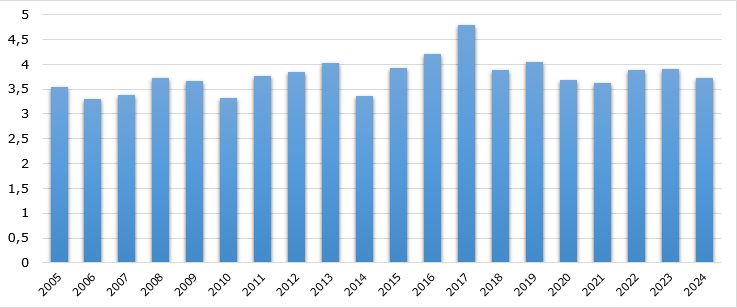
Apricots continue to see strong demand globally, not only for their taste but also for their health benefits. Rich in vitamin A, beta-carotene, fiber, and antioxidants, apricots are increasingly included in health-conscious diets, functional food products, and even skincare items.
As consumer awareness grows, so does the pressure on producers to innovate, from improving harvest efficiency to enhancing fruit quality and shelf life. Cold chain infrastructure, precision farming, and export logistics have become key differentiators in the global apricot economy.
Final Thoughts: A Fruit of Strategic Importance
The top apricot-producing countries – Turkey, Uzbekistan, Iran, Algeria, and Italy – stand out not just for their output but for their commitment to sustainable, high-quality agriculture. Each has carved out a niche in the global market, supported by unique climatic conditions, historical expertise, and strategic investment.
As global demand for apricots continues to rise, these countries will remain at the forefront, shaping trends, influencing prices, and setting quality standards for years to come. Whether dried in bulk for global export or freshly picked for local tables, the humble apricot represents the perfect blend of tradition, innovation, and economic value in modern agriculture.
Market Publishers boasts a rich collection of in-demand research reports covering different markets, use our search form to find the report you need.
CONTACTS
The Market Publishers, Ltd.
Natalie Aster
Tel: +357 96 030 922
[email protected]
MarketPublishers.com
Analytics & News