Acrylonitrile: A Market Shaped by Oversupply & Advanced Materials
17 Jul 2026 • by Natalie Aster
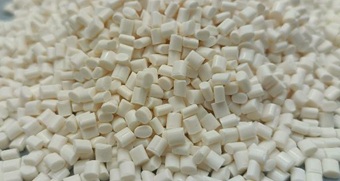
The global acrylonitrile (ACN) market is navigating a difficult transition in 2026. Capacity expansion in China is intensifying competition, while demand from acrylonitrile-butadiene-styrene (ABS), acrylic fibers, nitrile rubber and carbon fiber continues to evolve with automotive, electronics and advanced-material applications. At the same time, volatile propylene and ammonia costs are creating pronounced regional differences in production economics.
Global acrylonitrile production exceeds 6 million metric tons annually, but almost all commercial material is still manufactured from fossil feedstocks. The industry's immediate challenge is therefore balancing abundant conventional capacity against increasingly sophisticated downstream demand and emerging pressure for lower-carbon materials.
China's Capacity Expansion Reshapes the Acrylonitrile Market
China remains the most disruptive force in the global ACN supply balance. Four Chinese acrylonitrile plants with combined capacity of approximately 1.05 million tonnes per year entered operation in 2025. Although China's ABS capacity simultaneously increased by around 2.23 million tonnes per year, additional ACN supply expanded faster than downstream consumption. This imbalance is pushing Chinese suppliers more aggressively into export markets and increasing pressure on producers elsewhere in Asia. ICIS had already identified Asian ACN supply growth outpacing demand as a major structural issue, with new Chinese capacity weakening regional margins. Further additions mean operating rates, shutdowns and export volumes will remain critical indicators for acrylonitrile prices in 2026.
ABS Demand Remains Critical but Faces Its Own Oversupply Problem
ABS is one of the largest downstream outlets for acrylonitrile, linking ACN demand directly to automobiles, appliances, electronics and consumer goods.
However, China's ABS industry is itself dealing with surplus capacity. During January-April 2026, Chinese ABS exports surged by almost 90% year over year to approximately 170,000 tonnes, as producers sought overseas markets for excess material. Despite these exports, domestic oversupply continued to pressure margins and prices.
For ACN producers, this creates a complex demand environment: expanding ABS capacity supports theoretical feedstock requirements, but low utilization rates can prevent installed capacity from translating into equivalent acrylonitrile consumption.
Propylene & Ammonia Costs Drive ACN Price Volatility
Feedstock economics remain central to the acrylonitrile market outlook. Most ACN is manufactured using the ammoxidation of propylene, making propylene and ammonia prices major determinants of production costs. Supply disruptions or higher crude and natural-gas costs can therefore quickly affect producer margins. During the second quarter of 2026, acrylonitrile prices reached approximately USD 1,088 per tonne in China and USD 1,316 per tonne in Germany in June, supported by improved downstream purchasing and firmer supplier pricing. Regional feedstock availability increasingly determines which plants can remain competitive during periods of oversupply.
Carbon Fiber Creates a High-Value Growth Opportunity
While ABS and acrylic fibers dominate volumes, carbon fiber represents one of ACN's most strategically attractive applications. Polyacrylonitrile (PAN) is the principal precursor used for high-performance carbon fibers employed in aerospace, wind-energy systems, automotive lightweighting and other advanced composites. This segment matters because its growth is connected to performance requirements rather than commodity plastics consumption alone. Aerospace production, larger wind turbines and lightweight structural materials could gradually increase the importance of carbon-fiber-grade acrylonitrile within the broader product mix.
Bio-Based Acrylonitrile Moves Closer to Commercialization
One of the industry's most significant technological developments is the emergence of bio-based ACN. In 2026, the construction of the world's first demonstration plant for 100% bio-based acrylonitrile (using plant-derived glycerol instead of conventional fossil feedstocks) was completed. The project is designed to demonstrate industrial-scale manufacturability before development of a commercial facility.
The technology is particularly relevant to carbon fiber because conventional PAN-based composites carry embedded emissions originating from fossil-derived acrylonitrile. A renewable drop-in ACN could reduce upstream carbon intensity without requiring major changes to downstream manufacturing. Bio-ACN is already being evaluated for carbon-fiber applications serving aerospace, automotive, energy and consumer products.
Final Thoughts
The global acrylonitrile market is becoming increasingly divided between volume growth and profitability. China continues adding production capacity, strengthening its influence on Asian and international trade while forcing higher-cost producers to confront lower utilization and compressed margins.
Downstream demand is also becoming more differentiated. ABS will remain a major consumption pillar, but automotive and electronics cycles will determine operating rates. Acrylic fibers provide another established outlet, while carbon fiber offers higher-value exposure to aerospace, renewable energy and lightweight composites.
The most important longer-term development may be the transition beyond conventional propylene-based production. As bio-based acrylonitrile progresses toward commercialization, the market could eventually differentiate ACN not only by price, purity and location, but also by feedstock origin and carbon footprint. In the near term, however, Chinese overcapacity, downstream utilization and volatile propylene and ammonia costs will remain the forces with the greatest influence on global acrylonitrile economics.
Related Reports:
- Acrylonitrile (ACN): 2026 World Market Outlook and Forecast up to 2035
- Acrylonitrile Market Research Report 2026
- ACRYLONITRILE (CAS 107-13-1) Market Research Report 2026
- Global Acrylonitrile Market 2026 by Manufacturers, Regions, Type and Application, Forecast to 2032
- Global Recycled Acrylonitrile Market Growth 2026-2032
- Global High Purity Acrylonitrile Market Growth 2026-2032
- Acrylonitrile Market - 2026-2035
Market Publishers boasts a rich collection of insightful research studies covering the chemicals and petrochemicals market, find it in the Chemicals & Petrochemicals Market Reports Catalogue.
CONTACTS
The Market Publishers, Ltd.
Natalie Aster
Tel: +357 96 030 922
[email protected]
MarketPublishers.com
Analytics & News
29 Oct 2026
Where Is the Diagnostics Market Heading? 10 Promising Sectors to Watch
26 Oct 2026
Weekly Chemical Market Tracker: Update for October 19-26, 2026
23 Oct 2026
Military Aviation Market: Recent Developments Shaping 2026
21 Oct 2026
New Era of Cryptocurrency: The Rise of Regulated Digital Finance
19 Oct 2026
Weekly Chemical Market Tracker: Update for October 12–19, 2026