The Future of Construction Industry: High-Growth Sectors to Watch in the Next Decade
06 Mar 2026 • by Natalie Aster
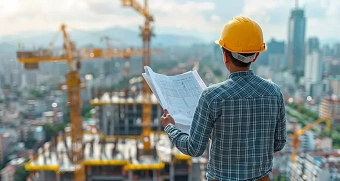
The global building and construction industry is undergoing a structural transformation unlike anything seen in previous decades. Rapid urbanization, rising infrastructure demand, digital engineering, and climate-driven regulatory policies are fundamentally changing how buildings are designed, constructed, and managed. According to industry forecasts, the global construction market surpassed USD 9 trillion in 2024 and is projected to exceed USD 14 trillion by 2034, supported by massive investments in transportation infrastructure, housing, smart cities, and industrial facilities.
Governments across North America, Europe, Asia-Pacific, and the Middle East are launching major infrastructure initiatives to modernize aging transportation systems and accelerate energy transition projects. At the same time, private investment is flowing into new construction segments such as data centers, green buildings, and digitally enabled smart infrastructure. As digital technologies integrate deeper into construction workflows, new high-growth subsectors are emerging that are expanding far faster than the traditional construction industry.
These rapidly evolving sectors are reshaping the entire built environment. From advanced materials and artificial intelligence to modular building systems and sustainable construction technologies, the next decade will be defined by innovation across multiple construction domains.
3D Printing Construction Technology
One of the most revolutionary developments in modern construction is the adoption of additive manufacturing technologies. Large-scale 3D printers capable of producing entire structural components are transforming the way buildings are fabricated.
Unlike conventional construction methods that require extensive labor and large quantities of raw materials, 3D printing enables structures to be produced layer by layer using specialized concrete mixtures and automated robotic systems. This process significantly reduces waste while accelerating construction timelines.
The global 3D printing construction market, which was valued at roughly USD 391 million in 2024, is projected to expand dramatically and could surpass USD 23 billion by 2030. The technology is already being used to construct residential homes, commercial facilities, and disaster relief housing. In regions facing severe housing shortages, entire communities are being developed using additive construction techniques that allow homes to be completed in a matter of days rather than months.
Smart Building Technologies
Buildings are no longer passive physical structures. Increasingly, they are becoming digitally connected environments capable of responding to occupants and optimizing their own performance.
Smart building technologies combine sensors, automation systems, artificial intelligence, and Internet of Things devices to create highly efficient spaces. These systems continuously monitor lighting conditions, temperature levels, energy usage, and security parameters. By analyzing this data in real time, buildings can automatically adjust operations to improve efficiency and comfort.
The global smart buildings market is forecast to exceed USD 427 billion by 2035, growing rapidly as cities transition toward intelligent urban infrastructure. Large commercial developments, office towers, hospitals, and airports are now being designed with integrated building management platforms that centralize control of lighting, heating, ventilation, and access control systems.
Beyond energy efficiency, smart buildings also support predictive maintenance strategies. Sensors embedded throughout building systems detect early signs of mechanical failure, allowing facility managers to address issues before costly breakdowns occur.
Building Information Modeling (BIM)
Building Information Modeling has become one of the most important digital tools in modern construction. BIM allows architects, engineers, and contractors to collaborate using a shared digital model that contains detailed information about every element of a building.
Instead of working with isolated drawings and fragmented data, project stakeholders can visualize the entire construction process in a virtual environment before ground is ever broken. Structural systems, electrical networks, plumbing layouts, and mechanical infrastructure are all integrated within a single digital model.
The BIM software market exceeded USD 5.9 billion in 2024 and is projected to grow at nearly 19% annually as governments increasingly require BIM-based project planning for public infrastructure initiatives. By detecting design conflicts early and improving collaboration between teams, BIM dramatically reduces costly construction errors and project delays.
Modular & Prefabricated Construction
Industrialized construction methods are rapidly gaining popularity as developers seek faster and more cost-effective ways to build. Prefabricated construction involves manufacturing major structural components in controlled factory environments before transporting them to the construction site for assembly. Entire building sections (including walls, floors, and even complete room modules) can be produced off-site with high levels of precision. This approach significantly reduces project timelines while improving construction quality. Because many tasks occur in factory settings, weather delays and on-site labor shortages have far less impact on project schedules.
Modular construction is increasingly used in residential apartment complexes, healthcare facilities, hotels, and educational institutions. In many projects, modular techniques can reduce construction schedules by as much as 30 to 50%, enabling developers to complete projects faster while maintaining high quality standards.
Green Building Materials
Environmental sustainability has become a defining priority in modern construction. Buildings account for nearly 40% of global carbon emissions, largely due to the production of materials such as cement and steel as well as energy consumption during building operation.
In response, developers and material manufacturers are investing heavily in environmentally friendly construction materials. Engineered timber, recycled metals, low-carbon concrete, and bio-based insulation materials are gaining traction as sustainable alternatives to traditional products.
The global green building materials market, valued at approximately USD 408 billion in 2024, is expected to surpass USD 1.5 trillion by 2035. Governments are introducing strict energy efficiency standards and carbon reduction targets that are accelerating the adoption of sustainable building practices across residential, commercial, and industrial projects.
Advanced Construction Additives
Innovations in chemical engineering are leading to the development of specialized additives that enhance the performance of construction materials. These additives improve characteristics such as curing time, strength, durability, and resistance to environmental stress. In large-scale infrastructure projects, advanced additives allow engineers to tailor concrete and other materials to meet specific performance requirements.
The construction additives market, valued at roughly USD 32.7 billion in 2024, is projected to grow to nearly USD 56.9 billion by 2032. As infrastructure projects become more complex and climate conditions more challenging, high-performance materials are becoming essential for ensuring long-term structural integrity.
Robotics & Digital Construction Technologies
Automation technologies are rapidly entering construction sites, fundamentally changing how projects are executed. Robotic equipment capable of performing tasks such as bricklaying, welding, and demolition is improving productivity while reducing reliance on manual labor. Drones equipped with high-resolution cameras and LiDAR sensors are now widely used for site surveying and progress monitoring.
At the same time, digital twin technology allows engineers to create virtual replicas of buildings that simulate performance under real-world conditions. These digital models enable project teams to identify design issues and optimize operational efficiency long before construction begins.
The integration of robotics, drones, and digital modeling technologies is creating a new generation of highly automated construction environments that will define the future of the industry.
Looking Ahead
The building and construction industry is entering a new era shaped by technological innovation, sustainability requirements, and unprecedented global infrastructure demand. Traditional construction methods are gradually giving way to digitally driven processes, automated production systems, and advanced materials that significantly improve efficiency and environmental performance. Companies that adopt these technologies early will gain a substantial competitive advantage as the industry continues to evolve.
Over the next decade, the fastest-growing sectors within construction will be those that combine digital intelligence, sustainable materials, and industrialized building techniques. These innovations will not only reshape construction practices but will also determine how cities, infrastructure networks, and communities are built for generations to come.
Market Publishers boasts a rich collection of insightful research studies covering the construction market, find it in the Construction Market Research Reports & Industry Analysis Catalogue.
CONTACTS
The Market Publishers, Ltd.
Natalie Aster
Tel: +357 96 030 922
[email protected]
MarketPublishers.com
Analytics & News
29 Oct 2026
Where Is the Diagnostics Market Heading? 10 Promising Sectors to Watch
26 Oct 2026
Weekly Chemical Market Tracker: Update for October 19-26, 2026
23 Oct 2026
Military Aviation Market: Recent Developments Shaping 2026
21 Oct 2026
New Era of Cryptocurrency: The Rise of Regulated Digital Finance
19 Oct 2026
Weekly Chemical Market Tracker: Update for October 12–19, 2026