
Diethyl Carbonate in Lithium-Ion Batteries: Powering the EV Revolution
19 Feb 2026 • by Natalie Aster
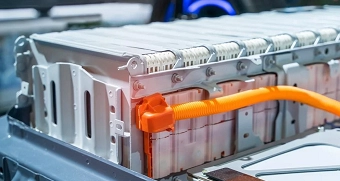
The electric vehicle transition is no longer speculative – it is an industrial reality. In 2023, global EV sales exceeded 14 million units, accounting for nearly one in five new cars sold worldwide, according to the International Energy Agency. Battery manufacturing capacity crossed 2.6 TWh globally and continues expanding at unprecedented speed. Beneath this scale-up lies a highly optimized chemical system that determines range, safety, charge time, and durability. At the center of that system is Diethyl Carbonate (DEC).
While cathode chemistries such as NMC 811 and LFP receive attention, the electrolyte solvent matrix determines how efficiently lithium ions move. Diethyl carbonate is a primary linear carbonate solvent in lithium-ion battery electrolytes. Its function is not peripheral; it directly governs ionic transport, viscosity, electrochemical stability, and temperature resilience inside every EV battery pack.
Molecular Engineering: Why Diethyl Carbonate Defines Electrolyte Performance
Diethyl carbonate is a low-viscosity organic carbonate with a high oxidation threshold and excellent compatibility with lithium salts. In battery electrolytes, it is blended with cyclic carbonates like ethylene carbonate to balance conductivity and structural stability.
Its low viscosity significantly reduces internal resistance inside the electrolyte. As EV charging infrastructure advances toward 350 kW and beyond, ionic mobility becomes critical. DEC enables rapid lithium-ion transport between anode and cathode without excessive heat generation. This directly supports faster charging cycles and minimizes energy loss during high-current operation.
Equally important is DEC’s wide electrochemical stability window. Modern EV batteries increasingly operate above 4.2 V, particularly in high-nickel cathode systems. Diethyl carbonate resists oxidative decomposition at these voltages, maintaining electrolyte integrity and extending cycle life.
Global EV Expansion & Rising Demand for Diethyl Carbonate
The acceleration of EV production has transformed electrolyte solvents into strategic materials. Companies such as CATL, LG Energy Solution, and Panasonic are commissioning gigafactories across Asia, Europe, and North America. Each gigawatt-hour of battery output requires substantial volumes of electrolyte formulations containing diethyl carbonate.
Battery manufacturing capacity is projected to exceed 5 TWh by 2030. Electrolyte demand is growing at a double-digit compound annual rate, closely mirroring EV adoption. As governments push for localized battery supply chains, domestic production of carbonate solvents has become a strategic priority, particularly in the United States and the European Union.
High-Voltage Stability & Fast-Charging Architecture
The next generation of EV platforms emphasizes ultra-fast charging and higher energy density. Silicon-enhanced anodes and high-nickel cathodes increase energy storage but impose greater stress on electrolytes. Diethyl carbonate contributes to stable solid electrolyte interphase (SEI) formation on graphite and silicon surfaces, protecting anodes from rapid degradation.
Under high charging currents, electrolyte viscosity plays a decisive role in thermal management. DEC’s fluidity ensures consistent ion transport even under aggressive load conditions. This reduces polarization effects and improves battery longevity under real-world driving cycles.
Low-temperature operation is another area where DEC delivers a measurable advantage. In sub-zero climates, electrolyte thickening can slow ion mobility and reduce available power. Diethyl carbonate maintains flow characteristics at temperatures well below freezing, supporting reliable cold-weather EV performance.
Safety & Thermal Behavior in Advanced Battery Systems
Battery safety remains a regulatory and engineering priority. Electrolyte composition directly influences thermal stability and gas generation during abuse conditions. Diethyl carbonate provides balanced volatility and controlled flammability relative to other linear solvents.
Its interaction with electrolyte additives enhances the formation of protective interphases, reducing parasitic reactions that contribute to gas buildup. As battery packs increase in capacity and voltage, solvent stability becomes increasingly critical to overall system safety.
Sustainability & Circular Economy Integration
Sustainability targets within the EV industry extend beyond tailpipe emissions. Battery lifecycle management now includes recycling mandates and carbon footprint reduction across supply chains.
Diethyl carbonate has a comparatively favorable environmental profile among organic solvents. Advances in hydrometallurgical battery recycling processes aim to recover not only lithium and cobalt but also electrolyte solvents. As closed-loop systems scale, reclaimed DEC could contribute to lower production emissions and improved resource efficiency.
The Road to 2030: Diethyl Carbonate in the Next Wave of EV Innovation
Solid-state battery technologies continue to advance, yet liquid electrolyte lithium-ion batteries will dominate the market throughout the decade. Even emerging localized high-concentration electrolyte systems rely on linear carbonate solvents to optimize viscosity and cost efficiency.
With EV fleets expected to exceed 300 million vehicles globally by 2030, battery energy density improvements and rapid-charging architectures will continue pushing electrolyte performance boundaries. Diethyl carbonate remains structurally embedded in this evolution.
Its molecular characteristics (low viscosity, high electrochemical stability, compatibility with advanced cathode systems, and scalable production) position it as a cornerstone of the EV revolution.
Final Thoughts: A Foundational Molecule in a Transformational Industry
The electrification of transport depends on more than vehicle design and battery capacity. It depends on molecular precision within the electrolyte system. Diethyl carbonate enables the ionic conductivity, voltage stability, and thermal balance required for modern EV batteries to perform reliably at scale.
As global battery production expands and performance expectations intensify, DEC will continue powering electric mobility from within – quietly, efficiently, and indispensably.
Market Publishers boasts a rich collection of insightful research studies covering the chemicals and petrochemicals market, find it in the Chemicals & Petrochemicals Market Reports Catalogue.
CONTACTS
The Market Publishers, Ltd.
Natalie Aster
Tel: +357 96 030 922
[email protected]
MarketPublishers.com
Analytics & News
29 Oct 2026
Where Is the Diagnostics Market Heading? 10 Promising Sectors to Watch
26 Oct 2026
Weekly Chemical Market Tracker: Update for October 19-26, 2026
23 Oct 2026
Military Aviation Market: Recent Developments Shaping 2026
21 Oct 2026
New Era of Cryptocurrency: The Rise of Regulated Digital Finance
19 Oct 2026
Weekly Chemical Market Tracker: Update for October 12–19, 2026
