
Dioctyl Phthalate in Plastics: Why DOP Remains a Key Plasticizer Worldwide
16 Feb 2026 • by Natalie Aster
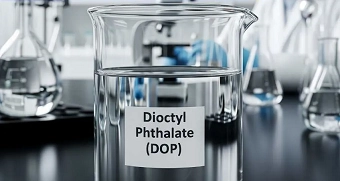
In a world increasingly shaped by advanced materials and evolving chemical technologies, Dioctyl Phthalate (DOP) continues to hold a defining place in the plasticizer market. Despite the introduction of numerous alternatives and growing regulatory scrutiny surrounding phthalates, DOP has remained indispensable. Its exceptional compatibility with PVC, long-standing formulation history, and favorable economic profile have positioned it as a mainstay for industries that rely on flexible plastics.
The global Dioctyl Phthalate (DOP) market has shown steady upward momentum, growing from approximately USD 2.5 billion in 2018 to an estimated USD 3.05 billion in 2024.
Global DOP market value during 2018-2024 (in USD billion)

This consistency highlights the irreplaceable value DOP provides to sectors such as construction, automotive, industrial manufacturing, and the electrical cable industry. Far from declining, demand for DOP remains robust, shaped by infrastructure expansion, manufacturing scale, and stable production economics.
The Chemical Advantage: Why DOP Performs Where Others Struggle
DOP’s molecular architecture (built around 2-ethylhexanol and phthalic anhydride) gives it outstanding plasticizing power. Its ability to diffuse uniformly into polymer chains results in plastics that bend, stretch, and withstand physical stress without cracking. This is particularly important in applications exposed to heat, mechanical pressure, and environmental wear. Because DOP has low volatility, it retains performance across long product lifecycles, an advantage that alternative plasticizers frequently fail to replicate with the same efficiency.
Manufacturers also value its processing stability. Production lines designed around DOP’s viscosity, fusion characteristics, and thermal profile consistently deliver uniform results, reducing waste and lowering risk – a critical factor in high-volume PVC processing facilities.
Industrial Dominance: How DOP Sustains Its Position Across Sectors
Across industries, DOP’s presence is nearly ubiquitous, especially in regions where industrial PVC use forms a foundational part of economic growth. From electrical cables to flexible vinyl films, from synthetic leather to automotive components, DOP enhances durability and performance in ways that keep production lines efficient and cost-competitive. Its excellent dielectric strength is essential for insulated wiring; its flexibility is vital for hoses and tubing; and its clarity makes it a preferred option for film producers who prioritize visual appearance as much as mechanical stability.
The construction sector remains one of the strongest supporters of DOP. Roofing membranes, vinyl flooring, and weather-resistant sealants rely heavily on plasticizers that offer consistency under variable climate conditions. Automotive manufacturing also leans on DOP for coatings, seals, upholstery materials, and protective sheathing that must endure extreme temperatures and mechanical vibrations.
These broad industrial needs create a demand profile that alternative plasticizers have not been able to fully replace, largely due to cost differences and performance trade-offs.
Economic & Global Dynamics: Understanding Market Stability
The economics behind DOP’s enduring use are straightforward. It offers a cost-to-performance ratio that remains highly attractive even as pricing for raw materials fluctuates. Feedstock availability, primarily 2-ethylhexanol and phthalic anhydride, continues to be stable, particularly in Asia-Pacific, where large-scale petrochemical production supports massive downstream plastics industries.
China, India, South Korea, and Southeast Asia form the backbone of global demand, not only because of manufacturing capacity but because PVC remains fundamental to infrastructure expansion. Buildings, transportation networks, and electrical grids all require flexible PVC components, keeping DOP demand consistently strong in these regions.
Market observers note that, while regulatory frameworks in Europe and North America have directed consumer markets toward non-phthalate alternatives, industrial and commercial applications remain largely unaffected. As a result, the global DOP market shows resilience and steady growth rather than decline.
Performance vs. Sustainability: The Slow Shift Toward Alternatives
In recent years, sustainability has begun to influence material choices across the plastics industry. Non-phthalate and bio-based plasticizers are gaining attention, particularly for consumer-facing products like toys, medical devices, and food packaging. Nonetheless, these alternatives often struggle to match the mechanical strength, flexibility retention, and thermal stability that DOP provides in heavy-duty environments.
Moreover, the cost of transitioning entire production systems to new plasticizers is significant. Reformulation can require new equipment calibrations, updated quality-control processes, and extensive testing. For many manufacturers operating on slim margins, the stability and familiarity of DOP remain preferable.
Thus, while innovation continues, DOP’s role is unlikely to diminish rapidly. Instead, a gradual diversification of plasticizer portfolios is occurring, with DOP firmly maintaining its position in applications where performance and reliability outweigh regulatory pressures.
Future Outlook: A Market Defined by Practicality and Performance
Looking ahead, the global DOP market is expected to expand alongside PVC consumption, particularly in emerging economies. Infrastructure modernization, increased electrification, and sustained industrial growth will continue to drive the need for reliable plasticizers. Even as sustainability goals push the industry toward alternatives, DOP’s established performance profile ensures that it will remain a dominant choice for applications requiring resilience, stability, and cost-effectiveness.
The future of plasticizers will likely involve a balancing act: incorporating greener materials where feasible while maintaining high-performance options like DOP where they are still essential. With this dynamic market landscape, DOP stands not as a relic of the past, but as a deeply entrenched, highly functional material that supports industries at the core of global development.
Market Publishers boasts a rich collection of insightful research studies covering the chemicals and petrochemicals market, find it in the Chemicals & Petrochemicals Market Reports Catalogue.
CONTACTS
The Market Publishers, Ltd.
Natalie Aster
Tel: +357 96 030 922
[email protected]
MarketPublishers.com
Analytics & News
29 Oct 2026
Where Is the Diagnostics Market Heading? 10 Promising Sectors to Watch
26 Oct 2026
Weekly Chemical Market Tracker: Update for October 19-26, 2026
23 Oct 2026
Military Aviation Market: Recent Developments Shaping 2026
21 Oct 2026
New Era of Cryptocurrency: The Rise of Regulated Digital Finance
19 Oct 2026
Weekly Chemical Market Tracker: Update for October 12–19, 2026
