
Polyphenylene Ether in Focus: A Core Material for Advanced Polymer Blends
23 Dec 2025 • by Natalie Aster
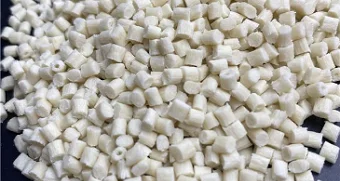
Polyphenylene Ether (PPE) has earned a distinct position among high-performance engineering polymers due to its exceptional balance of thermal stability, electrical insulation, and dimensional precision. In an era where advanced polymer blends define product reliability, efficiency, and miniaturization, PPE functions as a foundational material that elevates compound performance across automotive, electrical, electronics, and industrial sectors. Its role is no longer limited to being a standalone resin; instead, PPE has become a strategic backbone in sophisticated polymer blend systems engineered for next-generation applications.
Polyphenylene Ether as a Strategic Engineering Polymer
Polyphenylene ether is an amorphous thermoplastic characterized by an aromatic backbone linked through ether bonds. This molecular architecture delivers inherent rigidity, resistance to thermal deformation, and exceptional stability under continuous mechanical and electrical stress. Unlike many semicrystalline polymers, PPE maintains extremely low shrinkage and predictable behavior during processing, which is critical for precision-molded components.
In advanced polymer engineering, PPE is rarely used alone. Its true value emerges when it is compounded with compatible polymers to create blends that optimize processability, impact strength, flame resistance, and cost efficiency without sacrificing performance integrity.
PPE-Based Polymer Blends: Performance Without Compromise
Advanced polymer blends containing polyphenylene ether are designed to address the limitations of single-resin systems. By blending PPE with polystyrene, polyamide, or elastomeric modifiers, manufacturers achieve a finely tuned balance of toughness, thermal endurance, and flow characteristics.
PPE-rich blends exhibit glass transition temperatures near 210°C, enabling components to perform reliably in high-heat environments. At the same time, moisture absorption remains exceptionally low (typically below 0.1%), ensuring dimensional stability even under prolonged exposure to humidity or thermal cycling. This makes PPE-based blends highly attractive for tight-tolerance applications where deformation or electrical drift cannot be tolerated.
Electrical & Thermal Dominance in Advanced Applications
One of the most decisive advantages of polyphenylene ether in polymer blends is its electrical performance. PPE demonstrates low dielectric constant, minimal dielectric loss, and stable insulation properties across a wide frequency spectrum. These attributes are critical in high-voltage components, connectors, switchgear, and electronic housings.
Thermally, PPE-based blends outperform many conventional engineering plastics. Continuous operating temperatures above 150°C are achievable without significant loss of mechanical integrity. This thermal endurance directly supports applications in electric vehicles, power electronics, and industrial automation systems where heat management defines product lifespan.
Industrial Adoption Across High-Growth Sectors
The adoption of polyphenylene ether blends has accelerated in industries undergoing rapid technological transformation.
In the automotive industry, PPE-based materials are increasingly specified for fuse boxes, battery module housings, charging connectors, sensor enclosures, and structural electrical components. As vehicle architectures shift toward electrification, thermal resistance and electrical insulation have become mission-critical, driving consistent demand for PPE blends.
In electronics and electrical infrastructure, PPE blends support the production of circuit breakers, relay housings, transformer components, and high-frequency connectors. The material’s inherent flame resistance and compliance with global safety standards strengthen its appeal in regulated environments.
The industrial and energy sectors utilize PPE blends in pumps, valves, and precision housings that must operate under continuous mechanical and thermal stress without dimensional drift.
Global Market Performance & Growth Indicators
The global market for polyphenylene ether and PPE-based blends continues to expand steadily, supported by electrification, digital infrastructure growth, and advanced manufacturing.
In 2024, the global PPE market was valued at approximately USD 1.1 billion, with polymer blends accounting for more than 70% of total consumption. Market projections indicate a compound annual growth rate (CAGR) of 5.8% between 2024 and 2030, driven primarily by Asia-Pacific manufacturing hubs.
Asia-Pacific represents nearly 45% of global demand, followed by North America and Europe, where advanced electrical systems and automotive innovation continue to fuel consumption.
Processing Advantages in Advanced Polymer Engineering
From a manufacturing perspective, polyphenylene ether blends offer excellent moldability when properly formulated. Injection molding and extrusion processes benefit from PPE’s amorphous structure, which allows for superior surface finish and precise mold replication.
While neat PPE exhibits high melt viscosity, modern compounding technologies have significantly improved flow characteristics. As a result, PPE blends are now compatible with high-speed, high-volume manufacturing environments without compromising dimensional accuracy or mechanical performance.
PPE Compared to Alternative Engineering Plastics
When benchmarked against polycarbonate, polyamide, and PBT, PPE-based blends demonstrate superior thermal stability and lower moisture sensitivity. While some alternatives may offer higher impact resistance or lower material cost, they often fail to deliver the long-term electrical and dimensional reliability that PPE provides.
This performance differentiation positions PPE blends as premium materials for mission-critical components rather than commodity plastic solutions.
Sustainability & Regulatory Alignment
Polyphenylene ether blends are increasingly engineered to meet global sustainability and compliance requirements. Modern formulations are compatible with RoHS and REACH regulations, and manufacturers are investing in recyclable PPE compounds to align with circular economy initiatives.
The long service life of PPE-based components also contributes to reduced material consumption and lower lifecycle environmental impact, reinforcing its relevance in sustainability-focused procurement strategies.
Outlook: Polyphenylene Ether as a Backbone of Advanced Polymer Systems
Polyphenylene ether is no longer simply an engineering plastic – it is a core enabler of advanced polymer blend technology. Its unmatched combination of thermal endurance, electrical stability, and dimensional precision ensures continued relevance across high-growth industries.
As electrification, digitalization, and precision engineering accelerate globally, PPE-based polymer blends are set to remain a critical material platform supporting innovation, reliability, and long-term performance in advanced manufacturing ecosystems.
Related Reports:
- Polyphenylene Ether (PPE) Market: Current Analysis and Forecast (2025-2033)
- Global Polyphenylene Ether (PPE) Blends and Alloys Market Growth 2025-2031
- Global Polyphenylene Ether (PPE) Market Growth 2025-2031
- Global Polyphenylene Ether (PPE) Market 2025 by Manufacturers, Regions, Type and Application, Forecast to 2031
- Global Polyphenylene Ether (PPE) Market Research Report 2025(Status and Outlook)
Market Publishers boasts a rich collection of insightful research studies covering the chemicals and petrochemicals market, find it in the Thermoplastics Market Reports Catalogue.
CONTACTS
The Market Publishers, Ltd.
Natalie Aster
Tel: +357 96 030 922
[email protected]
MarketPublishers.com
Analytics & News
29 Oct 2026
Where Is the Diagnostics Market Heading? 10 Promising Sectors to Watch
26 Oct 2026
Weekly Chemical Market Tracker: Update for October 19-26, 2026
23 Oct 2026
Military Aviation Market: Recent Developments Shaping 2026
21 Oct 2026
New Era of Cryptocurrency: The Rise of Regulated Digital Finance
19 Oct 2026
Weekly Chemical Market Tracker: Update for October 12–19, 2026
