
Dibenzothiazolyl Disulfide: A Key Accelerator in Tire Manufacturing & High-Performance Elastomers
10 Dec 2025 • by Natalie Aster
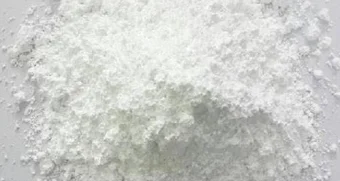
Dibenzothiazolyl disulfide (MBTS), widely known as mercaptobenzothiazole disulfide, has become a foundational accelerator in the modern rubber and tire industry. Its balanced vulcanization behavior, superior processing safety, and ability to perform consistently across natural and synthetic elastomers have positioned it as a critical ingredient in the engineering of durable, high-performance rubber products. As global mobility trends demand greater fuel efficiency, enhanced tire longevity, and optimized rolling resistance, MBTS remains central to formulations that push the boundaries of elastomer innovation.
MBTS Market Momentum Driven by Tire Industry Expansion
The global rubber processing chemicals market exceeded USD 5.6 billion in 2024, with MBTS contributing significantly due to its role in sulfur vulcanization. Because more than 70% of the world’s rubber consumption is tied to tire production, demand for MBTS has risen steadily.
Forecasts indicate the MBTS market will grow at a CAGR of 4.3% through 2030, fueled by rapid automotive manufacturing in Asia-Pacific, increasing attention to sustainability, and the expanding use of high-performance elastomers across industrial sectors.
Processing Reliability & Cure Control: Why MBTS Remains Indispensable
One of the most compelling features of MBTS is its delayed-action vulcanization profile. Unlike fast accelerators that can trigger premature scorch during mixing, MBTS provides a wide safety window, allowing processors to manipulate compounds without risking early cure. This safety margin promotes uniform dispersion of fillers and additives, stabilizes viscosity throughout mixing and extrusion, and creates a consistently reproducible cure response.
The controlled kinetics of MBTS are especially valuable in the production of large, multi-layer tire components where the curing process must proceed predictably. Tires such as high-speed radials, off-road constructions, and performance-focused segments depend on balanced vulcanization to achieve both durability and flexibility under dynamic loads.
MBTS in Tire Manufacturing: Strength, Heat Resistance, & Predictability
Within the tire industry, MBTS acts as a primary accelerator across natural rubber, SBR, NBR, and various synthetic elastomers. Its influence extends deeply into the structural performance of the tire. MBTS assists in forming a dense yet flexible crosslink network that increases tensile strength, promotes resistance to tearing, and enhances fatigue behavior – critical qualities for the demanding environment in which tires operate. Compounds cured with MBTS also demonstrate superior thermal stability, resisting degradation when exposed to the high temperatures generated during sustained high-speed driving.
Another advantage is its ability to provide a cure rate that is neither too fast nor too slow. This balance is vital because modern tires consist of multiple compounds, each requiring accurate synchronization during vulcanization. The result is consistent curing throughout the carcass, tread, sidewalls, and bead areas, ensuring uniform mechanical performance.
MBTS also works exceptionally well in combination with other accelerators, allowing manufacturers to fine-tune cure profiles. For example, by pairing MBTS with sulfenamides or thiurams, producers can shift from a safe processing stage to a faster curing phase only when desired.
Beyond Tires: MBTS in High-Performance Elastomer Engineering
Although tire manufacturing dominates global MBTS consumption, the accelerator plays an equally significant role in a wide range of industrial and consumer elastomer applications. MBTS supports the production of conveyor belts, vibration-damping components, molded rubber goods, hoses, footwear soles, and sealing systems. In these contexts, processors value MBTS for its clean extrusion behavior, reliable mold flow, and ability to maintain dimensional stability under mechanical or thermal stress.
Its predictable cure cycle is particularly important for components that must maintain compression set performance, withstand repeated dynamic loads, or operate in harsh operational environments. Manufacturers focused on high precision (such as those producing automotive gaskets or industrial seals) rely on MBTS to deliver repeatable, tight-tolerance curing.
A Performance Profile That Outranks Other Accelerators
Compared to alternative accelerators like thiurams, guanidines, and sulfenamides, MBTS stands out because it offers a unique balance of mild activity, broad compatibility, and excellent dispersion. It supports long scorch times, preventing premature crosslinking, while still achieving optimal cure density. In addition, MBTS maintains its effectiveness even in compounds that must resist reversion or operate under elevated temperatures.
From an environmental perspective, MBTS aligns well with evolving regulatory standards. Its low volatility and favorable toxicological profile allow manufacturers to meet stringent compliance requirements, especially in regions where chemical safety regulations are tightening.
Future Opportunities: MBTS in Sustainable & Next-Generation Rubber Compounds
The rubber industry is undergoing a profound transformation driven by the rise of electric vehicles, sustainability goals, and the push for lower rolling resistance. MBTS is well-positioned to support these trends due to its stable cure behavior and ability to function reliably in advanced compounds, such as silica-reinforced rubber and bio-based elastomers.
Electric vehicle tires, which must withstand higher torque loads while minimizing energy loss, require precise vulcanization control – a function MBTS delivers exceptionally well. Industrial sectors seeking longer-life seals, enhanced thermal endurance, or reduced maintenance cycles continue to adopt MBTS for its consistent performance.
With Asia-Pacific poised to lead global tire and rubber production and Western markets emphasizing cleaner, more efficient materials, MBTS is expected to remain a cornerstone in elastomer development throughout the decade.
Concluding Thoughts: MBTS as a Cornerstone of Modern Rubber Science
Dibenzothiazolyl disulfide stands at the intersection of reliability, performance, and innovation in rubber manufacturing. Its ability to provide safe processing, finely tuned cure control, and robust mechanical performance has made it one of the most trusted accelerators in tire production and high-performance elastomer applications. As industries continue to demand materials that endure heat, stress, and prolonged mechanical strain, MBTS remains crucial to the development of rubber compounds that perform reliably while meeting modern environmental and technological standards.
Related Reports:
- Dibenzothiazolyl Disulfide Global Market Insights 2025, Analysis and Forecast to 2030, by Manufacturers, Regions, Technology, Application
- Global Rubber Vulcanization Accelerator MBTS Market Research Report 2025(Status and Outlook)
- Global Rubber Accelerator Mbts(Dm) Market Research Report 2025(Status and Outlook)
- Global Rubber Vulcanization Accelerator MBT(M) Market Research Report 2025(Status and Outlook)
Market Publishers boasts a rich collection of insightful research studies covering the chemicals and petrochemicals market, find it in the Chemicals & Petrochemicals Market Reports Catalogue.
CONTACTS
The Market Publishers, Ltd.
Natalie Aster
Tel: +357 96 030 922
[email protected]
MarketPublishers.com
Analytics & News
29 Oct 2026
Where Is the Diagnostics Market Heading? 10 Promising Sectors to Watch
26 Oct 2026
Weekly Chemical Market Tracker: Update for October 19-26, 2026
23 Oct 2026
Military Aviation Market: Recent Developments Shaping 2026
21 Oct 2026
New Era of Cryptocurrency: The Rise of Regulated Digital Finance
19 Oct 2026
Weekly Chemical Market Tracker: Update for October 12–19, 2026
