A New Epoch for Mining & Steel Industries: The Road to a Sustainable & Strategic Era
21 Nov 2025 • by Natalie Aster
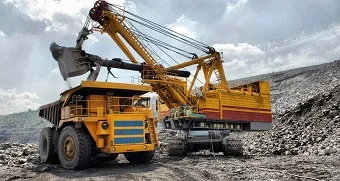
The global mining and steel industries are undergoing one of the most profound transformations in their history. Pressured by climate goals, technological disruption, and shifting geopolitical realities, the sector is moving away from the heavy, carbon-intensive models of the past toward a cleaner, smarter, and more strategically aligned future. This transition is not a passing trend, it represents a structural shift in how resources are extracted, processed, and utilized to fuel the world’s infrastructure and industrial growth.
In the year 2024, the combined mining and steel market was valued at approximately USD 875.7 billion, and it is slated to reach USD 1.45 trillion by 2035, expanding at a CAGR of around 4.6% in the next 10 years. This growth is supported by the resurgence of infrastructure projects, decarbonization efforts, and the push for supply-chain security. The interplay of these forces is reshaping the value chain from the ground up, turning mining and steelmaking into a central pillar of the global energy transition.
Infrastructure Investment: Fueling Demand & Strategic Growth
Steel remains the backbone of modern infrastructure. Nearly 70% of world’s steel output goes into construction, transportation, and public works. Around the world, governments are reviving industrial policies that prioritize infrastructure renewal, from highways and bridges to green-energy installations. India, for example, plans to increase its steel-making capacity to 500 million tonnes by 2047, a move supported by major mining regions like Odisha and Chhattisgarh. Meanwhile, the United States and China are driving large-scale construction initiatives (the Bipartisan Infrastructure Law and Belt and Road Initiative) that will sustain demand for both raw and finished steel.
These megaprojects signal more than just higher steel consumption. They represent a long-term realignment of economic priorities toward durability, resilience, and sustainability. For both miners and steelmakers, aligning investment strategies with infrastructure growth has become a defining factor for competitiveness. Those able to secure a consistent, low-emission supply will dominate the next decade of development.
Decarbonization & Technological Reinvention
No other industrial sector faces as much pressure to decarbonize as steelmaking, which accounts for roughly 8% of global CO₂ emissions. The shift away from coal-fired blast furnaces is now central to every major producer’s strategy. One of the most promising pathways is the electric arc furnace (EAF) route, which uses scrap metal and electricity instead of coke and iron ore. When powered by renewable energy, EAFs can reduce emissions by as much as 70%, marking a decisive break from the carbon-heavy past.
Equally transformative is the adoption of hydrogen-based direct-reduced iron (DRI), an emerging process that replaces coal with green hydrogen as the reductant. Several European pilot projects are already producing hydrogen-reduced iron, paving the way for commercial deployment. These innovations signal a future where “green steel” will be both technologically feasible and commercially necessary.
Meanwhile, mining operations are embracing digital transformation. The use of autonomous vehicles, drone-based exploration, and artificial intelligence in ore processing is reducing waste, improving efficiency, and cutting carbon intensity across the board. Automation and predictive analytics are now core to operational resilience and environmental stewardship.
Supply Chains, Resource Security & Geopolitical Shifts
Beyond technology, the reconfiguration of global supply chains is reshaping the industry’s strategic outlook. The rising prominence of scrap recycling has turned waste into a critical resource. With more countries transitioning to EAF production, demand for high-quality scrap is soaring. This is shifting trade dynamics, as scrap-importing nations tighten controls to secure domestic supply.
At the same time, access to low-carbon raw materials is becoming a geopolitical issue. Steelmakers are partnering directly with mining companies to guarantee the supply of sustainable iron ore and critical inputs. These collaborations extend beyond procurement – many involve joint decarbonization projects, with integrated emissions tracking from mine to mill. Such partnerships signal a deeper fusion between extraction and manufacturing, transforming the traditional boundaries that once divided them.
For mining companies, this shift introduces both opportunity and risk. Producers of metallurgical coal face declining demand as green-steel technologies scale, prompting them to diversify into new materials, invest in carbon-capture technologies, or pivot toward recycling. Those who fail to adapt risk being stranded in a decarbonizing world economy.
Integration Across the Value Chain
The future of mining and steel is increasingly interconnected. Mining companies are investing downstream into processing, recycling, and even green-steel production, while steelmakers are venturing upstream to secure sustainable feedstock. This convergence is blurring the lines between the two sectors, creating a closed-loop system that emphasizes traceability, efficiency, and circularity.
Advanced analytics and digital twins now allow real-time monitoring of emissions and production performance across the entire chain. Mines powered by renewable energy feed into hydrogen-based steel plants, which in turn recycle scrap and reuse byproducts to minimize waste. What once functioned as a linear process of extraction and consumption is evolving into an intelligent, circular ecosystem.
Challenges on the Road to Sustainability
Despite clear momentum, the path forward remains complex. Green-steel technologies, though promising, require enormous capital and infrastructure to scale. The cost of hydrogen, the availability of renewable energy, and the need for supportive policy frameworks remain significant barriers. Developing nations, in particular, face the dual challenge of expanding production capacity while maintaining environmental commitments.
Furthermore, the global shift toward circularity is straining existing trade relationships. Nations are rethinking export policies, particularly for scrap and raw materials, as they prioritize domestic industrial resilience. Regulatory uncertainty and varying carbon-pricing schemes add additional layers of complexity for multinational producers.
The Road Ahead: Strategy, Innovation & Responsibility
The mining and steel industries stand at a decisive crossroads. What began as a response to environmental pressures has evolved into a strategic redefinition of industrial growth. Those who embrace innovation (through clean technologies, digital integration, and sustainable sourcing) will gain a lasting competitive advantage.
The next era of steel will not be measured solely by tonnage but by carbon efficiency, material intelligence, and value-chain transparency. As the world rebuilds its infrastructure for a low-carbon future, the mining and steel complex will remain the foundation of progress – only this time, it will be cleaner, smarter, and far more resilient.
At Market Publishers you’ll find an extensive archive of market research studies covering the mining industry. Simply use the search form to find the report you need.
CONTACTS
The Market Publishers, Ltd.
Natalie Aster
Tel: +357 96 030 922
[email protected]
MarketPublishers.com
Analytics & News
29 Oct 2026
Where Is the Diagnostics Market Heading? 10 Promising Sectors to Watch
26 Oct 2026
Weekly Chemical Market Tracker: Update for October 19-26, 2026
23 Oct 2026
Military Aviation Market: Recent Developments Shaping 2026
21 Oct 2026
New Era of Cryptocurrency: The Rise of Regulated Digital Finance
19 Oct 2026
Weekly Chemical Market Tracker: Update for October 12–19, 2026