Cumyl Peroxyneodecanoate: An Efficient Initiator in High-Performance Polymers
15 Oct 2025 • by Natalie Aster

In the modern polymer industry, initiators define the efficiency, structure, and performance of the final material. Among these, cumyl peroxyneodecanoate (CPND) has emerged as a key free radical initiator, renowned for its stability, controlled decomposition rate, and ability to drive high-performance polymerization processes. As global demand for advanced polymers accelerates, particularly in automotive, electronics, coatings, and construction, the role of initiators like CPND becomes increasingly critical.
Understanding Cumyl Peroxyneodecanoate and Its Chemistry
Cumyl peroxyneodecanoate is an organic peroxide initiator derived from neodecanoic acid and cumyl alcohol. Its molecular structure ensures predictable radical release at moderate decomposition temperatures, making it especially suitable for emulsion, suspension, and bulk polymerization techniques.
- Decomposition characteristics: CPND decomposes cleanly, minimizing by-products that can compromise polymer quality.
- Half-life efficiency: With a 10-hour half-life temperature in the range of 60–70 °C, it provides flexibility in processing conditions, supporting both low and mid-temperature curing cycles.
- Controlled radical generation: This ensures uniform molecular weight distribution, improved crosslinking, and enhanced end-use polymer properties.
These features explain why CPND is considered superior to many conventional initiators in applications requiring precision polymer architecture.
Performance Advantages over Conventional Initiators
Compared to lauroyl peroxide (LPO) or benzoyl peroxide (BPO), cumyl peroxyneodecanoate provides longer pot life, better storage stability, and reduced volatility. These advantages reduce handling risks and ensure consistent production cycles, making it the preferred choice for next-generation polymer systems.
Key benefits include:
Enhanced thermal stability → ensures reliability in high-temperature curing.
Reduced polymer discoloration → critical in transparent and specialty-grade plastics.
Efficient energy usage → lower processing temperatures save costs and align with sustainability targets.
Industrial Applications Driving Adoption
1. Polyvinyl Chloride (PVC) Manufacturing
CPND is extensively applied in suspension and emulsion PVC production, where polymer consistency is paramount. It supports high conversion rates with reduced fouling, enabling manufacturers to achieve higher yield and cost efficiency.
2. Unsaturated Polyester Resins (UPR)
In thermoset composites, especially fiberglass-reinforced resins, cumyl peroxyneodecanoate offers enhanced curing performance. Its ability to generate radicals at lower processing temperatures reduces residual monomers and improves the mechanical strength of final products.
3. Specialty Coatings & Adhesives
High-performance coatings require initiators that guarantee long-term durability, chemical resistance, and adhesion. CPND provides superior curing control, resulting in coatings that withstand aggressive environments, particularly in marine, aerospace, and automotive applications.
4. Advanced Elastomers
In elastomer synthesis, CPND ensures consistent polymer chain branching while minimizing premature crosslinking, which is crucial in producing specialty rubbers with advanced thermal and oxidative stability.
Market Growth & Demand Outlook
The global organic peroxide market, valued at USD 1.5 billion in 2024, is projected to grow at a CAGR of 4.9% through 2030. Within this segment, cumyl peroxyneodecanoate holds a fast-growing niche, driven by demand for sustainable and high-performance polymers.
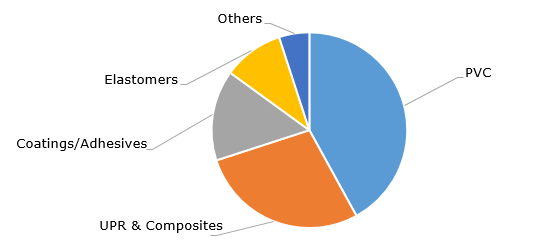
According to industry data, PVC remains the largest consumer, accounting for nearly 42% of CPND applications in 2024. UPR and composites are expected to grow at a 6.2% CAGR, fueled by wind energy, automotive lightweighting, and infrastructure projects. Asia-Pacific dominates consumption with over 55% of global demand, followed by Europe and North America.
Global Demand Outlook for Cumyl Peroxyneodecanoate by End-Use Sector (2024–2030)
Sustainability & Future Developments
The transition toward eco-friendly production has accelerated research on initiators with low toxicity, low VOC emissions, and improved biodegradability. Cumyl peroxyneodecanoate aligns with these trends by enabling lower energy polymerization processes and reduced chemical waste generation.
Emerging studies also highlight its potential role in bio-based polymer production, supporting industries’ shift toward circular materials and green chemistry initiatives.
Bottom Line
Cumyl peroxyneodecanoate is more than just a free radical initiator—it is a cornerstone of modern polymer science. Its balance of stability, efficiency, and versatility ensures superior performance across PVC, resins, coatings, and elastomers. As industries pursue sustainability and advanced material properties, CPND’s relevance will only strengthen, making it a critical component in the evolving landscape of high-performance polymers.
By enabling controlled polymerization, improved mechanical performance, and reduced processing costs, cumyl peroxyneodecanoate stands out as a future-ready solution in the global chemical industry.
Related Reports:
- Cumyl Peroxyneodecanoate Global Market Insights 2025, Analysis and Forecast to 2030, by Manufacturers, Regions, Technology, Application
- Global Market Report of Cumyl peroxyneodecanoate (CAS 26748-47-0)
- Global PVC Polymerization Initiator Market Research Report 2024(Status and Outlook)
Market Publishers boasts a rich collection of insightful research studies covering the chemicals and petrochemicals market, find it in the Chemicals & Petrochemicals Market Reports Catalogue.
CONTACTS
The Market Publishers, Ltd.
Natalie Aster
Tel: +357 96 030 922
[email protected]
MarketPublishers.com
Analytics & News
29 Oct 2026
Where Is the Diagnostics Market Heading? 10 Promising Sectors to Watch
26 Oct 2026
Weekly Chemical Market Tracker: Update for October 19-26, 2026
23 Oct 2026
Military Aviation Market: Recent Developments Shaping 2026
21 Oct 2026
New Era of Cryptocurrency: The Rise of Regulated Digital Finance
19 Oct 2026
Weekly Chemical Market Tracker: Update for October 12–19, 2026