
Polyhydroxyalkanoates: A Game-Changer in the Bioplastics Revolution
13 Aug 2025 • by Natalie Aster
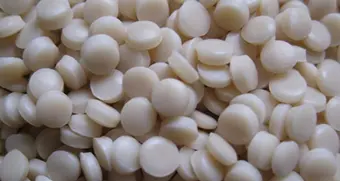
The shift away from fossil-based plastics is no longer a distant goal – it is a global imperative. At the forefront of this transformation are polyhydroxyalkanoates (PHAs), a family of bioplastics that combine performance, versatility, and true biodegradability. Unlike traditional petroleum-derived plastics, PHAs are produced naturally by specific bacteria and break down completely in soil, water, and composting environments without leaving behind microplastics. As industries face mounting regulatory pressure and heightened consumer expectations, PHAs are moving from niche applications into mainstream manufacturing, signaling a pivotal moment in the materials revolution.
The Science & Production Process
PHAs are created through microbial fermentation. When bacteria are fed renewable carbon sources (such as plant-based sugars, agricultural waste, or even greenhouse-gas-derived carbon) they store the resulting polymer within their cells. Once harvested, the polymer can be processed into films, fibers, or molded items. This biological route not only bypasses petrochemicals but also enables manufacturers to use waste materials as feedstock, closing the loop in the production cycle.
An advantage of PHA technology lies in its flexibility. By adjusting microbial strains and fermentation conditions, manufacturers can alter the polymer’s chain length and composition. This allows them to fine-tune properties such as rigidity, flexibility, or barrier performance, making PHAs suitable for applications ranging from rigid food containers to medical-grade sutures.
Market Momentum & Industry Growth
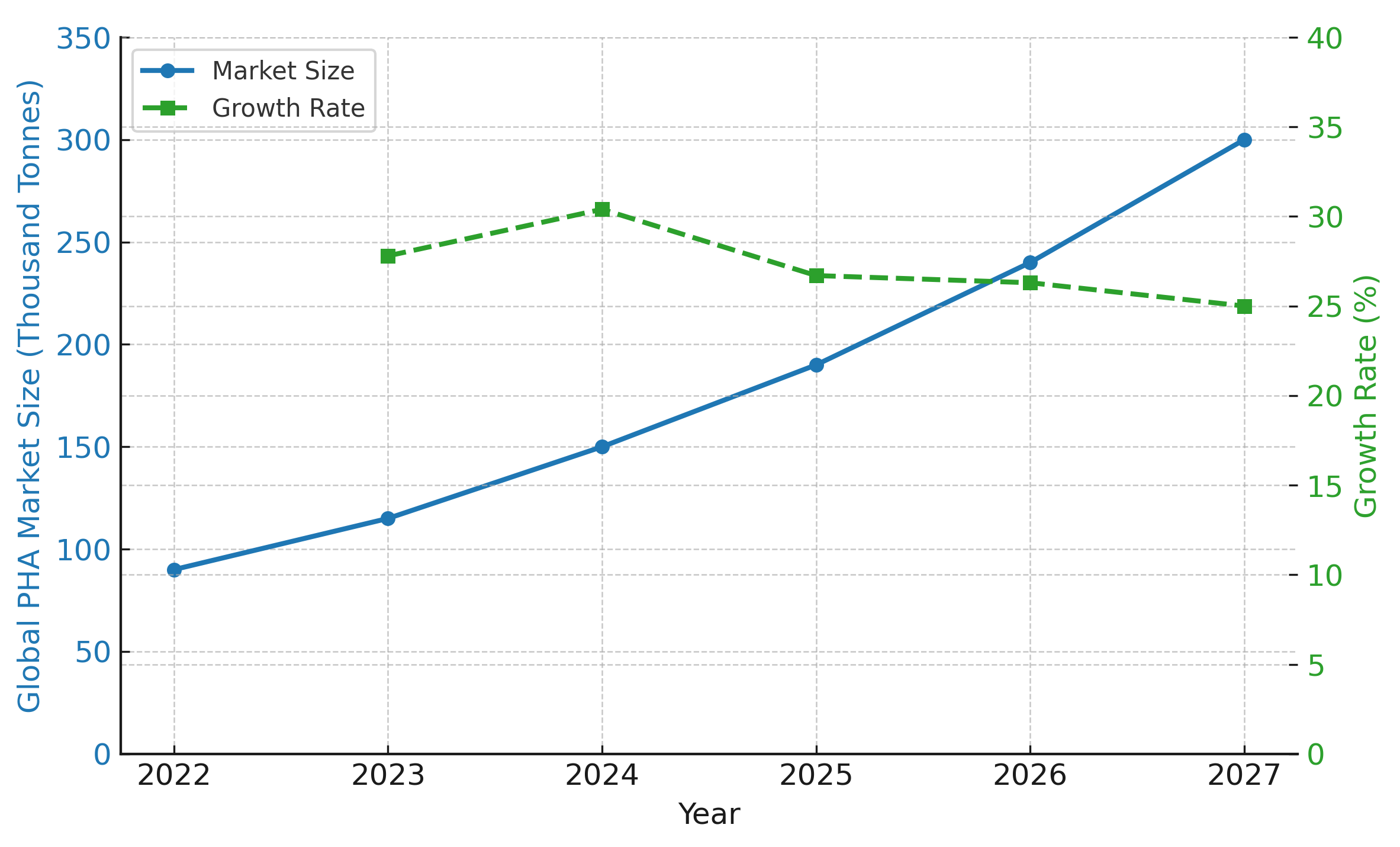
Over the last few years, global PHA production has increased dramatically. In 2024, global capacity reached approximately 150,000 tonnes annually, with forecasts predicting continued double-digit growth through 2030. Market analysts estimate that PHAs now account for 5–7% of the total bioplastics market – a remarkable rise considering their relative obscurity a decade ago. This growth is fueled by large-scale investments from producers expanding facilities and brand owners incorporating PHA-based products into their packaging portfolios.
Global PHA Market Size and Annual Growth Rate (2022 – 2027)
In the same period, several high-profile product launches showcased PHA’s commercial potential. Flexible films for food packaging, marine-degradable fishing gear, and compostable e-commerce mailers all demonstrated that PHAs could match the functional performance of conventional plastics while offering clear environmental benefits.
Performance & Environmental Impact
One of the common concerns about biodegradable plastics is whether they can perform as well as their petroleum-based counterparts. PHAs have proven that they can. With tensile strengths on par with polypropylene and polystyrene, as well as excellent oxygen barrier properties, they are more than capable of meeting industrial packaging requirements. Thermal stability allows them to be processed using standard equipment for injection molding or extrusion, reducing the barrier to adoption.
Environmental benefits are equally compelling. Lifecycle assessments have shown that PHAs produced from waste biomass can cut greenhouse gas emissions by up to 75% compared with low-density polyethylene. They completely mineralize under industrial composting in less than six months and in natural environments in under a year, eliminating concerns over persistent microplastic pollution. Certifications such as OK compost HOME and EN 13432 reinforce their real-world biodegradability, making them attractive to companies seeking both performance and credibility.
Expanding Applications Across Sectors
The versatility of PHAs is becoming increasingly apparent. In food packaging, they preserve freshness as effectively as conventional plastics but return safely to the environment after disposal. In agriculture, mulch films made from PHAs can be left to degrade in the soil post-harvest, saving time and labor. In healthcare, PHAs are used for absorbable sutures and drug-delivery systems, benefiting from their biocompatibility. Even in 3D printing, PHA filaments offer a balance of strength and environmental responsibility that appeals to sustainable design initiatives.
Economic Shifts & Competitive Positioning
Cost has historically been a limiting factor for PHAs. However, advances in fermentation efficiency, feedstock utilization, and continuous production have begun to drive prices down. The cost per kilogram has already fallen below USD 6 and is projected to approach USD 4–5 by 2026. As economies of scale develop and fossil-based plastics face higher compliance costs under new regulations, PHAs are likely to achieve cost parity sooner than expected.
For brands, adopting PHAs is not just a matter of compliance but of market differentiation. Early movers gain reputational advantages and secure supply chain relationships that will be harder to obtain once demand accelerates further.
Regulatory Drivers & Future Outlook
Legislation is playing a decisive role in accelerating PHA adoption. The European Union’s Single-Use Plastics Directive has already opened market opportunities by banning certain petroleum-based products. Similar measures in states like California and Washington are creating strong domestic demand for compostable alternatives. These policies, combined with rising public awareness, are aligning market forces in PHA’s favor.
While infrastructure gaps for composting and consumer education remain challenges, they are diminishing as adoption grows. Every new production facility brings not just more material to the market but also greater incentive for investment in waste collection and processing.
Final Thoughts: From Alternative to Mainstream
Polyhydroxyalkanoates have progressed far beyond being a curiosity of industrial biotechnology. They are now credible, scalable, and commercially viable materials capable of displacing traditional plastics in multiple markets. With their proven performance, unmatched biodegradability, and steadily improving cost structure, PHAs are positioned not just as an alternative, but as the new standard for sustainable materials in a circular economy. The bioplastics revolution is no longer on the horizon. With PHAs leading the charge, it is already underway.
Related Reports:
- Global Polyhydroxyalkanoate (PHA) for Rigid and Flexible Packaging Market 2025 by Manufacturers, Regions, Type and Application, Forecast to 2031
- Global Polyhydroxyalkanoate (PHA) Market Size Study & Forecast, by Type, Production Methods, Application and Regional Forecasts 2025-2035
- Polyhydroxyalkanoate Market - Global Industry Size, Share, Trends, Opportunity, and Forecast, Segmented By Type (Short Chain Length, Medium Chain Length, Others), By Application (Packaging & Food Services, Biomedical, Agriculture, Others), By Region and Competition, 2020-2030F
- Global Polyhydroxyalkanoate Market Research Report 2025(Status and Outlook)
- Global PHA Bioplastic Market Research Report 2025(Status and Outlook)
Market Publishers boasts a rich collection of insightful research studies covering the chemicals and petrochemicals market, find it in the Chemicals & Petrochemicals Market Reports Catalogue.
CONTACTS
The Market Publishers, Ltd.
Natalie Aster
Tel: +357 96 030 922
[email protected]
MarketPublishers.com
Analytics & News
29 Oct 2026
Where Is the Diagnostics Market Heading? 10 Promising Sectors to Watch
26 Oct 2026
Weekly Chemical Market Tracker: Update for October 19-26, 2026
23 Oct 2026
Military Aviation Market: Recent Developments Shaping 2026
21 Oct 2026
New Era of Cryptocurrency: The Rise of Regulated Digital Finance
19 Oct 2026
Weekly Chemical Market Tracker: Update for October 12–19, 2026
