Trimethylgallium in the Semiconductor Boom: Enabling the Next Generation of Electronics
22 Jul 2025 • by Natalie Aster

The global semiconductor industry is experiencing an unprecedented boom, with demand soaring for advanced materials that can sustain innovation in next-generation electronics. Among these, Trimethylgallium (TMGa) has emerged as a critical enabler for high-performance devices. Its unique chemical properties make it indispensable in the production of gallium-based semiconductors, powering everything from 5G networks and electric vehicles to advanced AI chips and quantum computing systems.
Rising Demand for TMGa in Semiconductor Industry
The semiconductor market is projected to grow from USD 573 billion in 2023 to over USD 870 billion by 2027, driven by technological advancements in consumer electronics, telecommunications, and automotive industries. Trimethylgallium plays a pivotal role in this surge, as it is the primary precursor for Gallium Nitride (GaN) and Gallium Arsenide (GaAs) semiconductors, materials known for their efficiency, high thermal stability, and ability to handle high-frequency operations.
Unlike traditional silicon, GaN and GaAs allow for faster signal transmission, lower energy losses, and greater power efficiency, making them crucial for 5G base stations, electric vehicle power systems, and satellite communications. TMGa is the cornerstone material enabling these advancements.
Why Trimethylgallium is Essential for Next-Gen Electronics
Trimethylgallium is prized for its exceptional purity and volatility, which makes it an ideal precursor in metal-organic chemical vapor deposition (MOCVD) processes. This method is the gold standard for producing high-quality GaN thin films used in cutting-edge electronic devices.
Key Advantages of TMGa in Semiconductor Applications:
- Superior Material Quality: Enables defect-free crystal growth, enhancing device reliability.
- High Thermal Conductivity: Critical for handling the heat generated by high-power devices.
- Energy Efficiency: Supports the creation of chips that consume less power while delivering higher performance.
- Scalability: Perfect for mass production, ensuring a stable supply for global semiconductor giants.
These properties make TMGa indispensable for power electronics, RF devices, LEDs, and laser diodes, all of which are cornerstones of modern technology.
Market Growth Drivers for Trimethylgallium
Several key factors are accelerating the demand for TMGa in the semiconductor sector:
- 5G Network Expansion
With global 5G adoption expected to exceed 5 billion subscriptions by 2030, demand for high-frequency, low-latency components is skyrocketing. TMGa-based GaN semiconductors are the backbone of 5G base stations and smartphones.
- Electric Vehicles (EVs)
EV sales are projected to surpass 45 million units annually by 2030, driving massive demand for power-efficient GaN chips, which rely heavily on TMGa.
- AI and Data Centers
The global AI market, valued at $196 billion in 2023, is set to triple by 2030. AI chips demand ultra-fast and power-efficient semiconductors, an area where TMGa is critical.
- LED and Photonics Growth
From high-brightness LEDs to next-gen photonics, TMGa continues to be a key ingredient in creating more efficient, long-lasting light sources.
Global Semiconductor Market Outlook
The semiconductor industry is experiencing a robust upward trajectory, as shown below:
Global Semiconductor Market Growth Forecast (2023-2027)
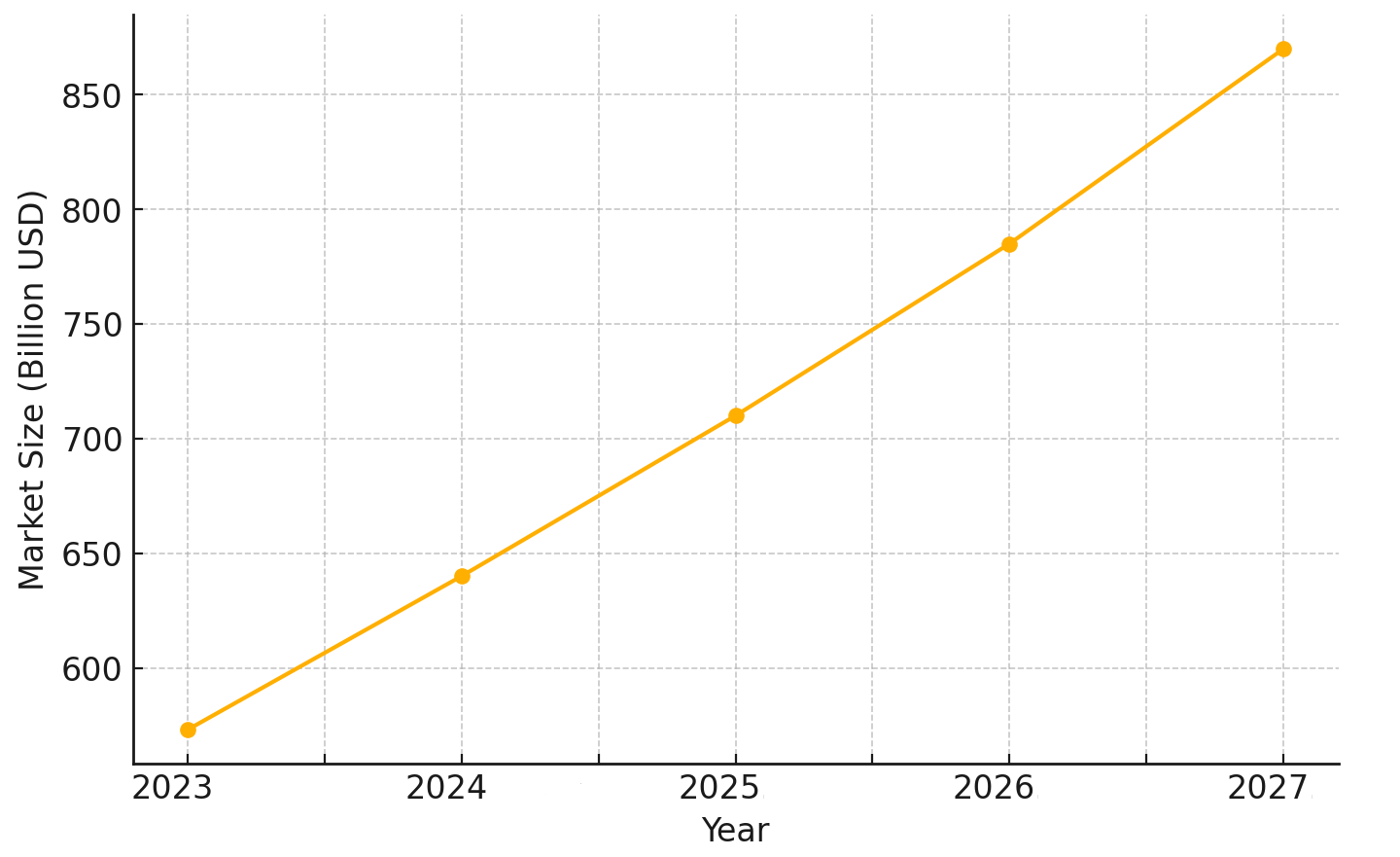
The forecast underscores the accelerating demand for semiconductor materials like TMGa, which will be instrumental in meeting future market requirements.
Challenges and Supply Chain Considerations
Despite its crucial role, the TMGa market faces challenges:
- High Production Costs: Manufacturing TMGa requires advanced technology and stringent purity standards.
- Supply Chain Fragility: Dependence on a few global suppliers creates risks of shortages and price volatility.
- Environmental Regulations: Strict guidelines for handling metal-organic compounds may slow down production scalability.
These factors underscore the need for strategic investments in production facilities and sustainable sourcing to ensure stable supply.
The Future of Trimethylgallium in Electronics
Looking ahead, Trimethylgallium is set to play an even greater role in powering the digital revolution. With continued investment in MOCVD technology, supply chain resilience, and research into greener production methods, TMGa will remain at the forefront of semiconductor innovation.
From smarter cities and autonomous vehicles to the evolution of 6G networks and beyond, the applications of TMGa are boundless. It is not just a chemical precursor — it is the silent driver behind the world’s most transformative technologies.
Related Reports:
- Trimethyl gallium (CAS 1445-79-0) Market Research Report 2025
- Global Trimethylgallium Analysis Market Size study & Forecast, by Application, Purity Level, Form, Distribution Channel, End User Industry and Regional Forecasts 2025-2035
- Global Semiconductor High Purity Trimethylgallium Market Growth 2025-2031
- Global Trimethylgallium (TMG) Market Report (2019-2030)
- Global Trimethylgallium (TMG) Market 2025 by Manufacturers, Regions, Type and Application, Forecast to 2031
- Trimethylgallium Global Market Insights 2025, Analysis and Forecast to 2030, by Manufacturers, Regions, Technology, Application
CONTACTS
The Market Publishers, Ltd.
Natalie Aster
Tel: +357 96 030 922
[email protected]
MarketPublishers.com
Analytics & News
29 Oct 2026
Where Is the Diagnostics Market Heading? 10 Promising Sectors to Watch
26 Oct 2026
Weekly Chemical Market Tracker: Update for October 19-26, 2026
23 Oct 2026
Military Aviation Market: Recent Developments Shaping 2026
21 Oct 2026
New Era of Cryptocurrency: The Rise of Regulated Digital Finance
19 Oct 2026
Weekly Chemical Market Tracker: Update for October 12–19, 2026