Diamond Market: Increasing Shift from Natural to Synthetic Gems
04 May 2023 • by Natalie Aster
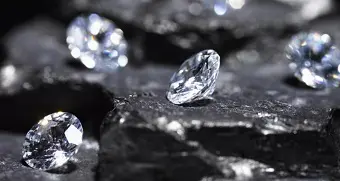
Diamonds have long been a symbol of luxury, wealth, and eternal love. With their unmatched brilliance and captivating beauty, these precious stones have captured the hearts and imaginations of people around the globe.
Diamonds are believed to have been first discovered in India over 2,500 years ago, with the earliest references to these gemstones found in ancient Sanskrit texts. Since then, diamonds have become a global phenomenon, with mines located in various countries including South Africa, Russia, Botswana, and Australia. Today, diamonds are not only prized for their beauty but also their rarity and the incredible journey they undertake from deep within the Earth to the surface.
Synthetic vs. Natural Diamonds
As the demand for diamonds follows an upward trend, so do concerns about the ethical and environmental impact associated with diamond mining. Issues such as conflict diamonds, labor exploitation, and ecological damage have led to an increased interest in synthetic diamonds, offering an ethically-conscious and more eco-friendly alternative to mined diamonds.
The debate over “synthetic diamonds vs. natural diamonds” has been gaining momentum in recent years. Due to remarkable technological advancements, the ability to create synthetic diamonds with similar characteristics to their natural counterparts has become a reality.
What are Natural Diamonds?
Natural diamonds are formed deep in the mantle of the Earth over billions of years. They are created under immense pressure and heat, then transported to the surface through volcanic eruptions. Natural diamonds are then extracted through mining operations, which can be environmentally damaging and labor-intensive.
What are Synthetic Diamonds?
Synthetic diamonds (aka man-made or lab-grown diamonds) are manufactured in a controlled environment with the use of advanced technologies. They are produced through two primary methods: High Pressure High Temperature (HPHT) and Chemical Vapor Deposition (CVD). Both methods imply the simulation of the natural conditions in which diamonds are formed, resulting in a gemstone with properties (chemical, physical, and optical) similar to a natural diamond.
Comparing Synthetic and Natural Diamonds:
- Appearance and Quality: When it comes to appearance and quality, both synthetic and natural diamonds can possess exceptional clarity, color, and carat weight. However, synthetic diamonds often have fewer inclusions and blemishes, making them appear more flawless. With advancements in technology, it has become increasingly difficult to distinguish between the two types of diamonds, even for trained gemologists.
- Environmental Footprints: Synthetic diamonds have a notably lower environmental impact in comparison to natural diamonds. Man-made diamonds require less land, water, and energy, and produce fewer carbon emissions during production. In contrast, natural diamond mining can lead to soil erosion, deforestation, and habitat destruction.
- Ethical Considerations: Choosing a synthetic diamond over a natural one can help alleviate concerns about the ethical implications of diamond mining. The diamond industry has faced criticism over conflict diamonds, child labor, and poor working conditions. By choosing a lab-grown diamond, consumers can avoid inadvertently supporting these practices.
- Price: One of the most appealing aspects of synthetic diamonds is their affordability. They are typically priced 20-40% lower than natural diamonds of the same size and quality. This price difference can make a considerable impact, particularly for those seeking larger or higher-quality stones.
Making the Right Choice
Ultimately, the choice between synthetic and natural diamonds comes down to personal budget, preferences, and ethical considerations. Both options offer stunning gemstones with unique advantages. Synthetic diamonds provide a more affordable and ethically-conscious alternative, while natural diamonds offer the allure of owning a rare piece of the Earth's history.
Global Natural Diamond Reserves & Mine Production
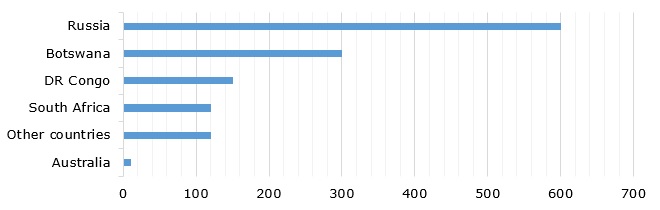
The volume of the global diamond reserves is estimated at about 1.1 billion carats. Russia boasts the world’s largest natural diamonds reserves, totaling 600 million carats as of 2022. Botswana has the second-largest natural diamonds reserves in the world, estimated at appr. 300 million carats in 2022. Three countries command about 80% of the world’s total diamond reserves.
Countries with the largest diamond reserves, 2022 (in million carats)
As for the volume of mining production, Russia and the Democratic Republic of Congo take the lead in the global arena. Last year, Russia’s mine production of natural diamonds totaled 17 million carats, whilst the mine production volume of the Democratic Republic of Congo reached 11 million carats. Botswana closes the top three mine producers of diamonds, last year, the country mined 7 million carats.
Synthetic Diamond Production Gains Traction
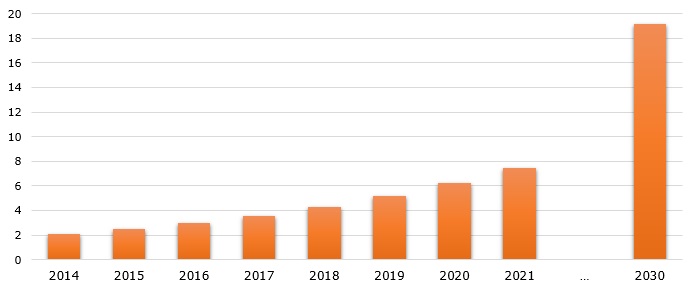
Synthetic diamonds are steadily gaining a share in the overall diamond production volume. In 2016, synthetic diamonds accounted for only 1.7% of the world’s total diamond production volume. In 2021, the share increased to 3.8%. By the year 2030, the market share of synthetic diamonds is anticipated to reach 10%.
The global production volume of synthetic diamonds totaled over 7.4 million carats and is poised to amount to almost 19.2 million carats in 2030, registering impressive growth in the next 7 years.
The global synthetic diamonds production volume, 2014-2021 and forecast for 2030 (in million carats)
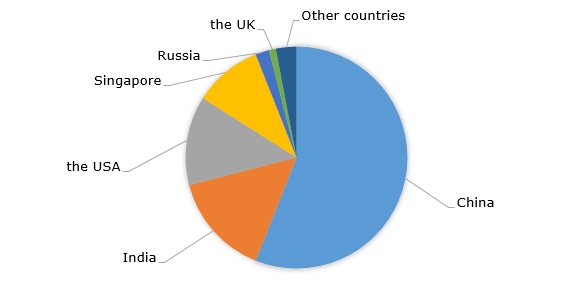
China is an unrivaled leader in the global synthetic diamond production, accounting for a share of 56%. India is the second largest producer of synthetic diamonds in the world, commanding a share of 15%. The third position in the world’s synthetic diamond production is held by the US – a share of 13%.
Structure of the global synthetic diamonds production by country, 2022
Bottom Line
The debate between synthetic and natural diamonds will likely continue as technology evolves and consumer preferences shift. By understanding the differences, benefits, and drawbacks of each option, you can make well-informed decisions that align with your values and budget. Whether you choose a synthetic diamond for its ethical and environmental advantages or a natural diamond for its rarity and historical significance, both options can result in a beautiful and lasting symbol of love and commitment.
Product Details:
Published: April 2023
Pages: 200
Price: US$ 4,950.00
Find many other topical research reports covering the diamond market on this page.
CONTACTS
The Market Publishers, Ltd.
Natalie Aster
Tel: +357 96 030922
[email protected]
MarketPublishers.com
Analytics & News
29 Oct 2026
Where Is the Diagnostics Market Heading? 10 Promising Sectors to Watch
26 Oct 2026
Weekly Chemical Market Tracker: Update for October 19-26, 2026
23 Oct 2026
Military Aviation Market: Recent Developments Shaping 2026
21 Oct 2026
New Era of Cryptocurrency: The Rise of Regulated Digital Finance
19 Oct 2026
Weekly Chemical Market Tracker: Update for October 12–19, 2026